The man who owned too much
Before there was a castle here for kings, there was a castle here for one man who lived rather like one. In the 1370s Bo Jonsson Grip, Lord High Steward of the realm and the richest subject Sweden has ever produced, built a fortress on this point in Lake Mälaren and stamped his own name on it. The full measure of what he owned — and how a commoner came to hold more of Sweden than the king — belongs to his own page; what belongs to this rock is that he raised it, named it, and made it the prize of his private empire.
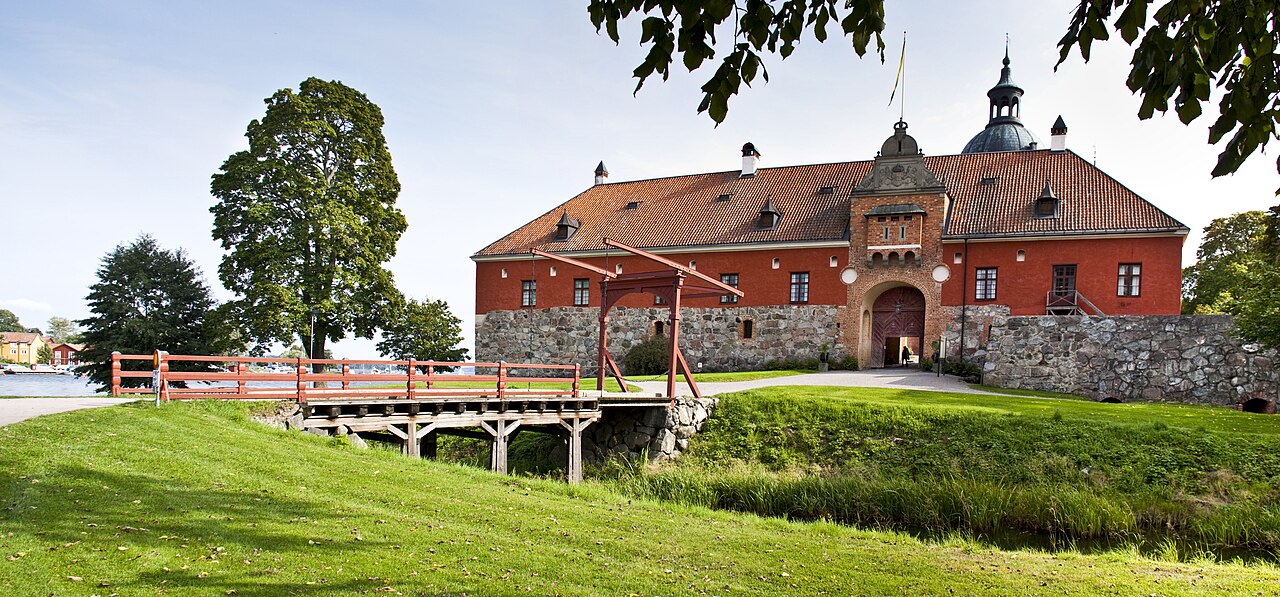
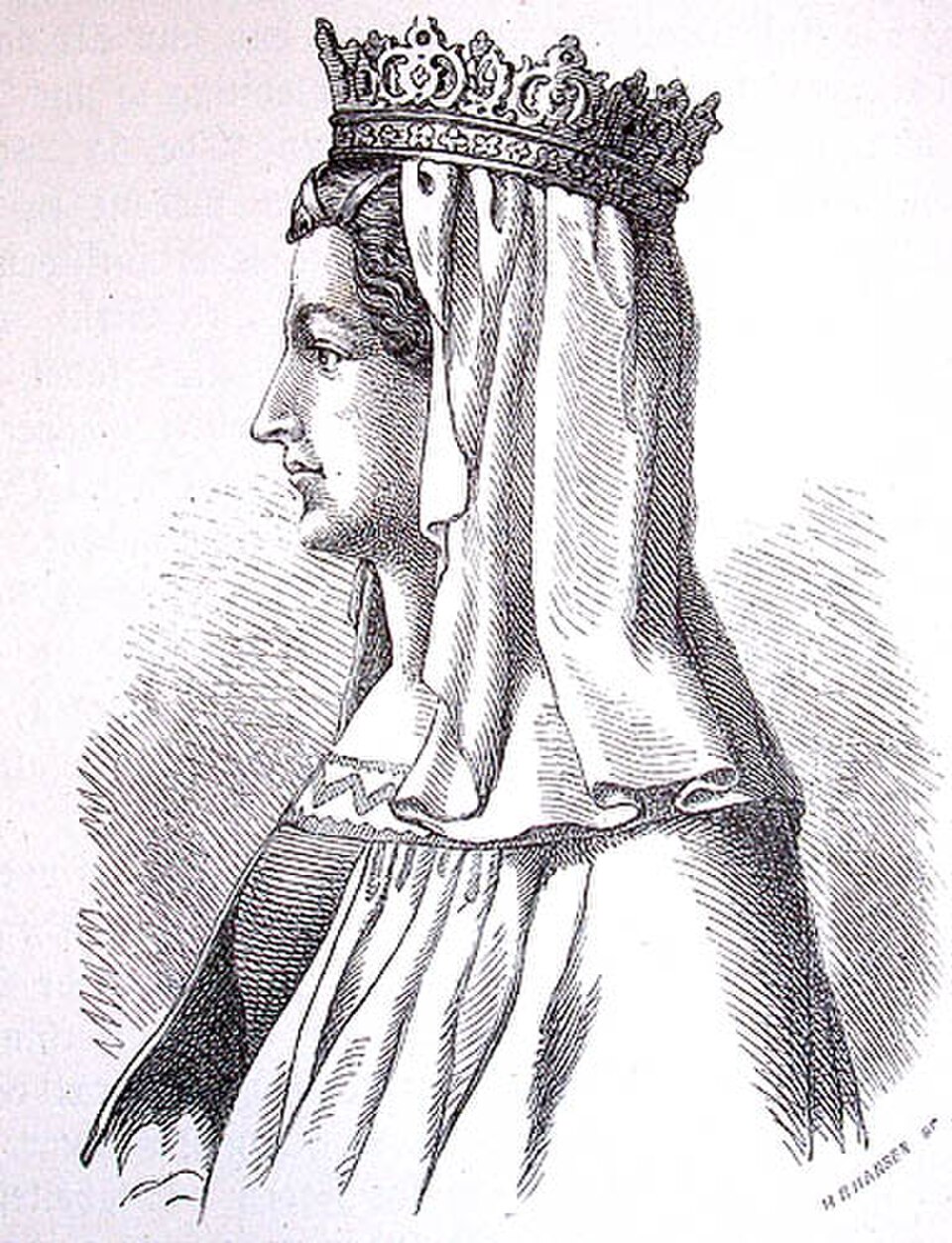
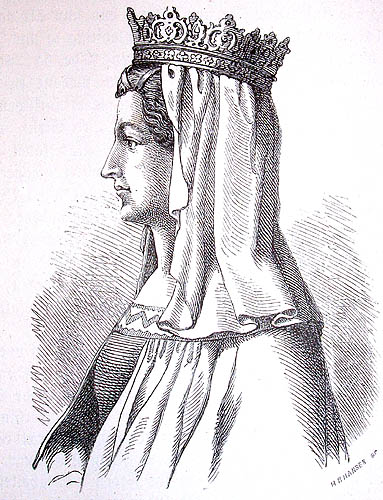
Such a fortune could not simply be inherited. When Grip died in 1386 his estates were so vast that the crown and the nobility spent decades prising them loose — the castle was sold in 1404 to Queen Margaret, architect of the Kalmar Union, passed down through the regents of Sweden, and at last, in the 1490s, handed to an order of Carthusian monks. The grasping man's stronghold became a house of silence and prayer. What the monks built here, and what Gustav Vasa pulled down to raise the castle that stands today, is the next chapter.
The king who built a nation
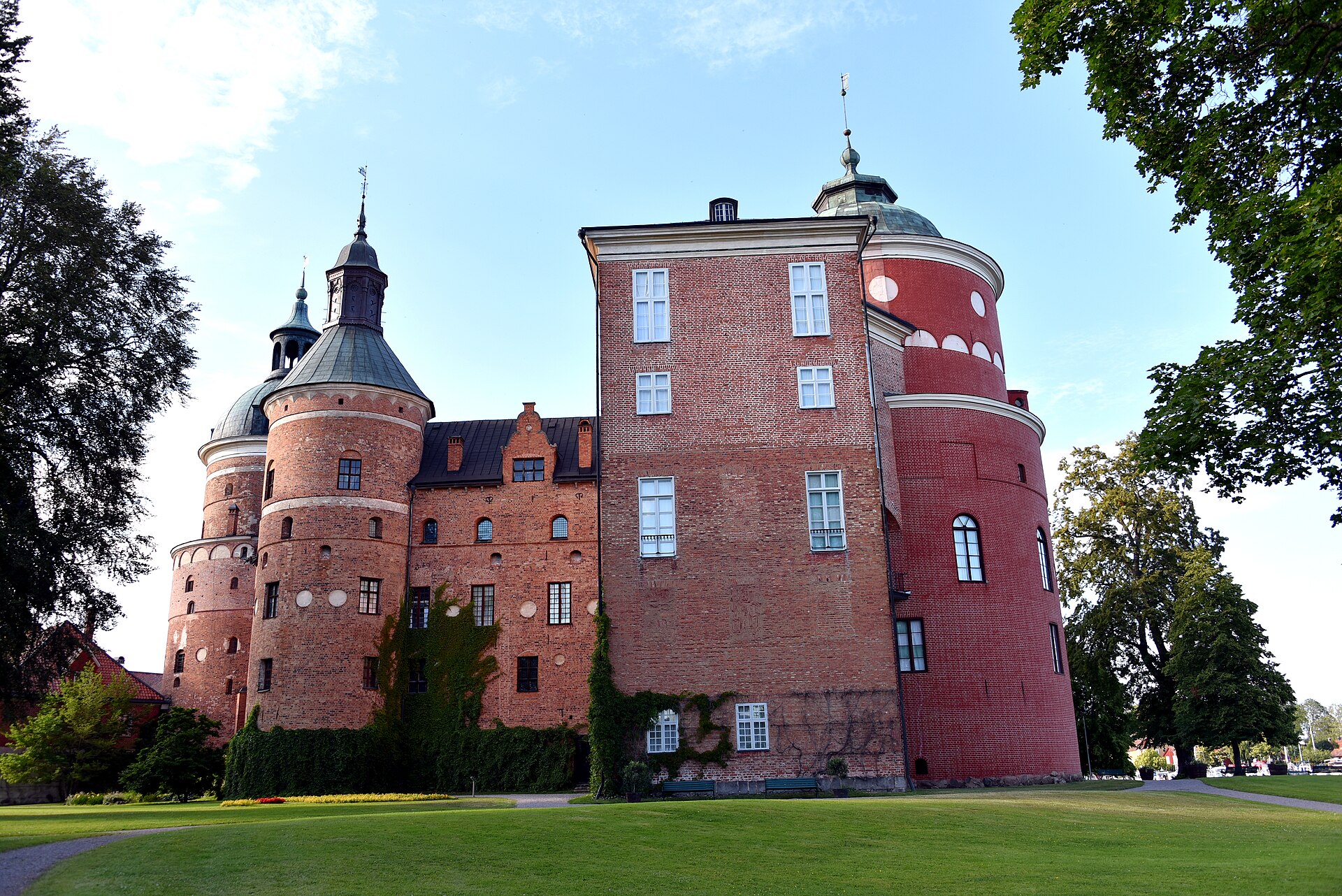
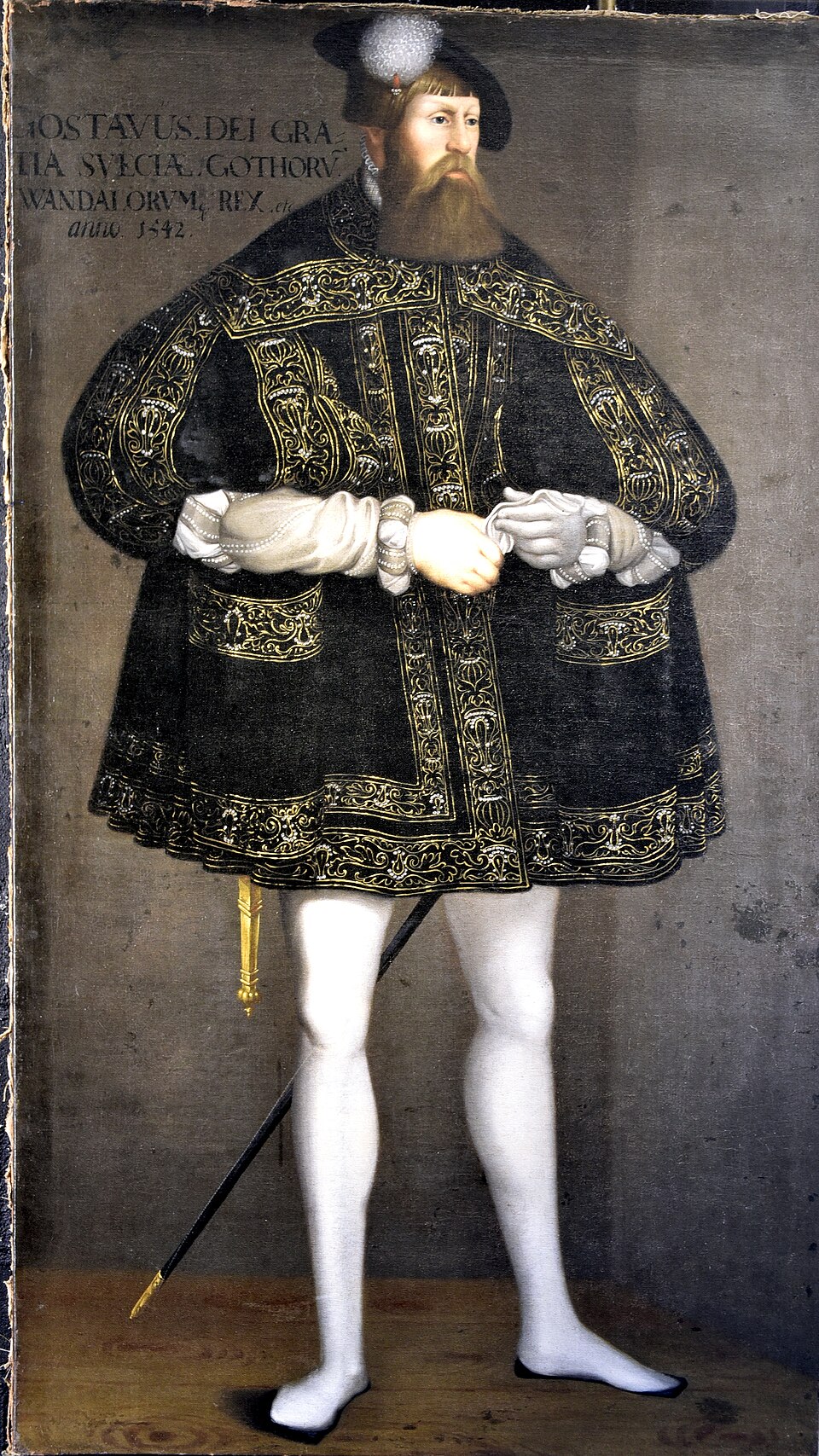
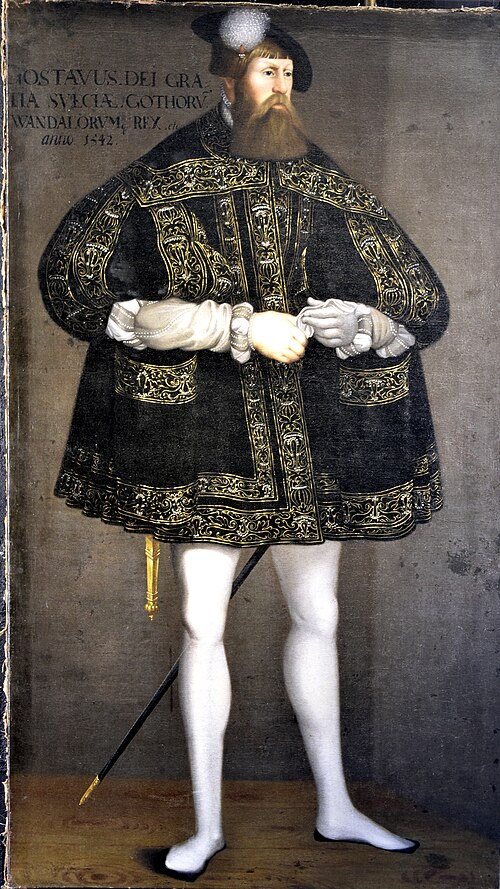
Gripsholm as we see it — the red brick, the four round towers — is the work of one man: Gustav Vasa, the king who founded modern Sweden. He came to the throne out of catastrophe — his father beheaded in the Stockholm Bloodbath of 1520, himself a hunted rebel who tore Sweden free of the Kalmar Union and then broke it from Rome. That story belongs to his own page. What concerns this rock is what he did with the Church's bones.
When Gustav swept the monasteries into the crown in the 1520s, among the houses he dissolved was a Carthusian charterhouse on Bo Jonsson Grip's old island — Pax Mariae, the peace of Mary, which still gives the town of Mariefred its name. The priests' peace ended; their stones became the king's to spend.
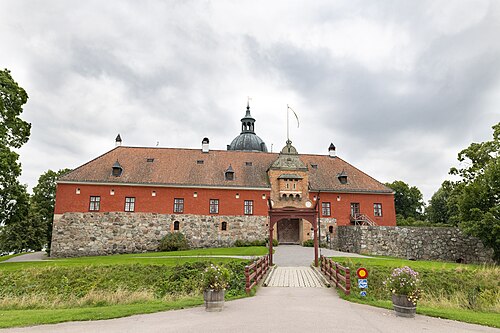
And spend them he did. In 1537 Gustav pulled the charterhouse down and raised, on the same rock and partly from the same stone, the castle that stands there today: red brick, four heavy round towers, a stronghold for the dynasty he would soon make hereditary. The fist that had unclenched into folded hands was a fist again — a king's, this time.
He meant it as a safe seat for the Vasa line. He could not have known that the safest room in it would soon be a cell — or that the prisoners would be his own sons.
The cell
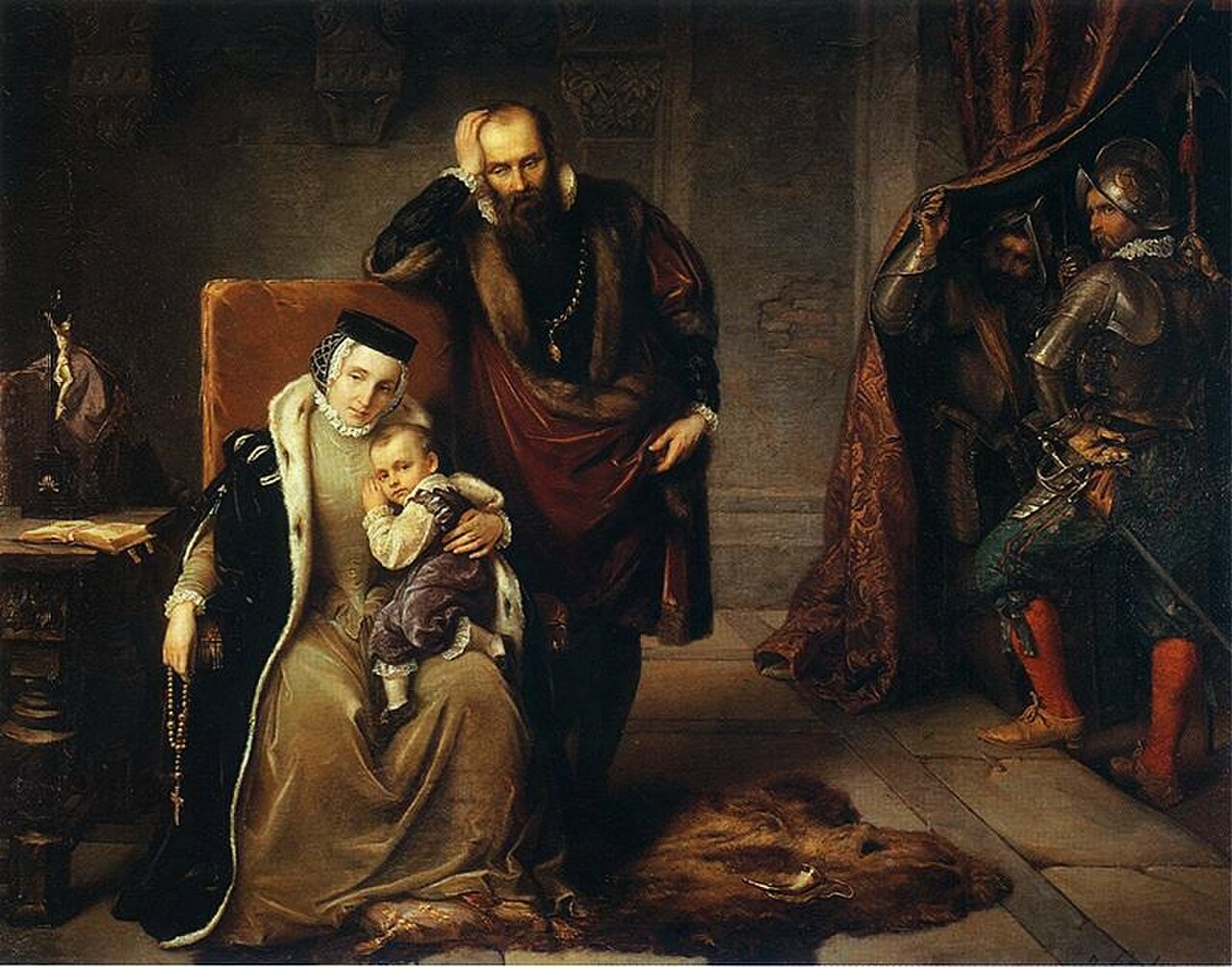
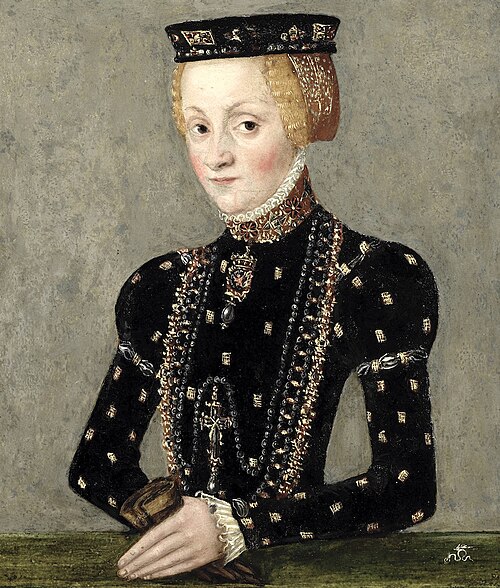
Gustav Vasa's sons did not wait long to prove him right about the safest room. In 1563 his eldest, King Erik XIV, fell out with his brother Johan, Duke of Finland — over a marriage, a foreign policy, a suspicion of treason — and how that quarrel began is a story the castle at Åbo tells. How it was carried out is Gripsholm's. Johan and his Polish wife, Catharina Jagellonica, were brought here and locked in a tower chamber, and there they sat for four years. When Erik offered Catharina her freedom, she chose the cell — and, the story goes, pointed to the words in her wedding ring: nothing but death.
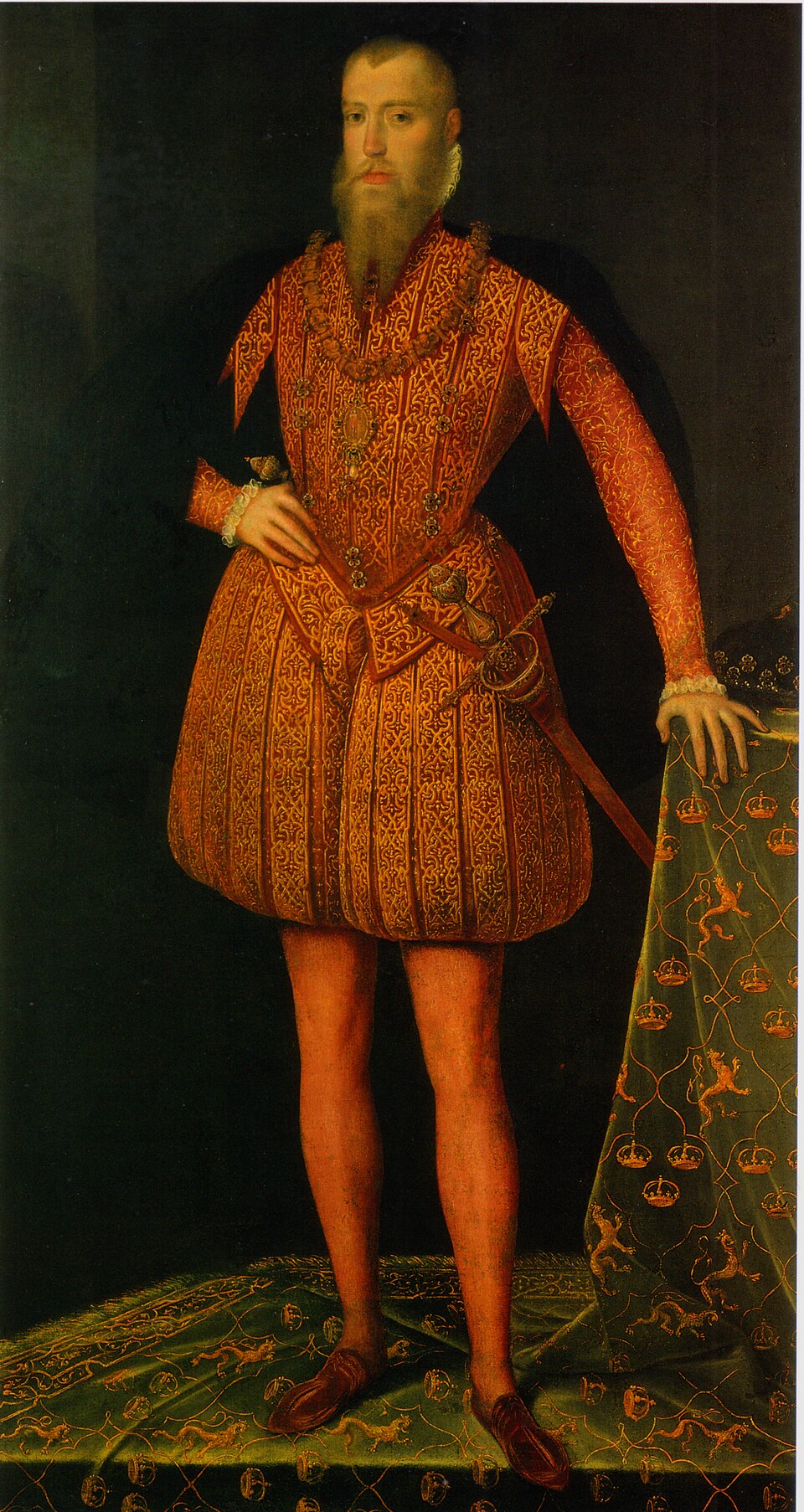
And in that captivity a child was born. In 1566 Catharina bore a son inside these walls — Sigismund, who would grow up to wear the crowns of Poland and Sweden both. A future king of two nations came into the world a prisoner of his uncle, in a cell in Gripsholm. Few rooms in the North have held a stranger guest list.
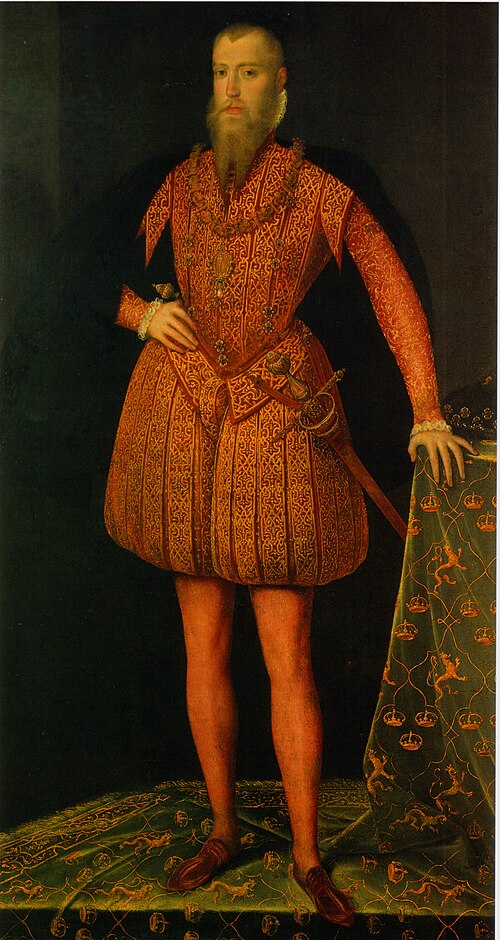
Then the wheel turned, as it does here. Erik's mind gave way, the lords rose, and Johan took the throne he had been jailed for wanting — Johan III. (That, too, Åbo tells in full.) And the man who had locked his brother in this castle was now locked in it himself: in late 1571 the deposed Erik XIV was himself brought to Gripsholm for a time, into the same red walls where his brother's son had been born a captive. The jailer in the jail. Gripsholm never took a side in the Vasa wars — it simply kept whichever brother was losing.
The theatre and the last prisoner
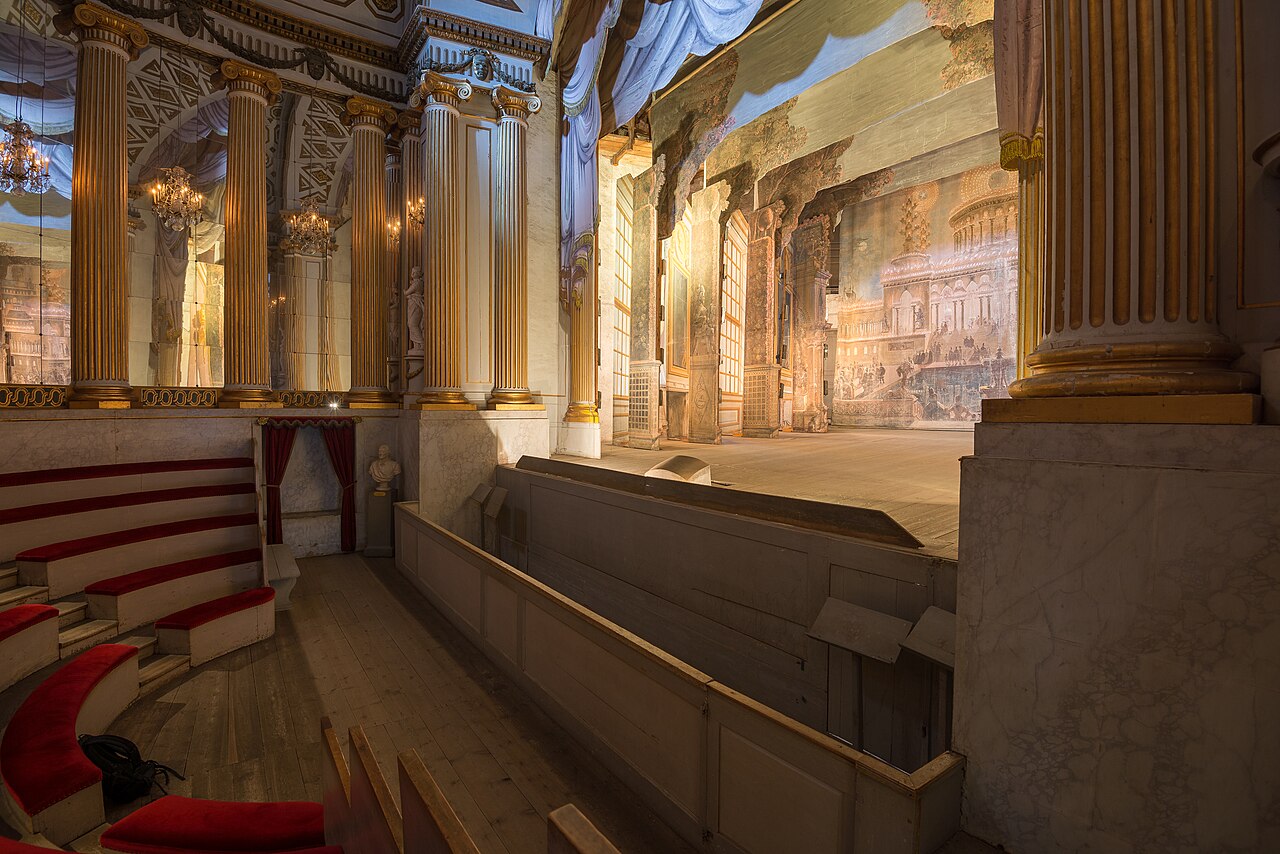
Two centuries on, the castle softened. Gustav III — the theatre-king, who loved the stage more than almost anything a crown could offer — fell for Gripsholm, spent months here every year, and in 1781 did the one thing only he would think to do: he built a theatre inside one of the round defensive towers. His architect took the tower's circle and turned it into a perfect little amphitheatre, a jewel-box for sixty, modelled on Palladio's theatre in Italy. The tower raised to repel cannon now staged French comedies. The fortress had become a salon.
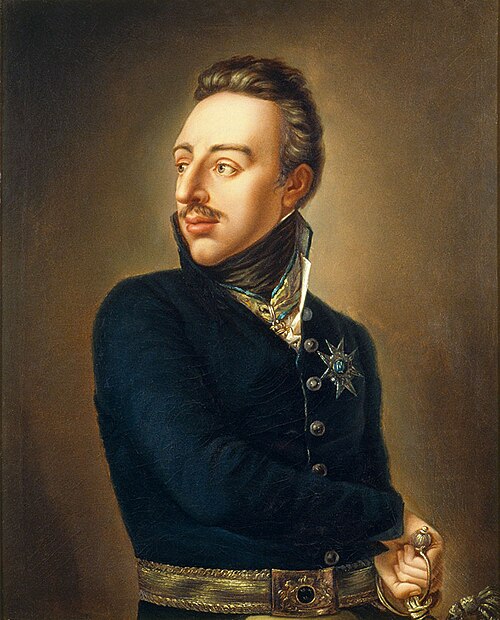
But Gripsholm held one last prisoner-king in reserve, and his fall is the one that touches this whole story most nearly. Gustav III's son, Gustav IV Adolf, lost a war — and not just any war. In 1808–09 Russia overran Finland, the eastern third of the realm Sweden had held for six hundred years, and the catastrophe broke him. In March 1809 his own officers stormed the palace in Stockholm, seized him, and brought him here, to Gripsholm, where he signed away his crown.
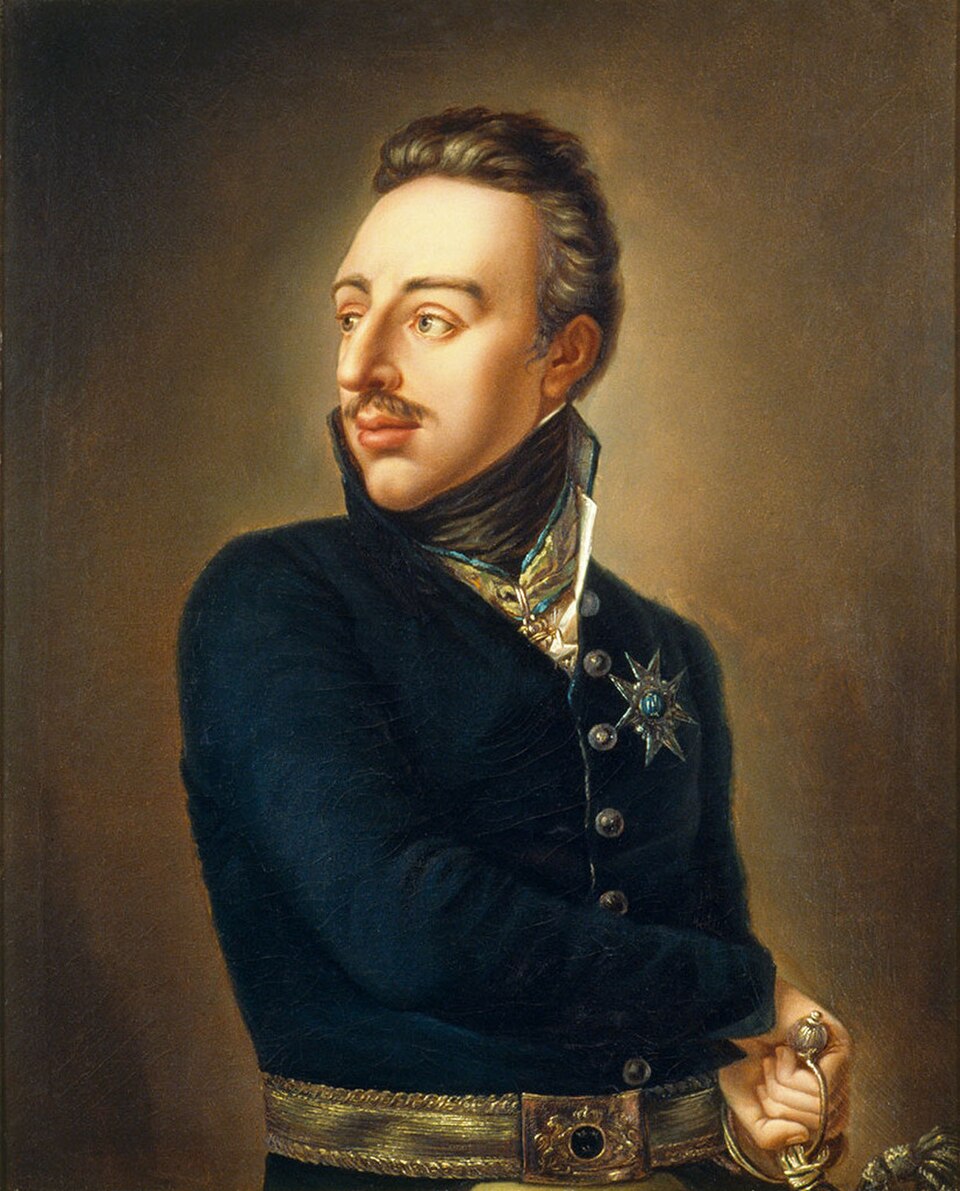
It is easy to miss what that meant. For six centuries "Finland" had simply been the eastern part of Sweden — the land Bo Jonsson Grip and the Vasas governed from Åbo, the realm ruled from Stockholm since the Middle Ages. In 1809 it was cut loose, and became, under the Russian tsar, a country in its own right for the first time: the Grand Duchy of Finland, the seed of the Finland that exists today. The king who lost it signed his abdication in a room in this castle. So Gripsholm, in its quiet way, is one of the places where Finland was born — out of a Swedish king's worst day.
The gallery of a nation's face
And then the wars ended, the dynasties turned over, and the castle of prisoners became something stranger and gentler: a place to keep faces. In 1822 Gripsholm was made the home of Sweden's national portrait collection — and it is, to this day, the oldest national portrait gallery in the world, and one of the largest: some five thousand portraits across five centuries, the whole sweep of a nation's memory hung on its walls.
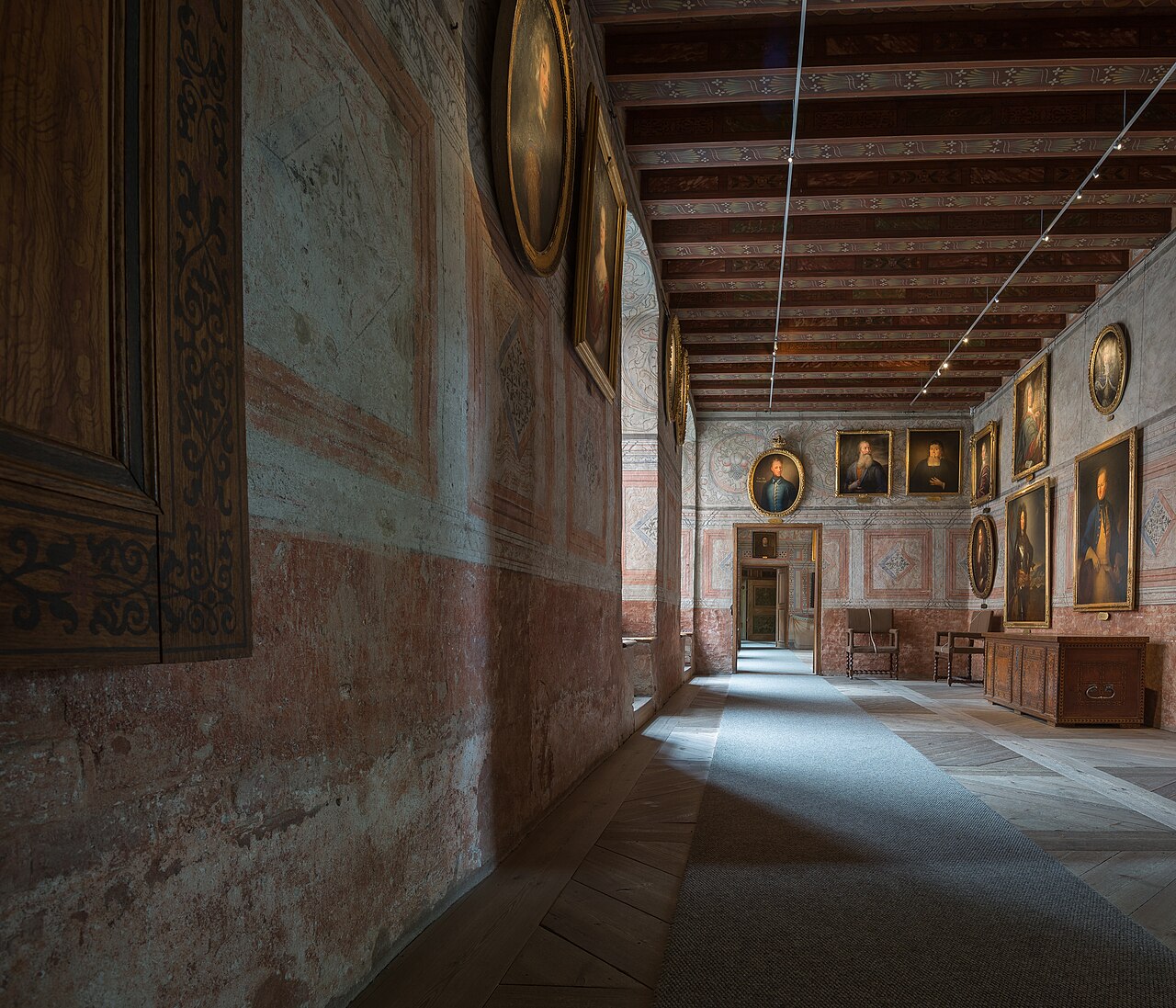
Which means the castle that jailed its kings now keeps them. On these walls hang Gustav Vasa, who built the place; Erik XIV, who is believed to have died of poison after his fall; Johan III, the brother who deposed him; the wives, the rivals, the dethroned. The men who caged one another inside these towers hang now in the same rooms, a few feet apart, at peace at last — because they are only paint now. The feud became the collection.
.jpg)
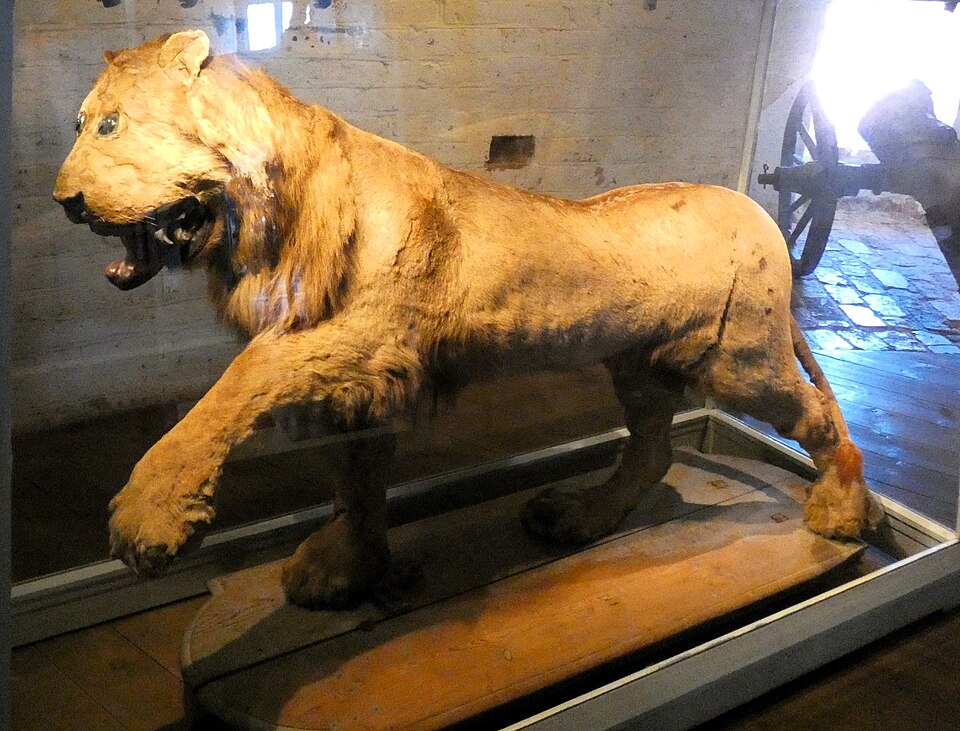
And then there is the lion. In 1731 the dey of Algiers sent King Frederick I a lion, one of the first ever seen in Scandinavia; it died, and was handed to a taxidermist who — it is safe to assume — had never set eyes on one alive. What came back is one of the most gloriously, catastrophically wrong stuffed creatures in Europe: a flat, goggle-eyed, grinning thing that looks less like a lion than like a frightened man's best guess at one. It sits in the castle still, three centuries of solemn royal faces ranged around it — and somehow it is as beloved as any of them.
So that is what becomes of a castle that has held everything — the magnate who owned too much, the king who built a nation, the brothers who caged each other, the deposed, the theatre, and one absurd lion. In the end it holds them all the way the gallery does: not as winners or losers, but as faces on a wall, a whole country looking back at itself. Bo Jonsson Grip raised a fist on this rock. Five hundred years later, it had become a face.
.jpg)
%2C_King_of_Sweden%2C_in_coronation-robes_(Alexander_Roslin)_-_Nationalmuseum_-_15330FXD.jpg)