Langinkosken keisarin kalastusmaja
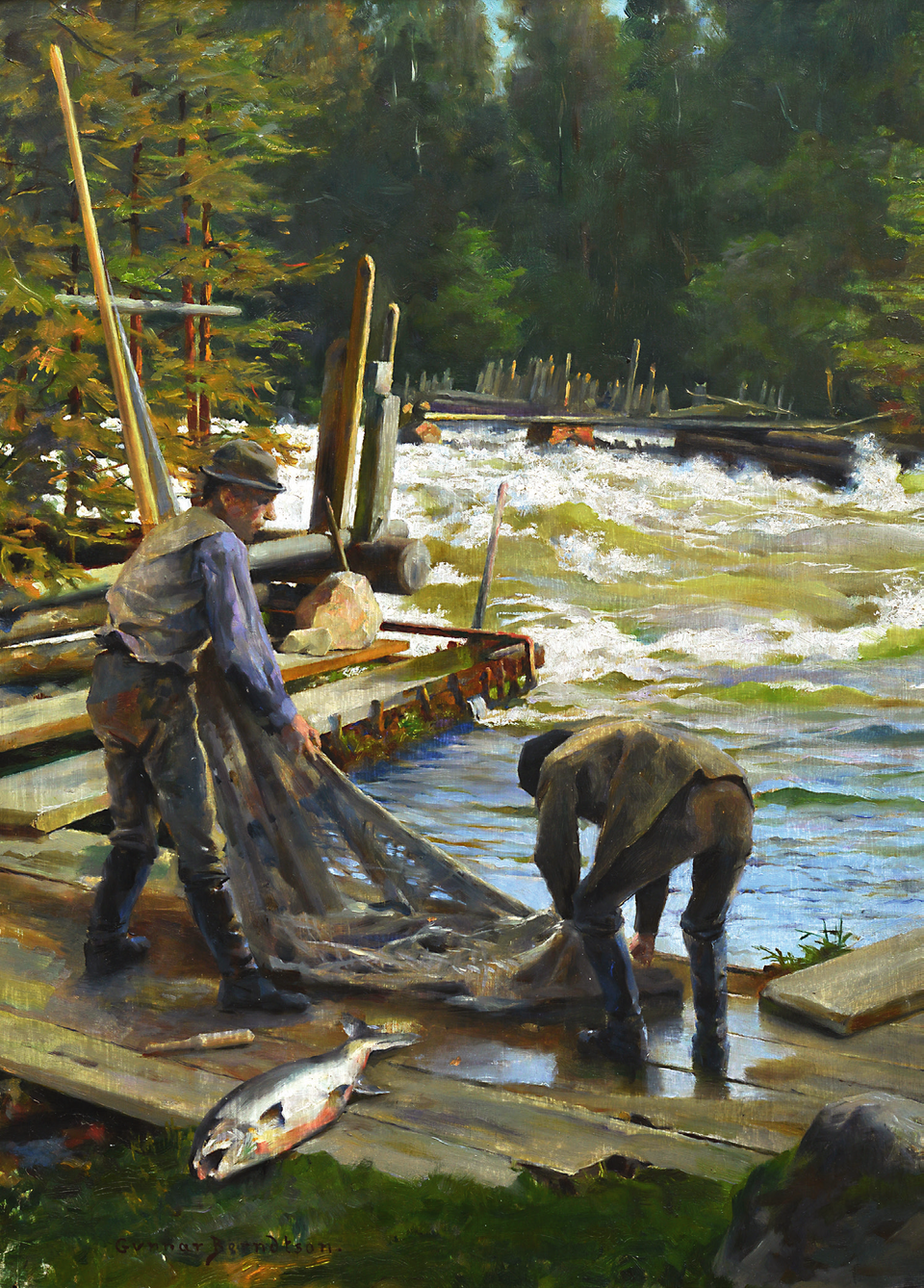
The Langinkoski area, with its rapids and small islands, is situated at the mouth of the western branch of the Kymijoki river near the sea. Long before the emperor's fishing lodge was built, the place was known both as an excellent fishing location and for its particularly beautiful and diverse natural landscape. On the adjacent Myllysaari island is a small wooden chapel (tsasouna) built by the monks of Valamo Monastery at the turn of the 18th and 19th centuries. The Langinkoski fishing lodge, i.e. the villa built for Emperor Alexander III and his consort Dagmar, was constructed in 1888–1889. The main building is a partly two-storey log-framed summer villa. It has been well preserved in its original form, though the colouring may have changed over time. On the adjacent Myllysaari is a residential building resembling the imperial family's building but smaller, constructed for the fishermen who assisted the emperor. Outside the main gate, i.e. to the east of the emperor's fishing lodge, is the warden's residential building and, on its grounds, stable, cattle shed and storage buildings, as well as a log-built sauna, a separate washhouse, two cellars and a fish hatchery built in 1909. The warden's residential building was extended to its present size in 1905. The main building and the fishermen's residential building, both unclad log structures, were originally designed to be left unpainted or coated with transparent paint. The outer walls at some point began to be painted red, initially apparently with boiled paint but subsequently with completely opaque dark-red oil paint. Details of the facades such as eave, window and door mouldings and the balcony railings have, at least since the walls were painted red, been highlighted with yellow paint. Within the fishing lodge area there are in total ten wooden bridges, built partly on log cribs and partly on masonry footings. The imperial-era bridges have over time been rebuilt roughly in accordance with their original models. Their railings were later painted red. The wooden main gate, modelled on the original from the late 1880s, is also entirely painted with dark-red oil paint, as are the wooden railings of the bridges within the area. Fixed fishing equipment has been present at the site for centuries. Stone and log fishing installations were also built along the shores for the emperor's fishing grounds, including a fish weir in front of the fishermen's cottage. Salmon and whitefish, as well as lamprey, have been caught at Langinkoski. To the east of the fishing lodge, on the former warden's fields, is a tree species park established by the National Board of Forestry in 1959. The Langinkoski area also contains First World War fortification structures, some built right at the river bank. The water area has changed somewhat due to regulation dams. The view to the sea has changed due to the bridge on Langinkoskentie, completed in 1963. A comparable site to the emperor's fishing lodge is the unclad log building constructed in 1882–1883 on the summit of Aavasaksa, known for its views, in northern Finland, for Emperor Alexander III's visit. The main building, the fishermen's residential building, two cellars, equipment shed, fish hatchery and the old Orthodox chapel at Langinkoski are protected under a decree (480/85) from 1990. The remaining buildings, all located outside the main gate, were at the time identified by the National Board of Antiquities and the building administration as building conservation objects but were not included in the decree protection. The imperial fishing lodge at Langinkoski is also a nationally significant built cultural environment (RKY site).
.jpg)