.jpg)
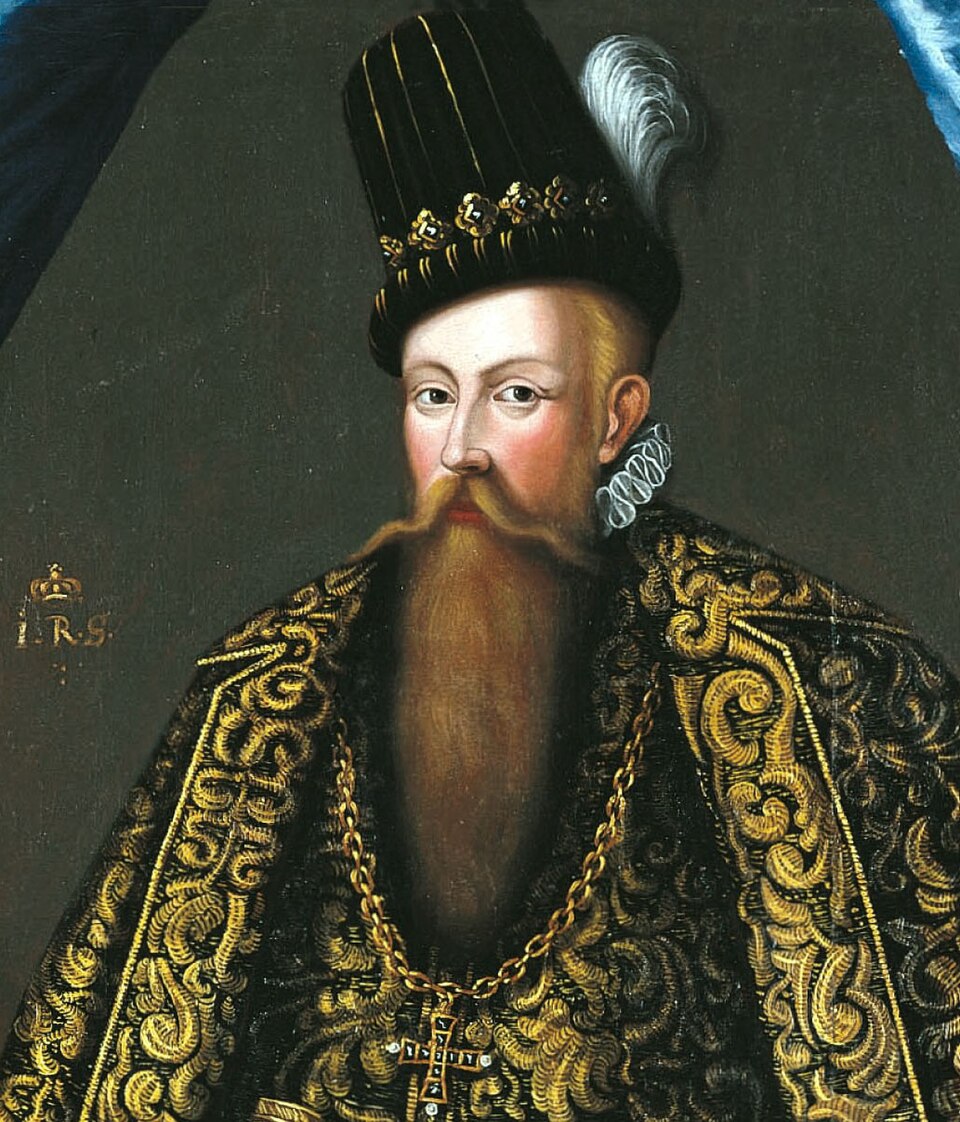
The second of Gustav Vasa's sons to wear the crown, Johan was the most cultivated and the most complicated of them. He ruled Finland as a near-sovereign duke, married a Polish princess against his king's will, and was jailed for it by his half-brother Erik XIV — until the wheel turned and the prisoner took the throne. He reigned for twenty-three years, fought his way to the Gulf of Finland, rebuilt castles across the realm, and spent his deepest passion trying to steer the Swedish church back toward Rome — a fight that set him against his own brother Karl. He had Erik poisoned. And in his son Sigismund, raised Catholic, he seeded a line that would briefly join the crowns of Sweden and Poland, then lose them both. A builder and a believer, and a Vasa to the end — which is to say, undone by his own blood.
The second son
Johan was born at Stegeborg Castle in 1537, the eldest son of Gustav Vasa's second marriage, and from boyhood he carried the gifts and the flaws of his line in equal measure: quick, learned, devout, proud, and restless. In 1556 his father did something that would shape the rest of his life and nearly end it — he made Johan Duke of Finland, a hereditary duchy, and set him up across the sea with his own court, his own revenues, and something dangerously close to his own kingdom.
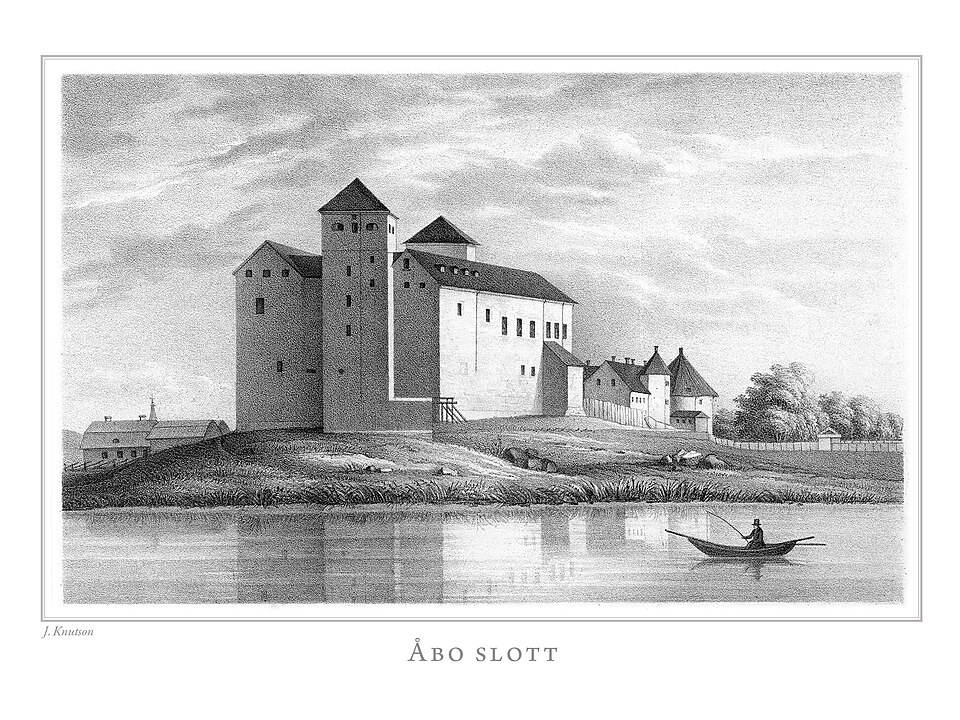
Johan took to it with a will. He made Turku Castle his seat and set about turning a cold grey border-fortress into a Renaissance court, a splendour Finland had never seen. That story belongs to the castle itself; what matters here is what it did to the man. Ruling his own realm at the edge of the world gave Johan a taste for sovereignty that a mere duke was never meant to have — and a half-brother on the throne who was watching.
A duke with a foreign policy
The taste for sovereignty turned into the act of a rival. From Turku, Johan began to run a foreign policy of his own. In 1562 he married Catharina Jagellonica, a Jagiellon princess of Poland and one of the most cultivated women in Europe — a Catholic match his brother the king had expressly forbidden. He lent the Polish crown a small fortune, a hundred and twenty thousand daler, and took seven castles in Livonia as security, entangling Sweden in the Baltic scramble on terms he set himself. Their father had seen it coming: years before, Gustav Vasa had written to warn his son that he was 'so eager to chase after misfortune.'

To Erik XIV — suspicious to begin with, and King of Sweden — this was not a duke governing a province. It was a brother building a private kingdom across the water, in defiance of the very laws meant to keep the royal dukes in check. In June 1563 Erik had the assembly of the realm condemn Johan as a traitor. The splendour at Turku had bought him a throne's enmity, and it would cost him his freedom.
The cell
In 1563 the reckoning came the direct way: Erik XIV's army crossed to Turku, the castle's own guns were turned against the king, and after a siege Johan surrendered and was carried across the sea to a cell at Gripsholm. He would spend four years there — not alone. Catharina, offered her freedom, chose to follow her husband into captivity, and in 1566 she bore him a son inside those walls: Sigismund, an heir whose first cradle was a cell. The scenes belong to the castles that staged them; what belongs to Johan is the shape of it — a duke who had reached for a kingdom, locked in a tower with a wife who would not leave and a newborn son for a fellow prisoner.
_I_f%C3%A4ngelset_med_sin_gem%C3%A5l_Katarina_Jagellonica%2C_prinsessa_av_Polen_-_Nationalmuseum_-_39519.tif)
It should have been the end of him. It was, instead, the making of the strangest reversal in the dynasty's history.
The prisoner who took the crown
When Erik XIV's mind broke apart after the Sture murders, the doors of Gripsholm opened, and in 1567 Johan walked free. He did not forgive. The following year he joined his younger brother, Duke Karl, and together they raised the nobility against the king; Stockholm surrendered in the autumn of 1568, and the estates confirmed it early the next year. The traitor condemned in 1563 was crowned Johan III in 1569. He had gone from a cell to a throne in the space of two years — the one Vasa who was jailed for playing at king and then simply became one.
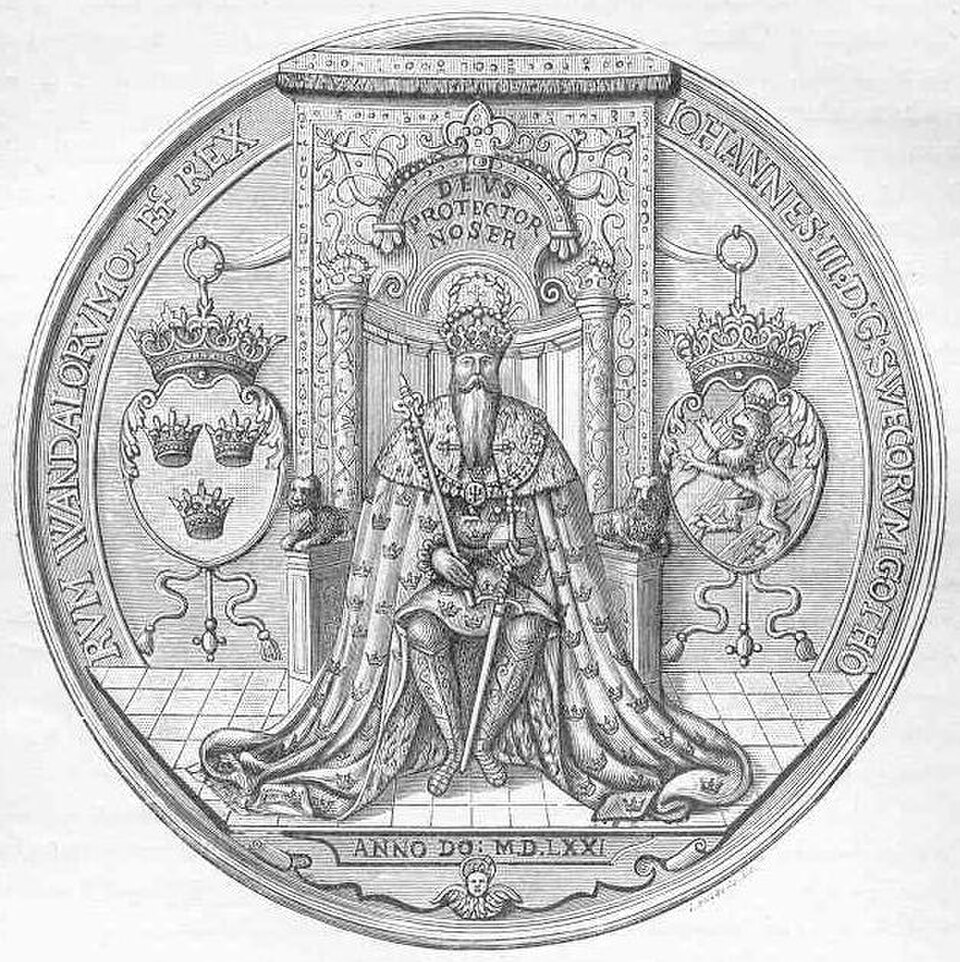
His first work was to end the war his brother had left him. The long, grinding Northern Seven Years' War with Denmark was closed by the Treaty of Stettin in 1570 — no gain, no glory, a ransom paid for a lost fortress, but peace. Johan turned his energy east and inward, to the two projects that would define him: a war on the Gulf of Finland, and a war over the soul of the Swedish church.
The war east, and the brother's death
The war was the cleaner of the two. Johan meant to shut Russia out of the Baltic by seizing the river-mouths of its trade, and in the French-born soldier Pontus De la Gardie he found the man to do it. The campaign crossed the frozen Gulf of Finland and in 1581 stormed Narva — a bloody sack, and a real gain: Sweden held Narva, Ivangorod and most of Ingria when the truce came in 1583. It was the reach his father had never risked and his brother had never managed.
The other reckoning was darker, and it was family. Erik XIV, deposed and dangerous, was still alive in a prison of Johan's keeping — a banner any rebel could raise. Johan and a councillor put their names to a standing order: if anyone tried to free him, Erik was to be poisoned. In February 1577 Erik died at Örbyhus, and when his body was opened four centuries later it was heavy with arsenic. Whether Johan gave a fresh command that winter, or simply let the standing order stand, the record will not say. What it says plainly is enough: the brother he had deposed died by poison, on a warrant Johan had signed.
The Red Book
Johan's deepest passion was not war but worship. He was a genuinely learned theologian, and he believed the Reformation had thrown out too much — that a truer church lay in the ceremony and reverence of the ancient one. In 1576 he issued a new liturgy, bound in red and known ever after as the Red Book: the Mass restored much of its old Catholic shape, kneeling and vestment and gesture brought back, though he deliberately left out the parts he knew would offend too deeply. For four years he negotiated quietly with Rome, receiving the Jesuit Antonio Possevino at his court and setting his own terms for reunion — communion in both kinds, a Swedish Mass, married priests, and the Church's lands kept by the crown.
Whether he meant to return Sweden to Rome, or only to steer a middle way of his own devising, the sources cannot finally say — and his contemporaries could not either, which is why the fight was so bitter. It set him against his own brother. Duke Karl refused the Red Book in his duchy and sheltered the priests who defied it; theologians were jailed and exiled; the quarrel ground on for the rest of the reign. Near the end, worn down, Johan said he would not be 'king of their consciences.' The year after he died, the Church he had tried to bend settled the matter for good and locked Sweden into Lutheran orthodoxy. Of everything he reached for, this was the one he wanted most, and the one that beat him.
The builder and the bridge
For all the fighting, Johan left his surest mark in stone. Like his father, he was a builder-king — he issued hundreds of building orders in his own hand and drew his own plans — and he brought Italian architects north, the Pahr brothers from Lombardy, who wrapped the realm's grim medieval castles in Renaissance dress and gave Sweden its first modern bastioned fortifications. Kalmar, Uppsala, Borgholm, Vadstena, the royal castle in Stockholm: the Vasa Renaissance is largely his doing. The castle he had made glow at Turku was only the first.
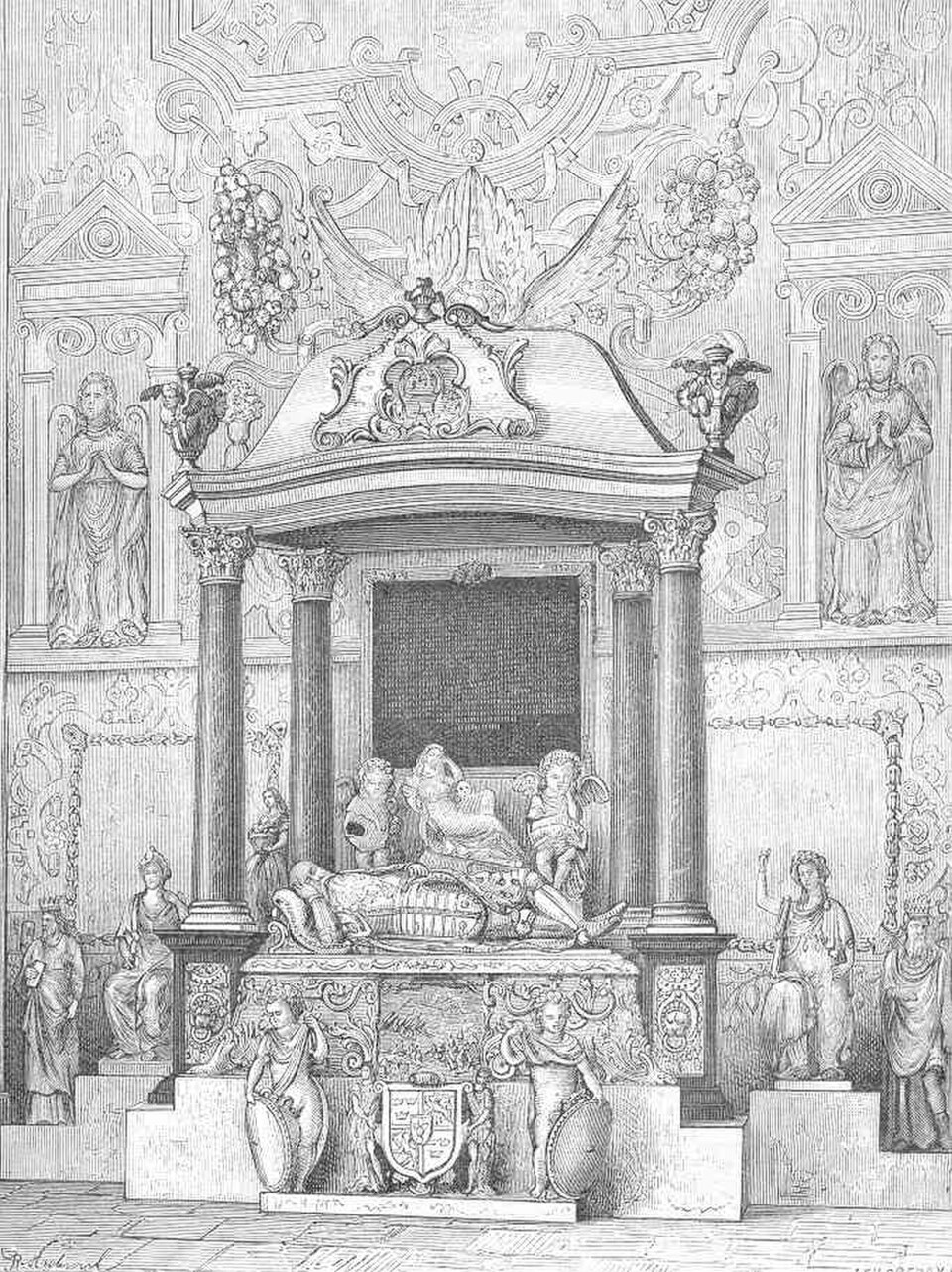
Catharina died in 1583; two years later Johan married a young Swedish noblewoman, Gunilla Bielke. But his lasting legacy was the son of the prison years. Sigismund, raised Catholic by his mother, was elected King of Poland in 1587, and when Johan died in 1592 the prison-born boy inherited Sweden too — two crowns, briefly, in one head. It did not hold. Sigismund's Catholicism and his uncle Karl's Lutheran Sweden could not share a throne, and within a decade Karl had driven him out and taken the crown himself. The dynasty Johan had seeded to span the North instead split it, and the Vasa blood turned once more upon itself. He was buried in Uppsala beside Catharina — the duke who reached too far, the prisoner who became a king, and the believer whose deepest cause outlived him only long enough to be undone.
.jpg)