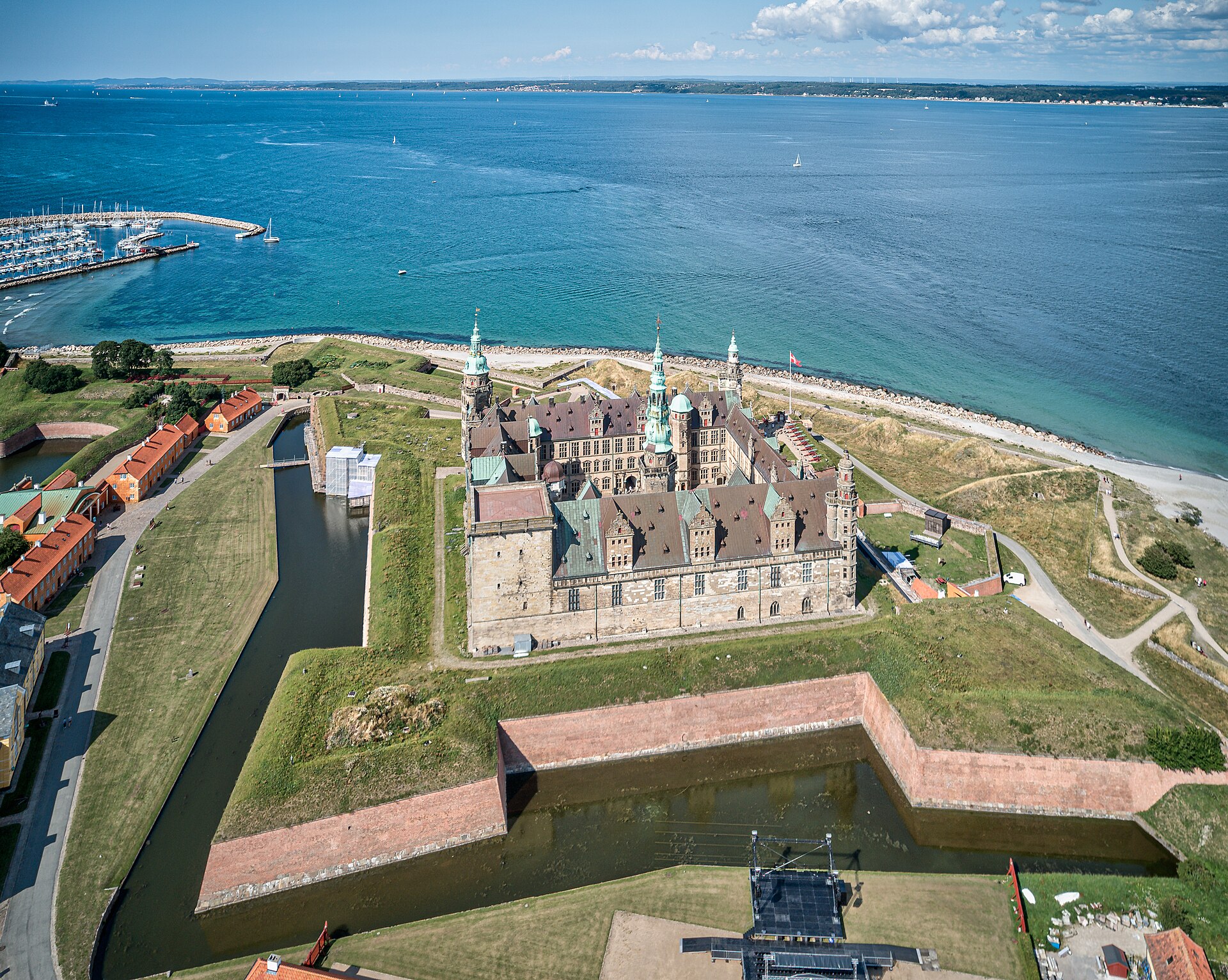
The hook in the Sound
Before the palace, there was the chokepoint. In the 1420s a king called Erik of Pomerania — the heir whom Margrete I had adopted, crowned, and left her three kingdoms to — raised a stronghold on this low spit of land and named it Krogen, "the Hook." Four kilometres across the water stood its twin at Helsingborg; together, the two fortresses could shut the Sound like a gate.
In 1429 Erik turned that gate into a tollbooth. Every foreign ship bound into or out of the Baltic had to halt at Helsingør and pay the Danish crown for passage — and a ship that refused was fired on from both shores. The Sound Toll would run for more than four hundred years and, at its height, brought in as much as two-thirds of the entire Danish state revenue. A castle on a sandspit had become the turnstile of northern Europe, and the money it raised would build everything that came after.

Frederik II's Renaissance crown
Krogen was a soldier's box of stone. Frederik II wanted a king's stage. Between 1574 and 1585 he had the medieval fortress torn open and rebuilt as a Renaissance palace of pale sandstone and green copper — the most magnificent castle in the North — and when the walls were finished in 1577 he gave it a name to match: Kronborg, the castle of the crown.
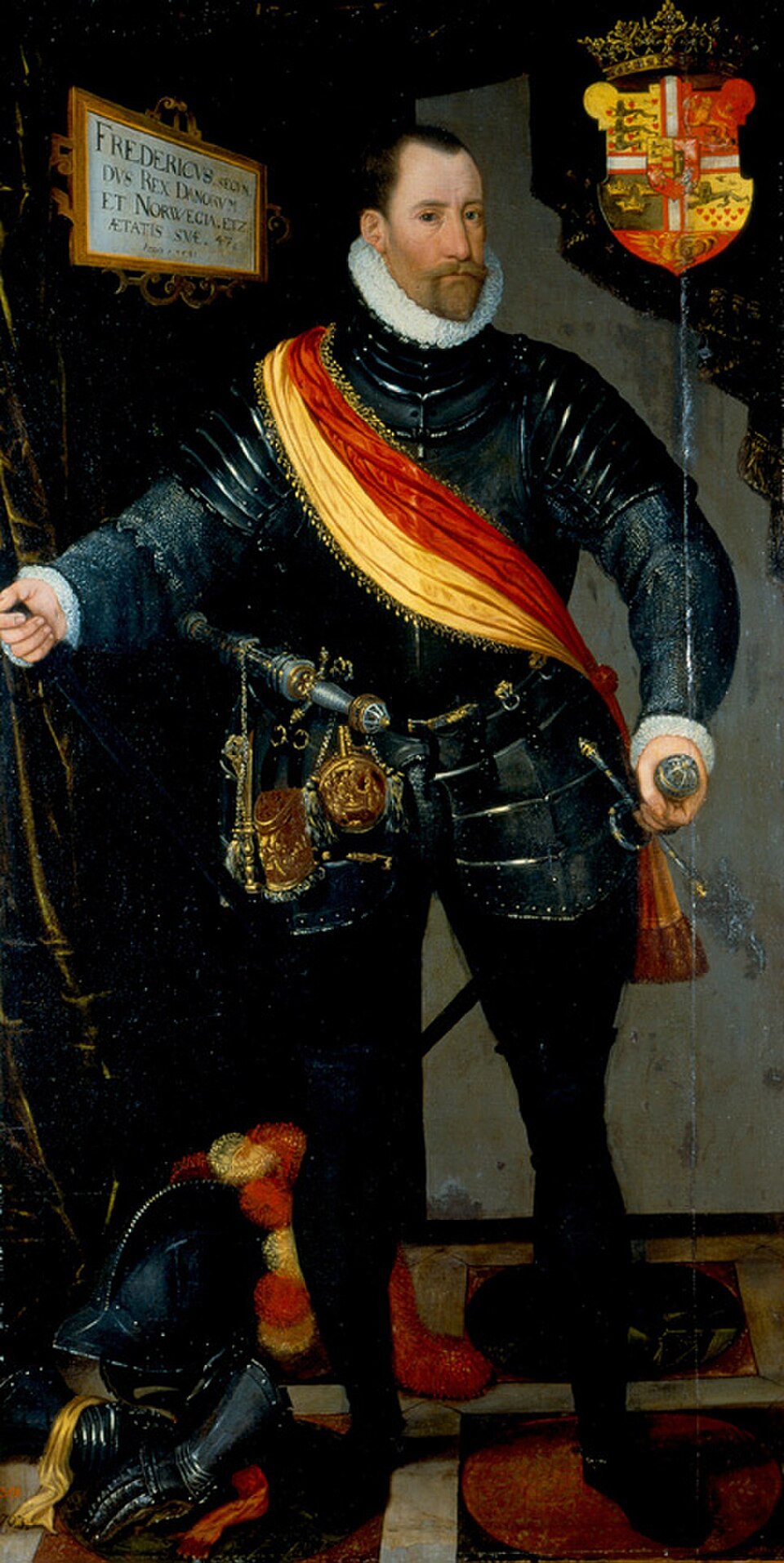
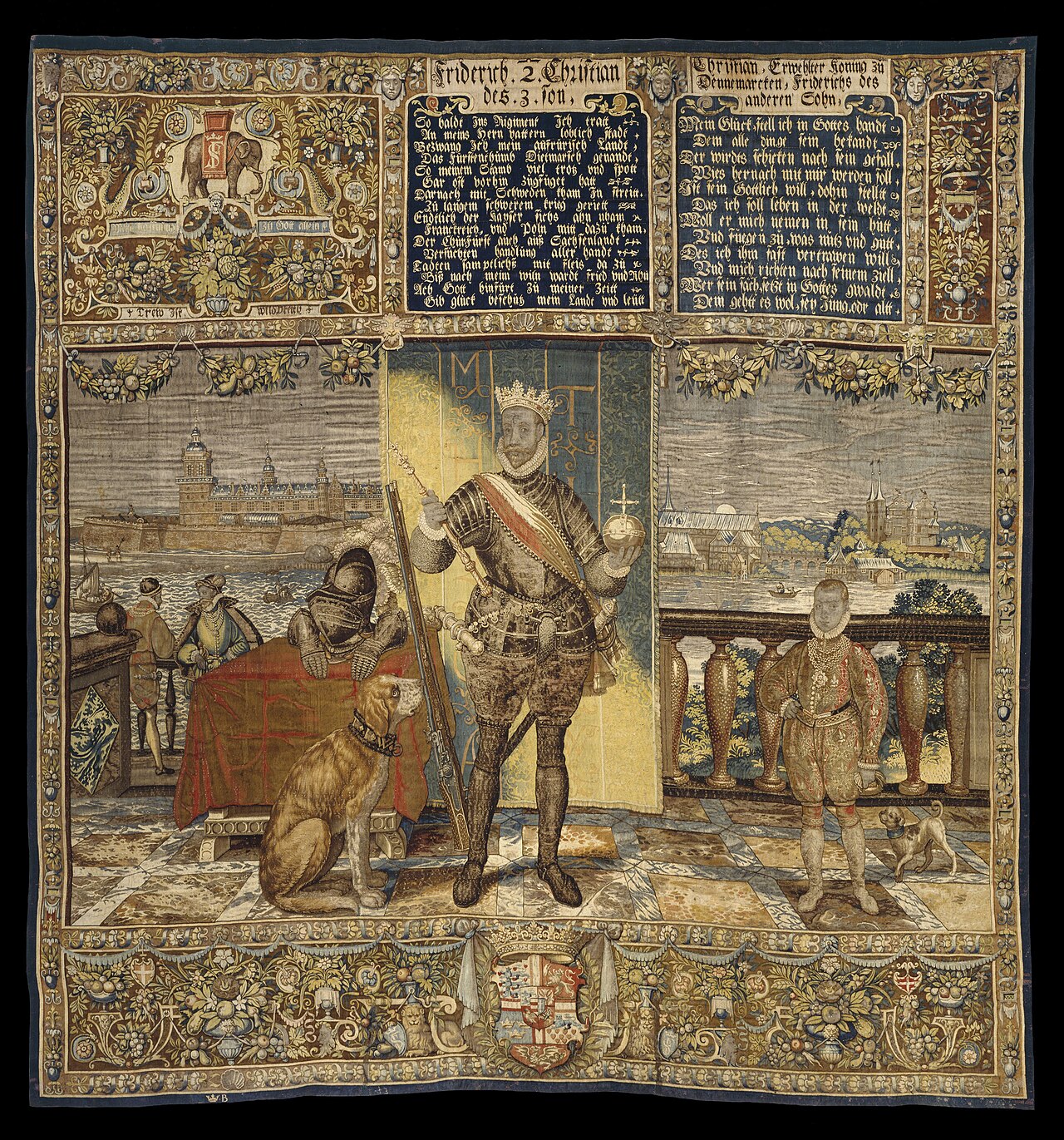
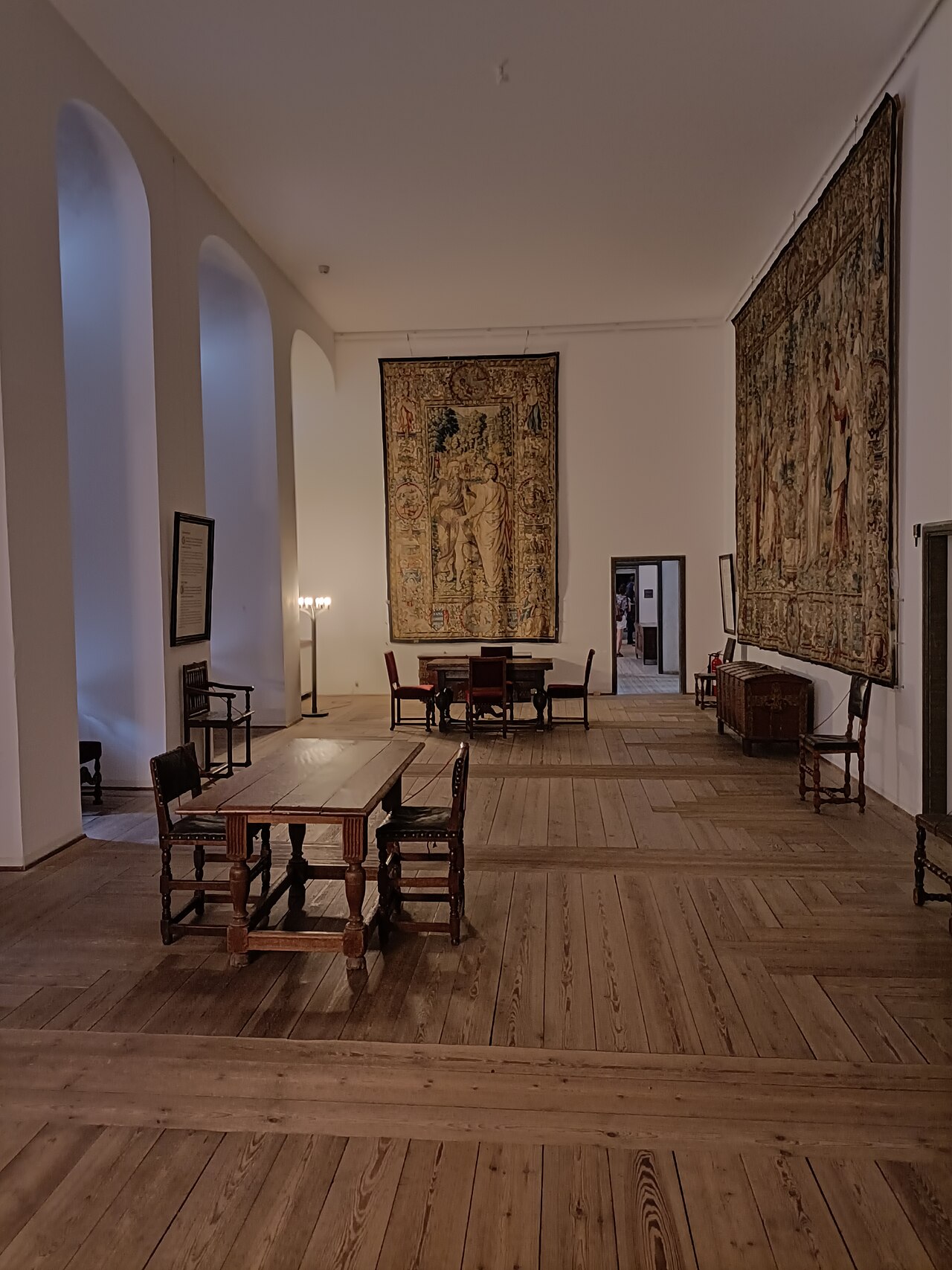
To dress it, he commissioned a gallery in wool. The Kronborg tapestries, woven by Hans Knieper's workshop in the 1580s, were a procession of around a hundred Danish kings, real and legendary — a woven argument that this line had ruled since the dawn of time. About fifteen of the panels survive, seven of them still at Kronborg and the rest in Copenhagen; and the same series lends the boy-king Olav his face on another page of this site.
Hamlet's Elsinore
Around 1600 an English playwright set his greatest tragedy in a castle he had almost certainly never seen. Shakespeare's Hamlet plays out at "Elsinore" — the English name for Helsingør — and the choice was no accident. In 1586 a company of English actors had performed at the newly built Kronborg for Frederik II, and three of them would go on to help found Shakespeare's own troupe. The playwright never crossed the sea; the castle crossed it to him, in the accounts of men who had stood in its halls.
It made Kronborg immortal in a way no toll ever could. For four centuries a prince who never lived has haunted the real walls: Hamlet was first staged here in 1816, and Olivier, Gielgud, Jacobi and Jude Law have all worn his black at Elsinore since. On a summer evening you can still watch the ghost walk and the duel fall in the courtyards where, supposedly, none of it ever happened.
.jpg)
Fire and resurrection
On a September night in 1629, two careless workmen left a fire burning, and most of Frederik II's masterpiece went up with it. Only the chapel came through — saved by its stone vaults — which is why its carved and gilded interior is the one room still truly original. Everything else was a blackened shell.
The man who rebuilt it was Christian IV, the building-king who reshaped half the North — the same king who, when Oslo burned, raised a new city, Christiania, beneath the walls of Akershus. By 1639 he had restored Kronborg's exterior almost exactly as it had been; he wanted the silhouette back, even if the rooms inside never regained their old glory. The castle that rises from the Sound today is, in its skin, his resurrection of Frederik's dream.
The Swedes take the fortress
For all its splendour, Kronborg sat on a front line — and in 1658, in the war with Sweden's Karl X Gustav, it failed the test. A Swedish army under Carl Gustaf Wrangel laid siege and took it, and for two years the castle that guarded Denmark's golden gate flew Swedish colours.

Denmark won it back and never trusted it again. A ring of bastions — the Crownwork — was thrown up around it in 1688–90, making Kronborg one of the strongest fortresses in Europe; and for two centuries after that it was less a royal seat than a garrison, and from 1739 a prison worked by convicts. The crown castle had become a barracks. The soldiers did not march out until 1923.
The sleeper and the open sea
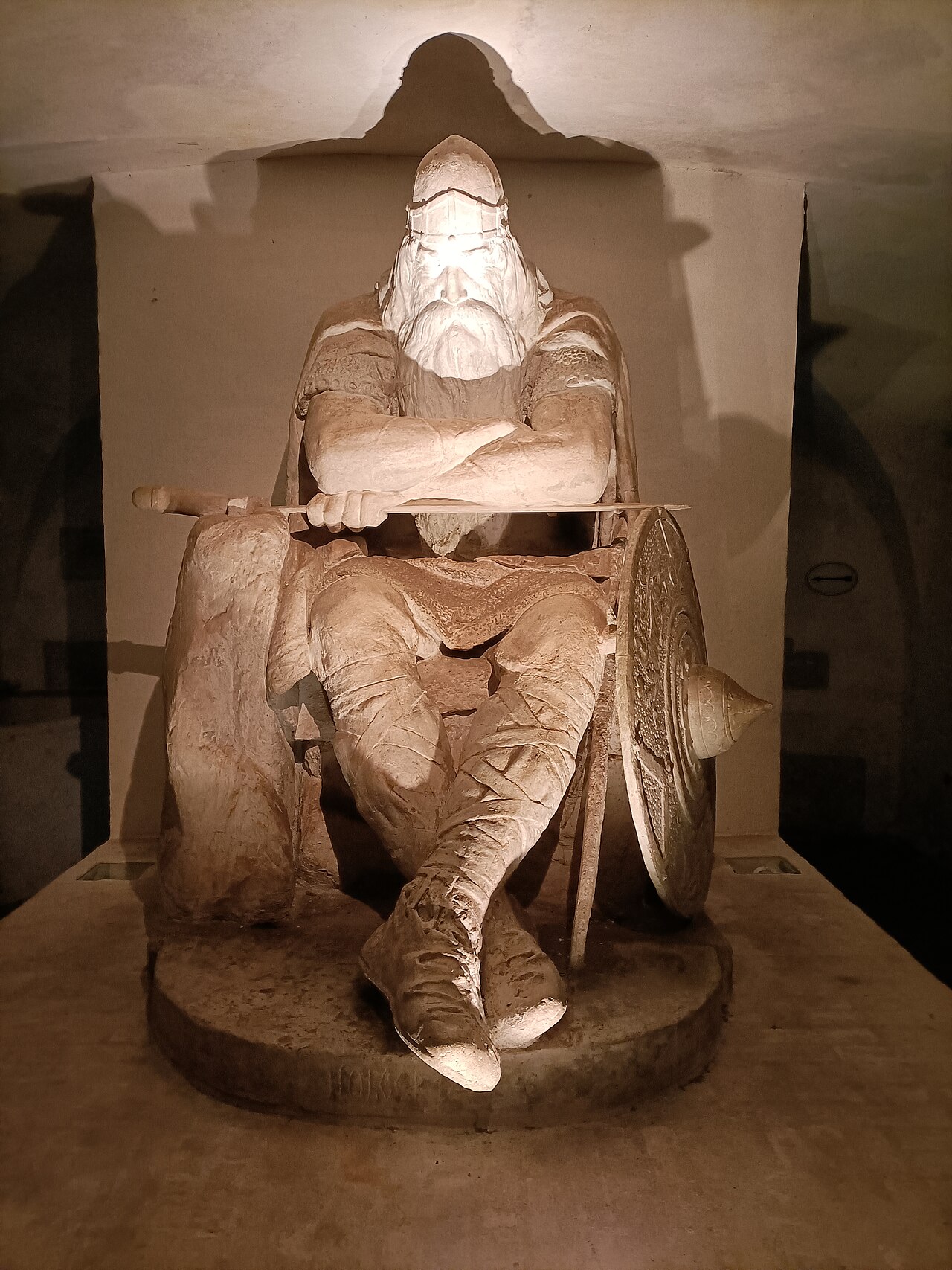
Down in the damp casemates beneath the castle sits Holger Danske — Ogier the Dane — asleep over his sword and shield, waiting, the legend says, to wake on the day Denmark is in mortal danger. The hero is far older than the castle; the brooding figure in the dark is not. It is a sculpture from 1907, recast in concrete in 1985 after the first plaster Holger rotted in the sea-air — a modern statue of an ancient dream, in the cellar of a castle built on a toll.
The toll itself ended in 1857, when the seafaring nations bought Denmark out of its turnstile and the Sound became free water. The ships stopped paying, and the castle's whole reason for being quietly dissolved. What was left was the building — and in 2000 the world put its name to it: Kronborg, a UNESCO World Heritage site, the fortress that taxed a sea and gave the stage a castle. It guards nothing now. It no longer needs to.
.jpg)