A castle to move a border
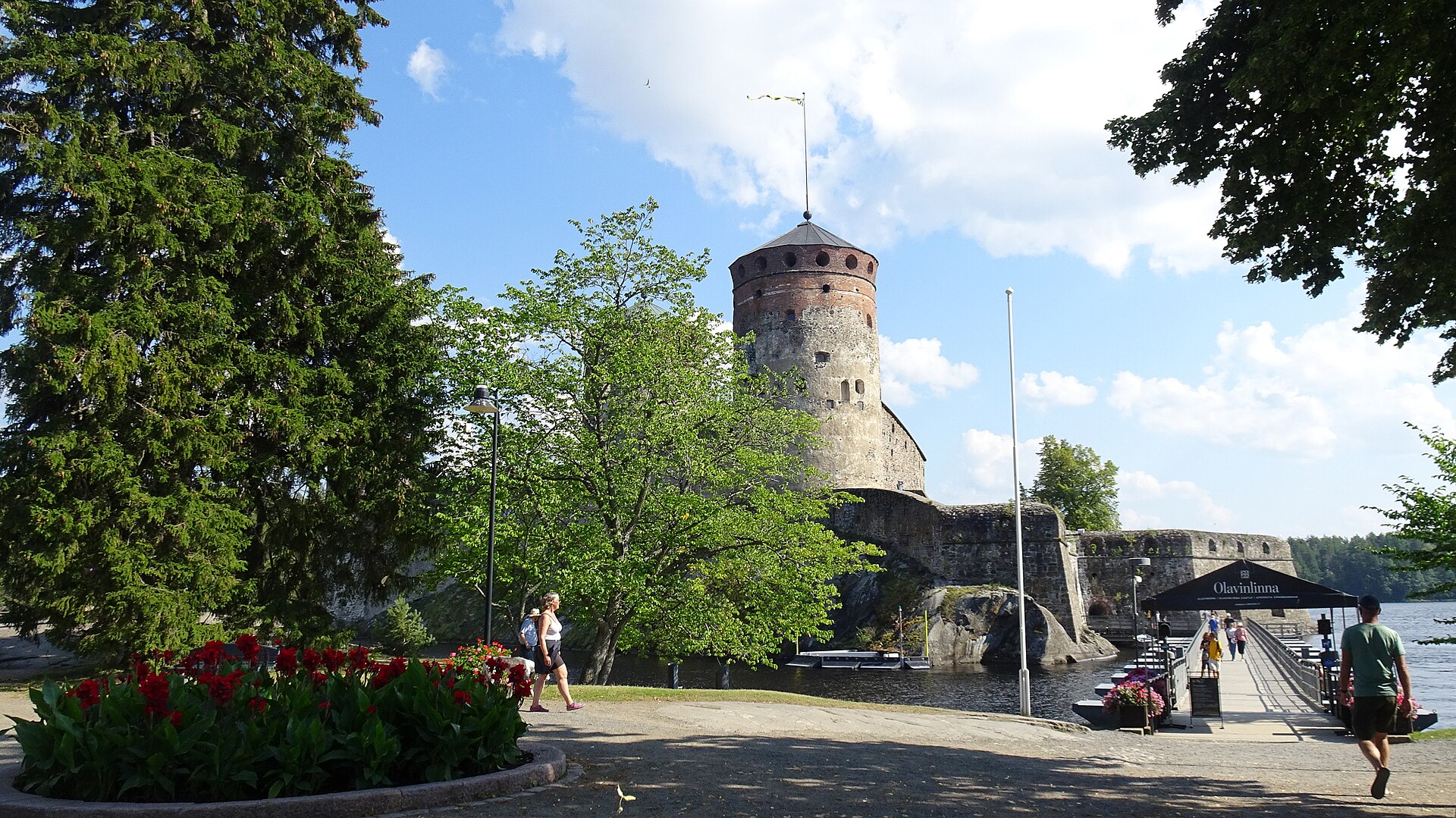
In 1475 a man named Erik Axelsson Tott raised a fortress where no fortress had any business being: on a bare rock in the Kyrönsalmi strait, between the lakes Haukivesi and Pihlajavesi, deep in the roadless lake-country of Savo. He was no minor frontier lord. A Dano-Swedish magnate, lord of Viborg, he had been Regent of Sweden itself a decade before — and he chose this spot for a reason that had nothing to do with defence and everything to do with ambition.
.jpg)
The old border between the Swedish realm and Novgorod had been drawn in 1323, and Savonian settlers had long since spilled across it onto ground the treaty called Russian. When Moscow swallowed Novgorod in the 1470s, that frontier was suddenly up for grabs. Tott planted his castle on the disputed side of the line — not to hold the border where it was, but to move it. Olavinlinna was, from its first stone, an act of eastward reach: a claim in masonry, staked in the wilderness against a rising empire.
Towers built for cannon
What Tott built was not a medieval castle in the old sense. The age of the high thin wall was ending — cannon could batter it down — and Olavinlinna was among the first fortresses in the whole Swedish realm designed from the ground up for the gun. Its towers are thick, low and round, built to mount artillery on their roofs and to shrug off the artillery of others. Tott knew he could not build such a thing with local hands; in a letter of 1477 he wrote of bringing master-builders from across the Baltic, most likely from Reval, carrying the newest Central-European science of fortification into the northern woods.
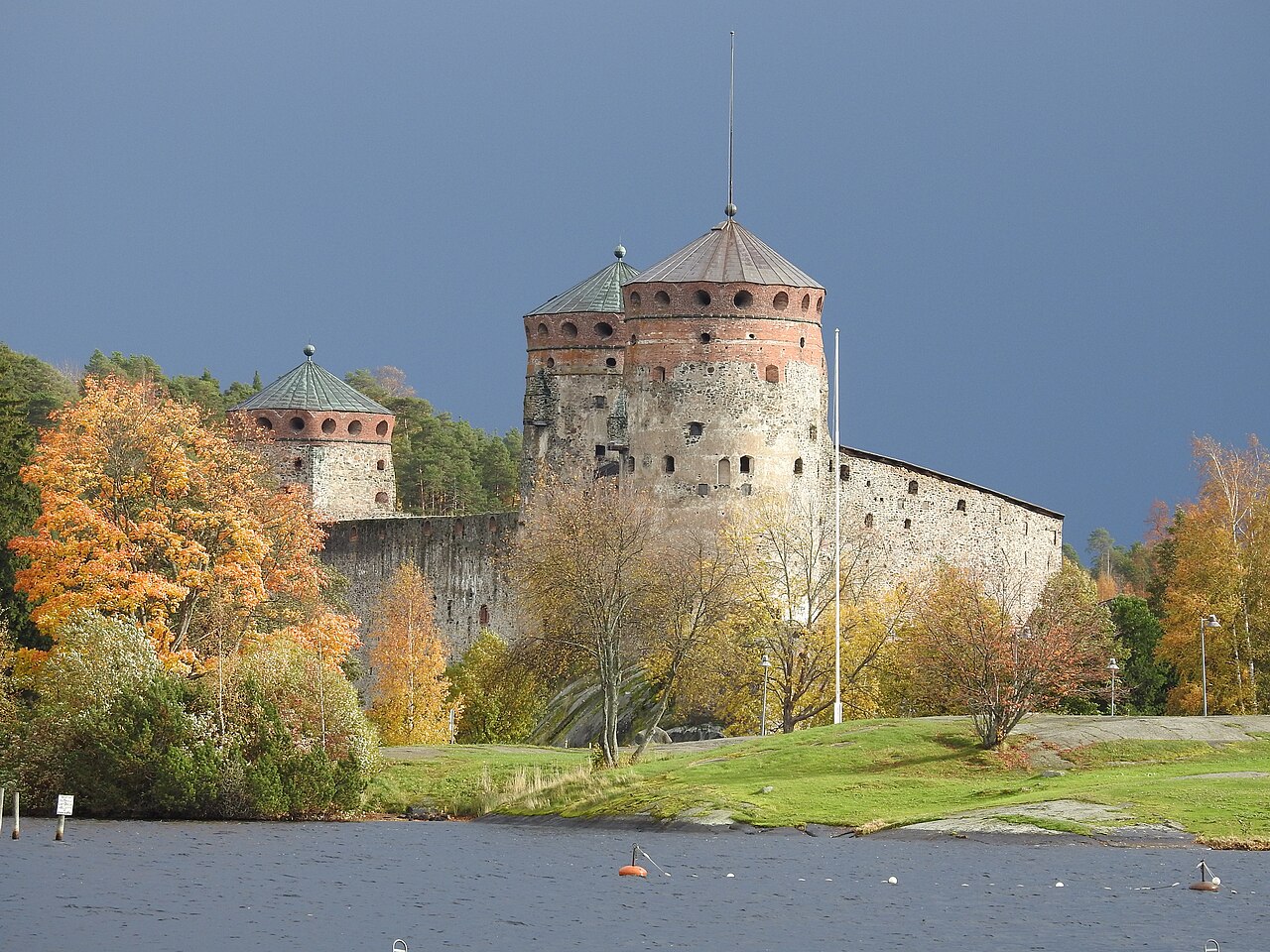
The main castle rose by about 1485, the encircling walls and two further round towers by around 1495 — and the design worked. Where it stands, the strait is the only way through, and the castle commands it utterly. For the next two centuries, army after army would come to test the walls Tott's foreign masters had raised, and for two hundred and forty years not one of them would get in.
The border that would not hold
The armies came almost at once. In the 1490s a Muscovite host besieged the new castle and failed; in the 1550s another came, and failed again; when war swept the lakes in the 1650s the town around the castle burned, but the walls held. Under the Vasa kings the fortress was strengthened further, a new tower raised in the 1560s, and Olavinlinna settled into its long career as the immovable anchor of the eastern frontier — the one point the border always ran up against and never past.
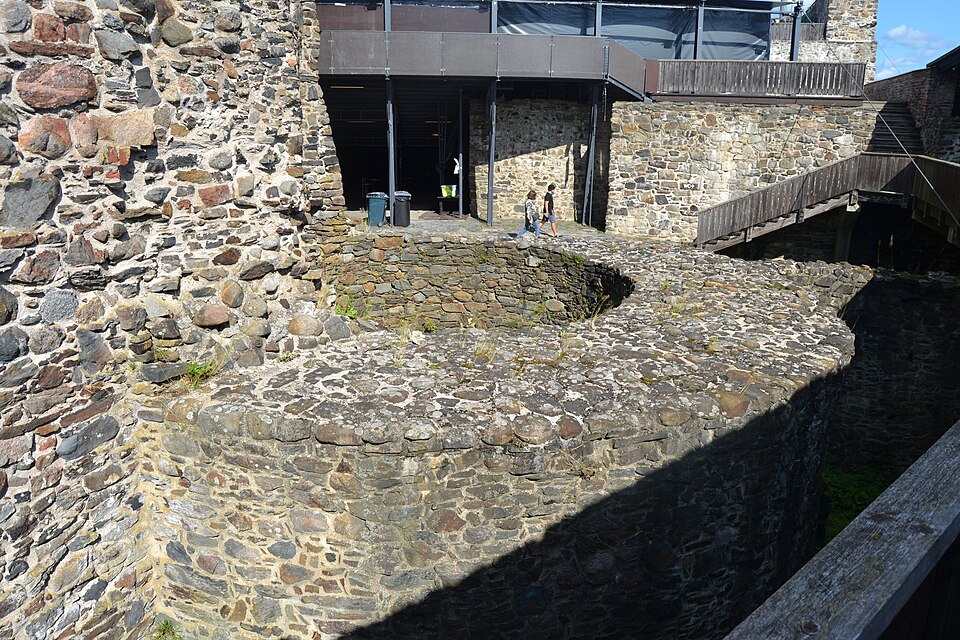
Then came the Great Northern War, and the reckoning the castle had put off for two centuries. In the summer of 1714 a Russian army finally forced it: after a hard siege, the garrison surrendered, and for the first time in its life Olavinlinna changed hands. The great St Erik's tower was cut down to its base. The castle that had turned away every army for two hundred and forty years had, at last, been taken — and worse was coming, though it would come not by storm but by treaty.
Ceded to the enemy it was built against
The Peace of Nystad handed Olavinlinna back to Sweden in 1721, a brief reprieve. It did not last. In the war of 1741 to 1743 the garrison surrendered again, and this time the map was redrawn for good: by the Treaty of Åbo in 1743, all the land east of the Kymi river — Olavinlinna among it — was ceded to Russia. The Swedish border-castle, the claim in masonry that had been planted to push the frontier east, now stood a full day's march inside the empire it had been built to keep out. This corner became known as Old Finland.
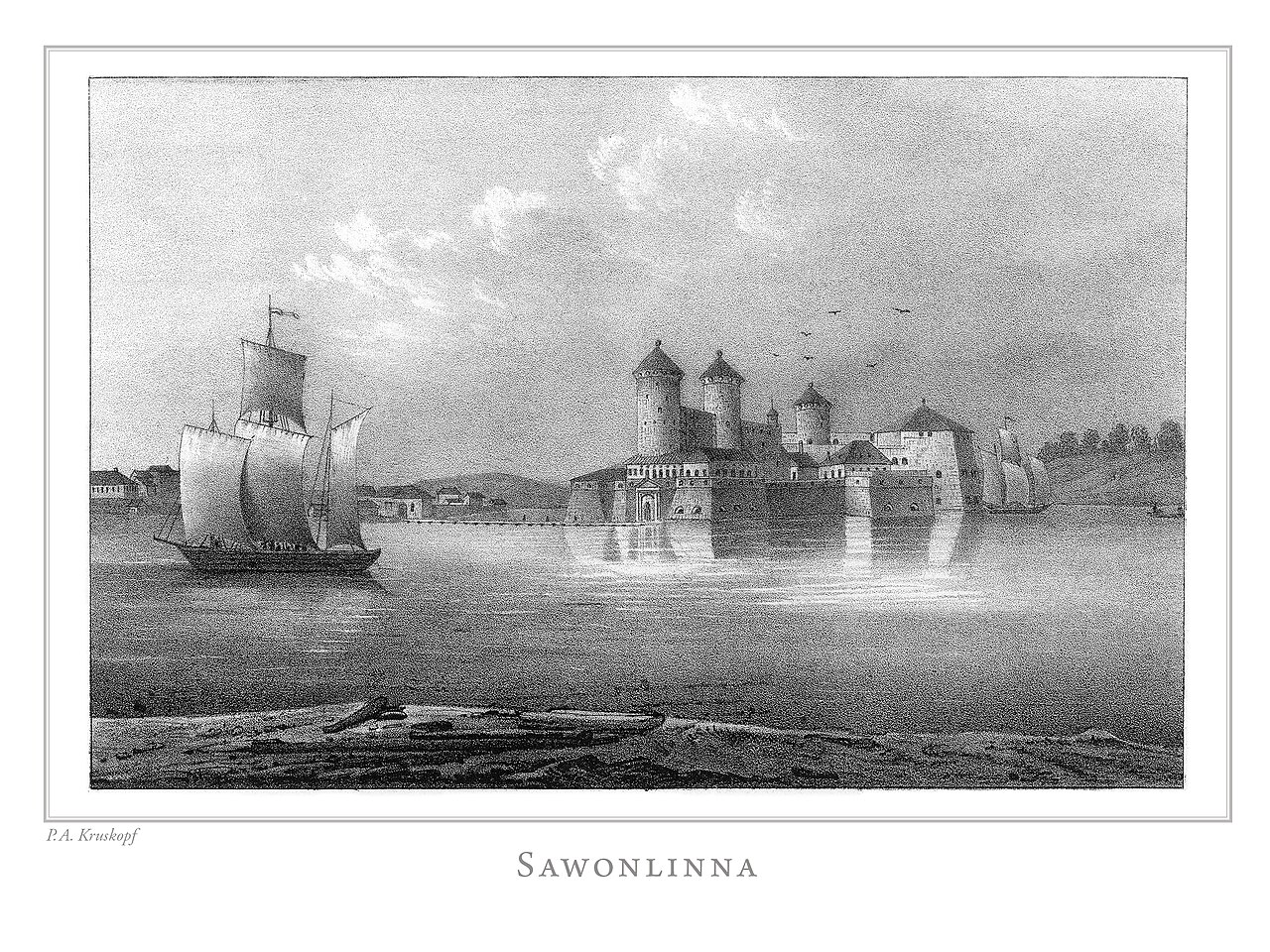
And then the strangest turn of all: Russia kept the castle in service, and improved it. The great general Alexander Suvorov oversaw its rearmament, wrapping the medieval walls in a modern system of earth-and-stone bastions and cutting military canals through the Saimaa lakes to move his fleets. Olavinlinna was modernised by the very power it had been raised against — refitted, at last, to point its guns the other way. (A powder-magazine blast wrecked one of the old towers in 1791; the castle gave as much to accident as to any enemy.)
When the border dissolved
The end of Olavinlinna's usefulness came, fittingly, when the border it had spent three centuries guarding simply ceased to exist. In the Finnish War of 1808 to 1809, Russia took the whole of the rest of Finland, and the frontier that had run past the castle was suddenly hundreds of miles away to the west. A fortress needs an enemy on the other side of the wall; Olavinlinna no longer had one. In 1812 Old Finland was rejoined to the rest of the country in the new Grand Duchy, healing the cut of 1743 — and the great castle, its whole purpose erased, was left with nothing to do.
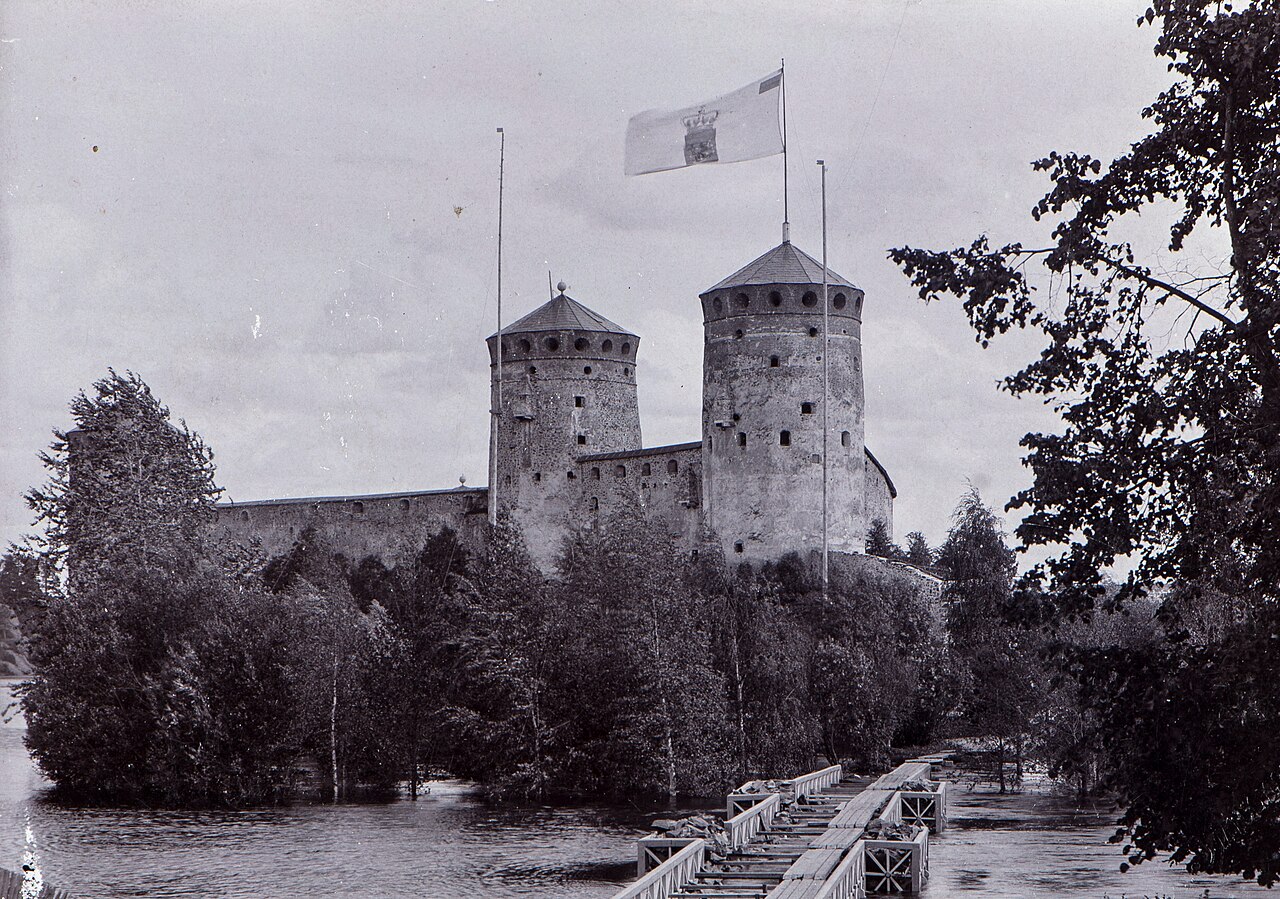
So it did what redundant fortresses do: it decayed. The garrison drained away, the halls became storerooms, part of it a prison, and then it was simply abandoned. Fires in 1868 and 1869 gutted what was left of the interiors — every original furnishing the castle had was lost — and by the later nineteenth century the northernmost great castle in the world was a picturesque ruin on a lake, quietly falling into the water it had once commanded.
The maiden and the ram
A castle this old and this remote grows legends the way its walls grow moss, and Olavinlinna has two famous ones. Both are folklore — the castle's own keepers say as much, that the tales 'are not quite true, but there might be a shred of truth in some of them' — and both are worth telling for what they are. The first is the immured maiden: a young woman, in the usual telling the lord's own daughter, walled up alive for treachery after she opened a gate by night to a man she loved on the wrong side of the war. From the spot, the story goes, a rowan tree grew, white-blossomed for her innocence and hung with berries as red as blood, weeping for her still. It is pure folklore — the same immured-maiden tale is told at half the old castles around the Baltic — and the rowan is long gone.
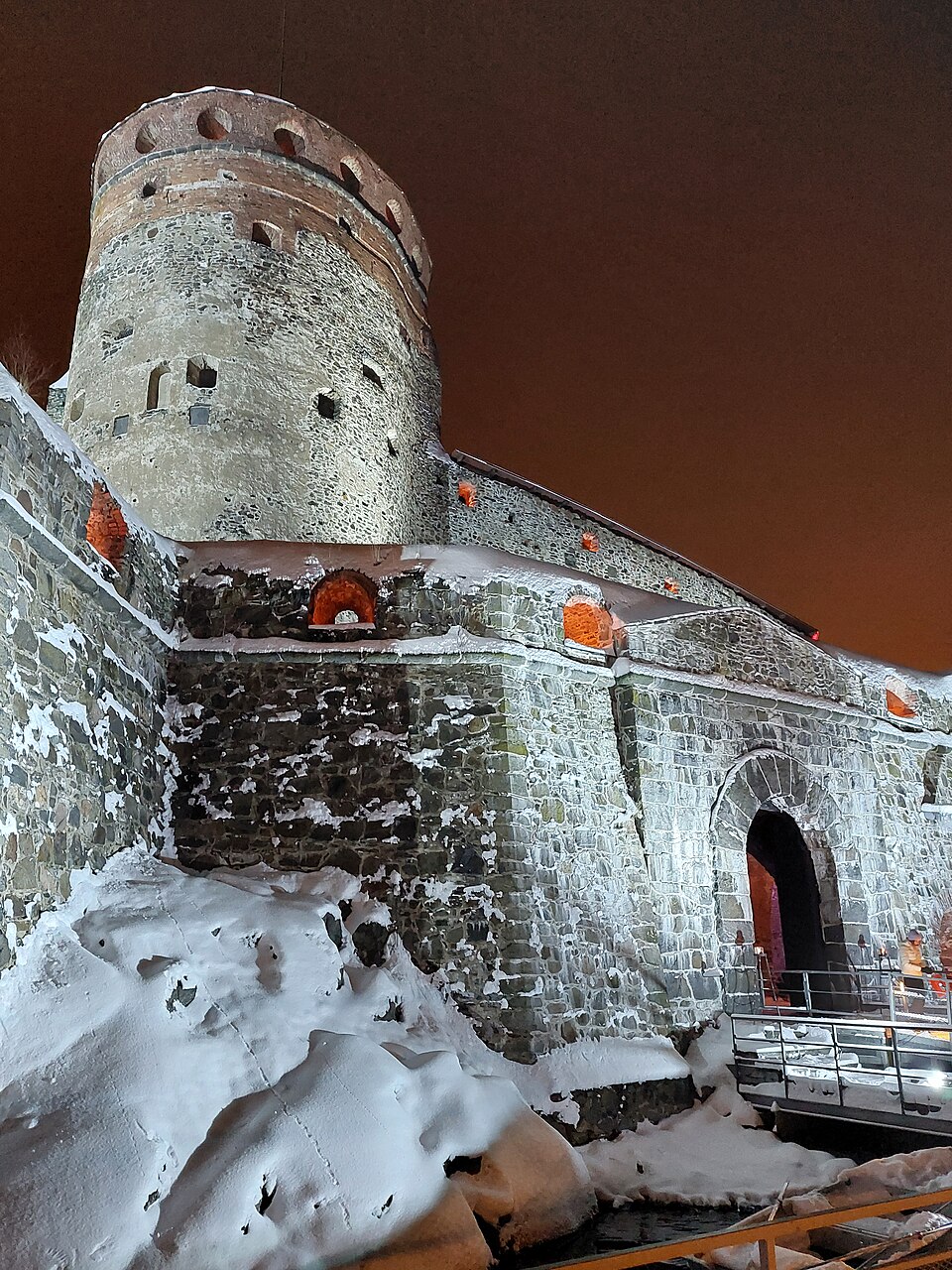
The second is the black ram. During a Russian siege, the tale runs, a black ram climbed onto the ramparts amid a storm, its horned silhouette lit by the burning tar on the walls, and the attackers took it for the Devil himself defending the castle and fled. That one is legend too — but it has a real root: the castle genuinely kept black rams, feasted on at St Olaf's Day, and the parish register of 1728 soberly records the last of them falling from the wall and drowning in the strait. A statue of the ram stands on an island nearby. One thing, though, should be corrected, because everyone gets it wrong: the ram is not on Savonlinna's coat of arms. The town's shield carries a three-towered castle and the bow of the province of Savo — no ram anywhere. The famous ram lives in the story, and in bronze, but never in heraldry.
The soprano who filled the courtyard
The castle was saved twice over. First by history: a national-romantic age fell in love with the ruin, marked its four-hundredth year in 1875 with speeches from the great men of the Finnish awakening, and set the long work of restoration going — a labour that culminated in a great campaign from 1961 to 1975 that gave Olavinlinna back the shape it wears today, the northernmost medieval stone castle still standing, and the best preserved of all the castles of the old Swedish realm.
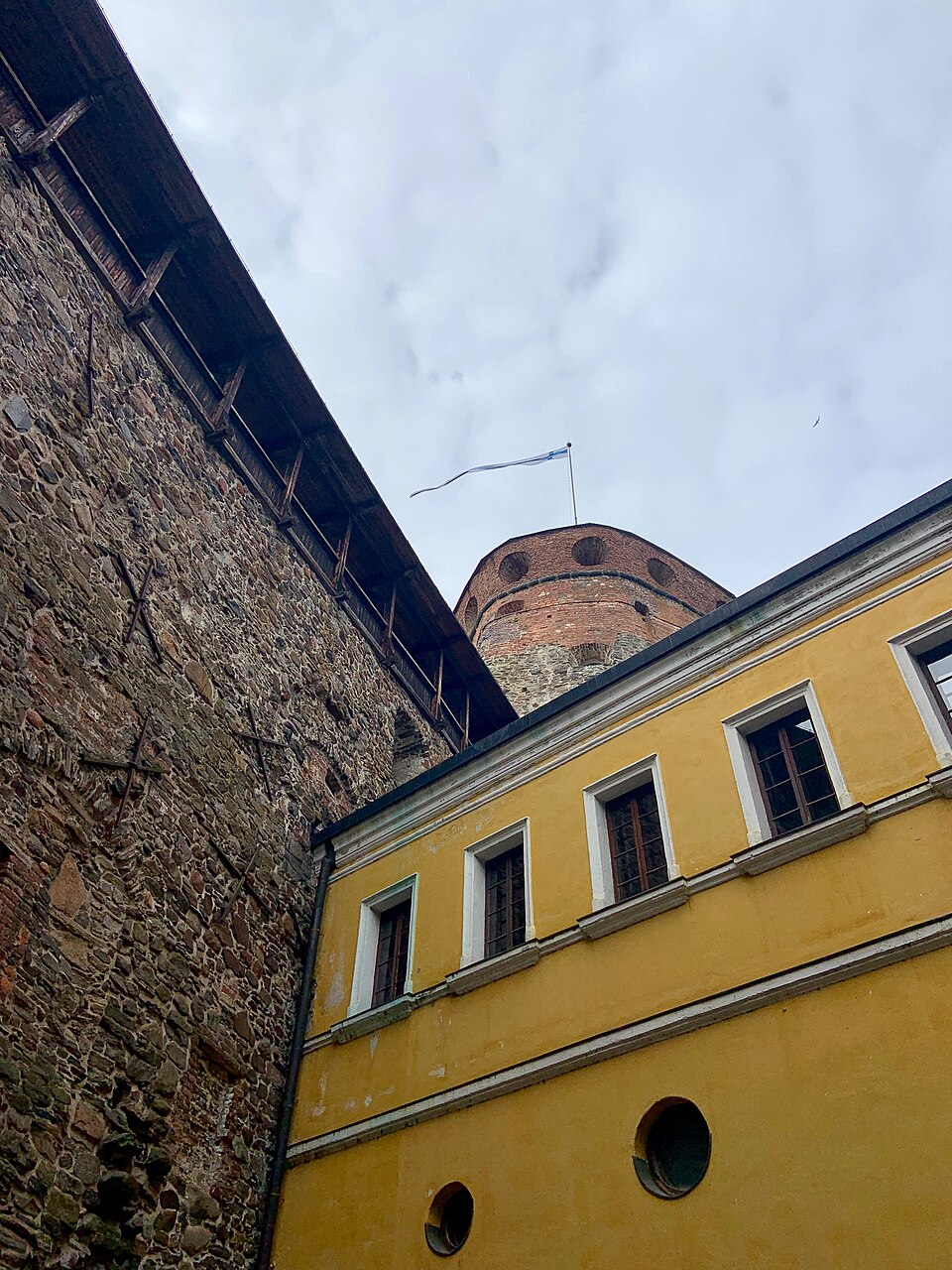
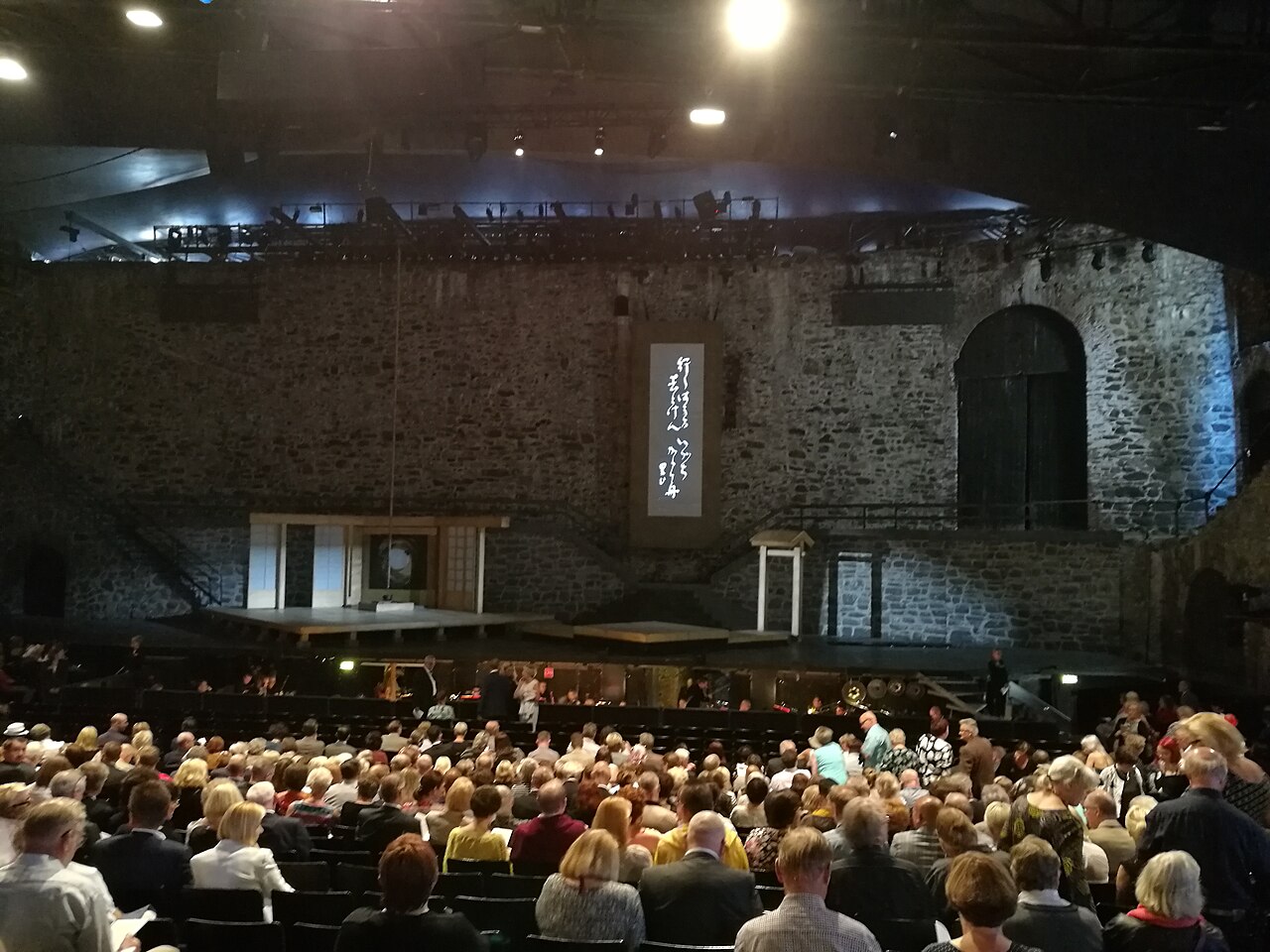
And then it was saved a second time, by music. In 1912 the Finnish soprano Aino Ackté — a star of the Paris Opéra and the Met, who had stood in this courtyard and seen a stage where others saw only stone — brought opera to Olavinlinna. She sang Marguerite in Gounod's Faust within these walls, and for a few summers the fortress rang with something it had never heard. War and revolution silenced it; save for a single revival in 1930, the courtyard stayed quiet for half a century. Then, in 1967, the Savonlinna Opera Festival was reborn with Beethoven's Fidelio before a packed courtyard and the President of Finland, and it never stopped. Every summer now, the walls that turned away armies for two hundred and forty years fill instead with voices. A castle built to guard a border that no longer exists has found a better thing to hold.