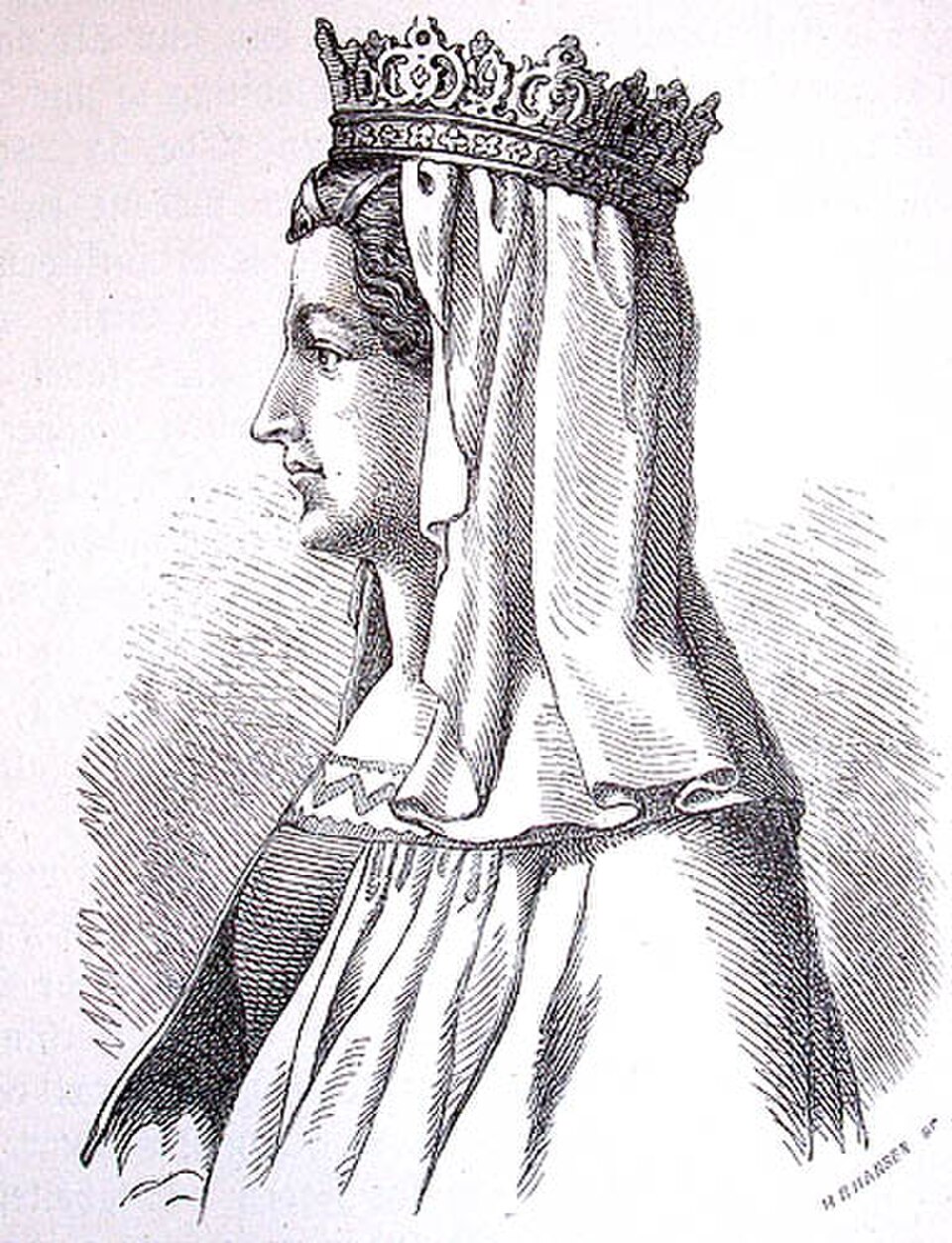
She is the only woman who ever ruled the whole of the North. Born a Danish princess and married off at ten, Margrete inherited Denmark and Norway through a chain of deaths, took Sweden by the sword, and gathered all three crowns into a single union — the Kalmar Union — which she governed from behind a boy-king's throne until the day she died. This is how a pawn became the player who held the North in one hand.
The child bride
She was born in 1353, a daughter of Valdemar IV — "Atterdag," the hard, cunning king who had clawed a half-dissolved Denmark back into one realm and squeezed a fortune out of Visby at the point of a sword. At ten she was a counter in his game: in 1363 he married her to Håkon VI of Norway, son of the Magnus who had once worn two crowns, to bind Denmark and Norway together through her.

She went north to her husband's kingdom, and in 1370, seventeen years old, she bore a son behind the walls of Akershus on the eastern frontier — Olav. A foreign queen-consort, a marriage arranged for someone else's strategy: no one's idea of a sovereign. But the board was about to clear, one death at a time.
The deaths that crowned her
Then the dying began, and each death pressed a kingdom into her hands. Her father died in 1375; she had her five-year-old son Olav elected king of Denmark and ruled in his name. Her husband Håkon died in 1380, and Norway fell to Olav too — two realms, one small boy, and his mother holding every rein.
Then, in 1387, Olav himself died — sixteen years old, without warning. Suddenly there was no one left for her to rule on behalf of. So the councils did the near-unthinkable for a woman of the age: within a week they named her Denmark's "fully empowered lady and master," and Norway swore the same the next winter. The regent had become the sovereign — Denmark hers by birth, Norway by marriage, and both now in her own name.
The third crown, by the sword
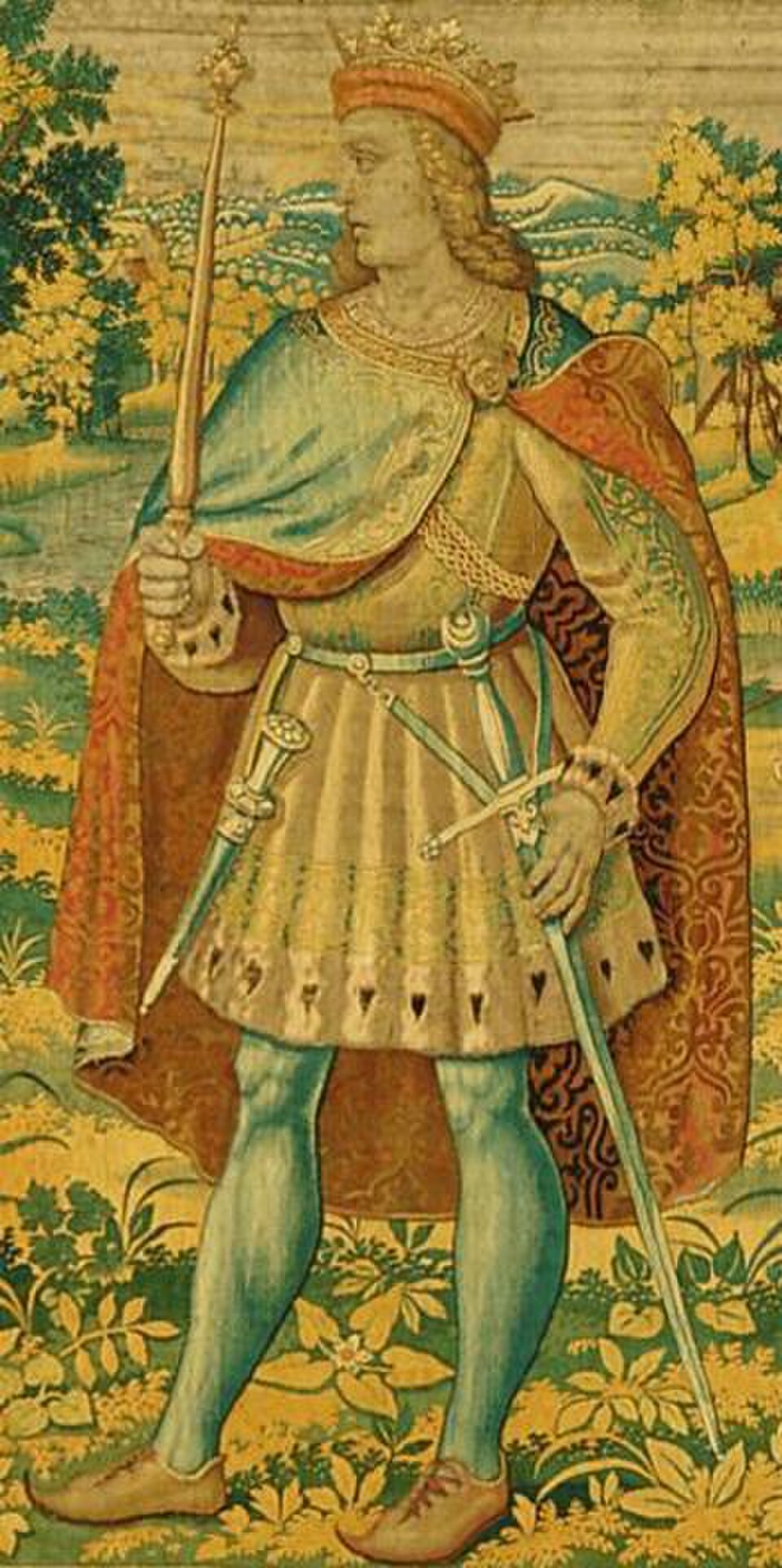
Two crowns had come to her by death; the third she would have to take. Sweden was straining under a German king, Albert of Mecklenburg — and the recent death of Bo Jonsson Grip, the mightiest subject the realm had ever produced, had left behind a colossal fortune the king grabbed for and the lords refused to surrender. Deadlocked, resentful, and done with their foreign king, the Swedish magnates looked across the border and sent for Margrete.
She came with an army. At Åsle, outside Falköping, in February 1389, she shattered Albert's German horsemen and took him captive, king and son both, and held him at Lindholmen Castle for nearly seven years. The chronicles savour what came next: Albert, who was said to have jeered at the woman ruler as "King Breechless" and sent her a whetstone to sharpen her needles, was now — by legend — dressed by her own hand in a fool's hood with a tail nineteen ells long. The battle is fact; the hood is a tale Scandinavia told itself afterward. Either way, the meaning was plain: three kingdoms now answered to one woman.
The masterstroke
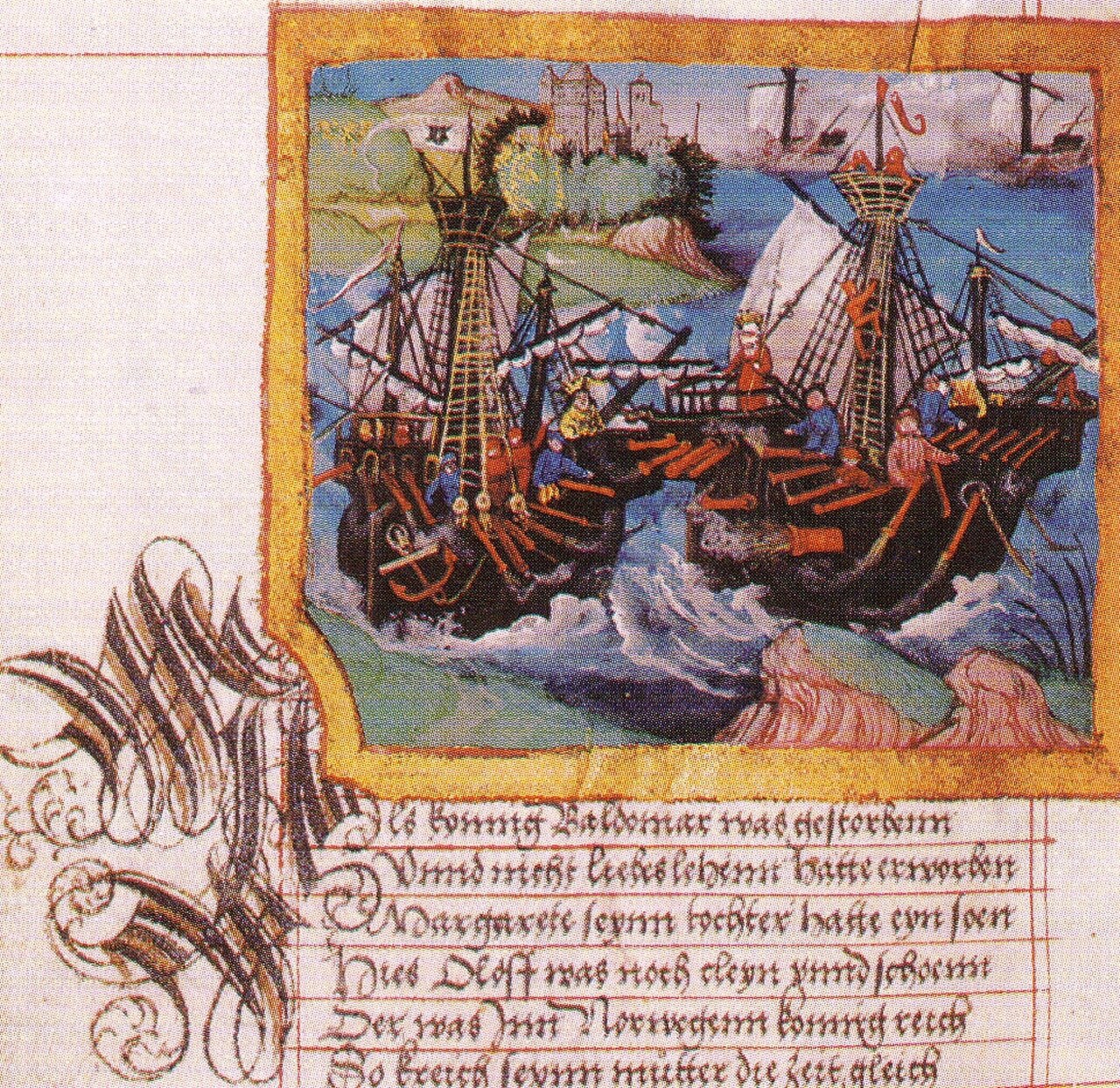
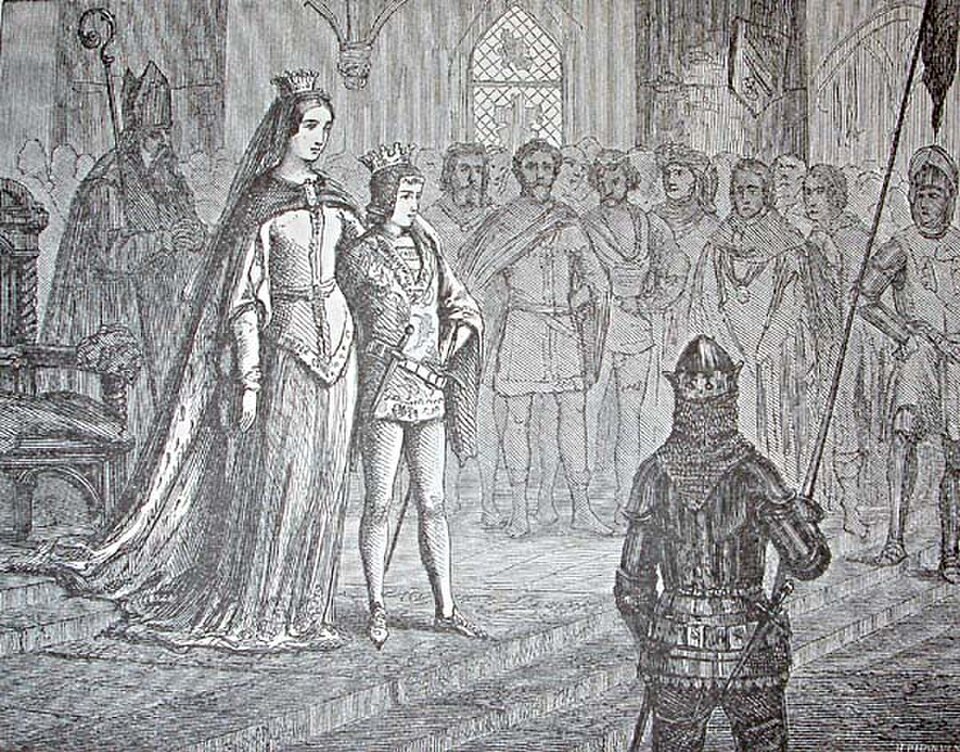
She held three kingdoms and had no heir — Olav was gone. So she made one. She adopted her sister's grandson, a boy from Pomerania, renamed him Erik, and had him acclaimed king in each of the three realms in turn. Then, in June 1397, she gathered the councils of Denmark, Norway and Sweden at the great fortress of Kalmar, and on Trinity Sunday had the boy crowned king of all three at once.
.JPG)
It was the high-water mark of the medieval North: for the first time, three crowns rested on a single head. The documents drawn up there — the famous union letter among them — were never fully sealed and ratified; the letter survives as a corrected draft on paper, short of the seals it lists, and historians still argue whether a true union was founded that day or only begun. But the fact on the ground brooked no argument: from the Arctic coast to the Baltic, one ruler. And though the crown sat on Erik's head, the hand on all three realms was hers.
The queen behind the crown
Erik wore the crown; Margrete ran the North. She clawed back crown lands the nobles had swallowed, reined in the great families and the Hanseatic towns that had bought their way into Swedish trade, left the highest offices empty so no rival could climb into them, and put the royal castles in the hands of men who answered to her alone. She ruled through letters and seals rather than battles — a paper empire, held in a tight fist.
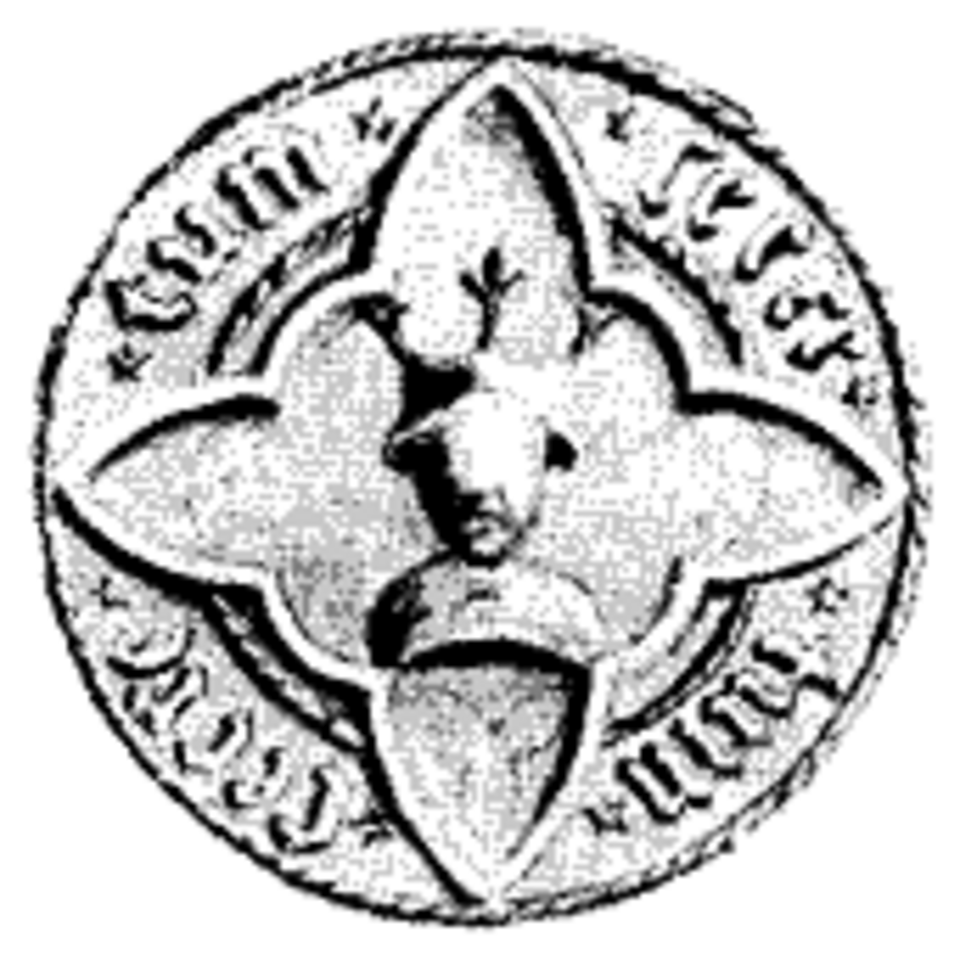
Her grip was tested in earnest only once. In 1402 a sick, ragged man surfaced in Prussia claiming to be her son Olav, come back from the dead, and even wrote to her as her child. She had him brought to Kalmar — where he could not so much as speak Danish. Exposed as a German commoner, he was burned at Lund. The dead stayed dead; the whispers that she had hastened Olav's own end stayed whispers; and the North stayed hers.
Death at sea, a union that outlived her
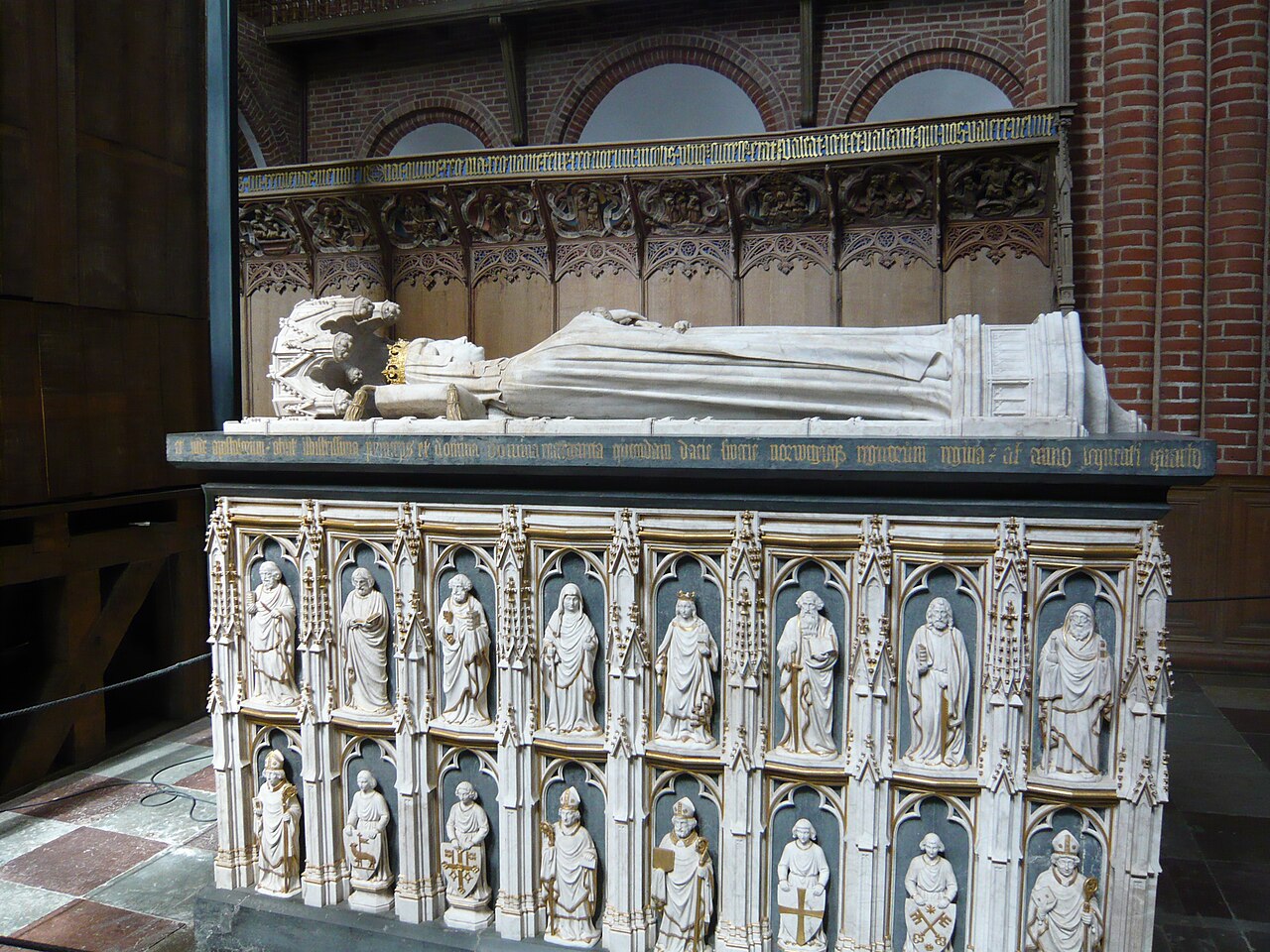
She died as she had lived — at work. In October 1412, aboard her ship in Flensburg harbour while pressing a long, grinding quarrel over the duchy of Schleswig, an illness, most likely the plague, took her. She had meant to lie at Sorø beside her father and her son; within the year her bishop moved her instead to Roskilde Cathedral, and a decade on, Erik raised over her the alabaster monument that still lies behind the high altar.
The union she had built outlasted her by more than a hundred years — three crowns held together, through strain and revolt, until a young Swedish nobleman named Gustav Vasa broke Sweden out of it in 1523. By then she had been dead for over a century, and still the thing she made was the frame every northern king had to govern within. A girl married off at ten had become the only woman ever to hold the whole of the North — and the architect of the union that defined it.