.jpg)
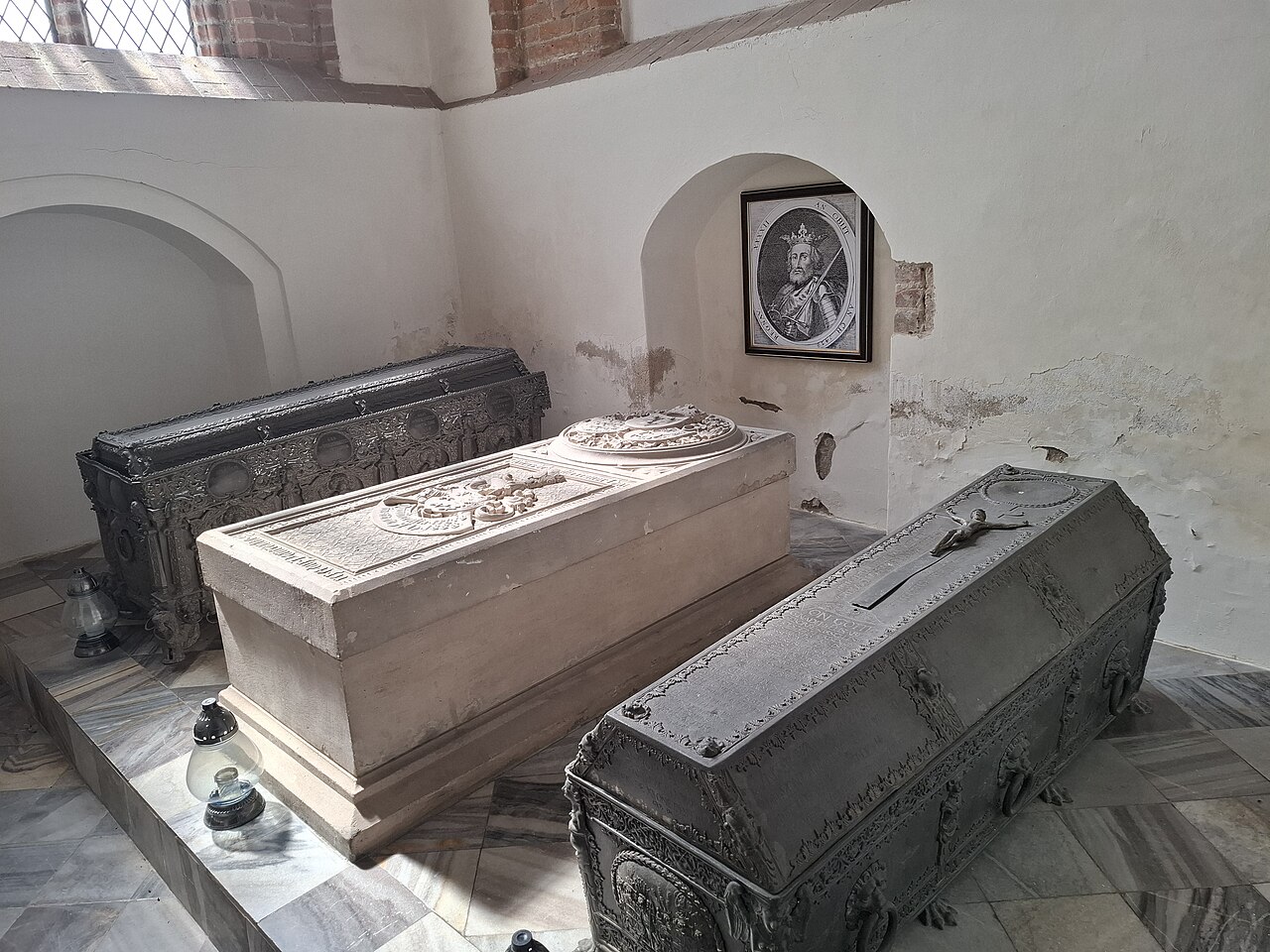
He is the only man ever crowned king of Denmark, Norway and Sweden at once — and he lived to lose all three. Margrete I plucked him from a small Pomeranian duchy, renamed him, and made him heir to the whole North; he inherited a union built by the cleverest ruler the age produced, and spent thirty years failing to hold it, until Denmark, Sweden and Norway each in turn cast him out. He ended his royal life as a sea-raider on a Baltic island, and died, decades later, in the very castle where he had been born. This is the story of the man who was given everything.
The boy given three crowns
He was born around 1382 in a small castle on the Pomeranian coast, a prince of the Griffin dukes, and his name was Bogislav. He might have lived and died an obscure German duke — except that his great-aunt was Margrete I, who, after her own son died, needed an heir. She sent for the boy, gave him a Nordic name — Erik — and set about making him king of the North.
It worked, on paper, beyond anything his birth could have promised. Hailed king in Norway at six, given the homage of Denmark and Sweden, and in 1397, at the great fortress of Kalmar, crowned king of all three realms at once — the founding act of the union that would bear that town's name. But the crown sat on a boy; the power stayed with the woman who had made him. For the first fifteen years of his reign, Erik was king of the North in name, and Margrete ruled it in fact.
The king in his own right
Margrete died in 1412, and at last the king was the ruler. And he had a vision: a single strong monarchy over all three realms, hereditary, answerable to the crown rather than to the councils of nobles — the union made real and permanent. He was no fool and no idler, whatever his enemies later said; contemporaries found him able, energetic and quick-tempered, a man who knew exactly what he wanted.
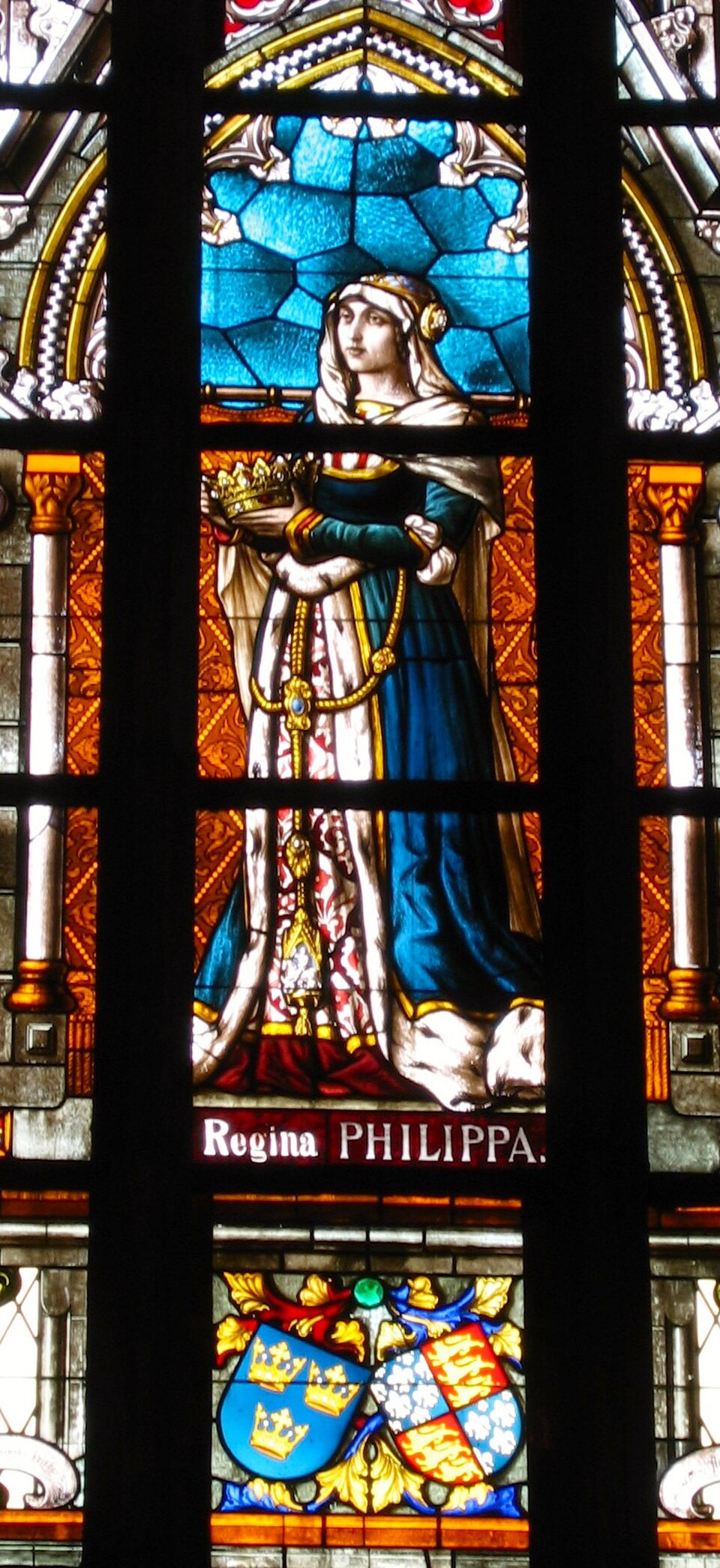
He did not rule alone. In 1406 he had married Philippa of England, daughter of Henry IV, and she proved one of his great assets: he trusted her with the regency of all three kingdoms while he travelled, and in 1428, with Erik away, Philippa personally directed the defence of Copenhagen against an enemy fleet. She was capable, loyal, and — when she died in 1430, childless — irreplaceable. After her, Erik had no heir of his body and, increasingly, no one to steady him.
The wars that bled him
What undid him was not idleness but a war he could not win and would not drop. For more than twenty years Erik fought the Counts of Holstein for the duchy of Schleswig — the one cause Margrete had counselled him to settle by negotiation, and the one he chose to settle by the sword. He won nothing, and lost the gains she had already made. To pay for it he leaned on the Sound Toll he had founded in 1429 at the castle of Krogen — the future Kronborg — squeezing the passing ships of the Hanseatic League, who promptly joined his enemies.
It was Philippa who held Copenhagen when the Hanseatic fleet came in 1428; but the war ground on until 1435, when the Peace of Vordingborg handed the Hansards their toll-exemption back and gave Schleswig to Holstein outright. Two decades of war, and Denmark was poorer and smaller for it. The union's strongest realm had been bled to pay for a quarrel it never wanted.

Engelbrekt's revolt
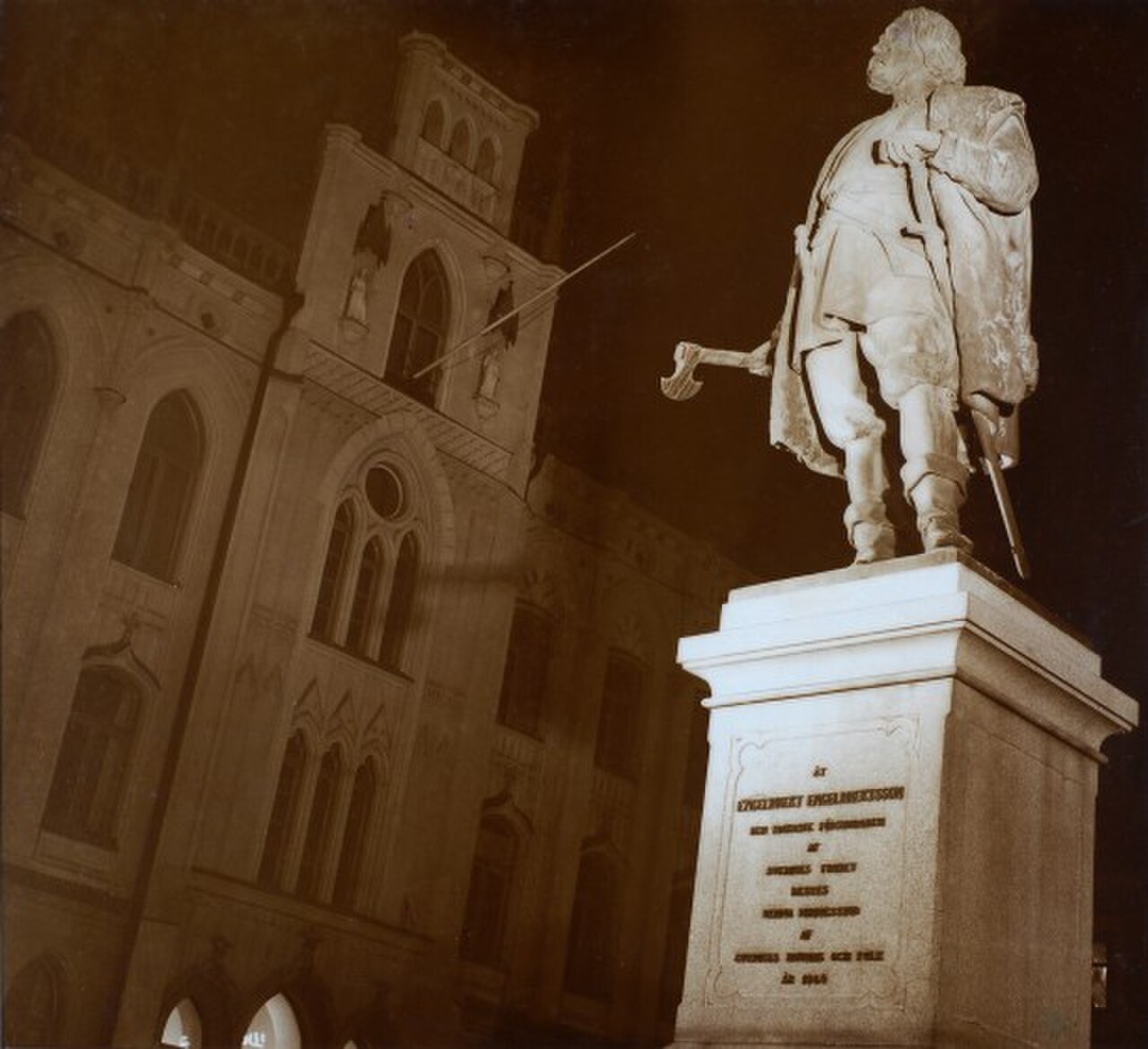
The war's bill came due first in Sweden. The realm's wealth was iron, and iron needed export markets — markets the Hanseatic war had strangled, even as Erik's Danish bailiffs kept the taxes coming and, some of them, lined their own pockets. In 1434 the Bergslagen mining country rose behind a local ironmaster, Engelbrekt Engelbrektsson, and the revolt swept the land: castles burned, bailiffs fled, and at Arboga in 1435 an assembly of the estates — remembered as Sweden's first Riksdag — named Engelbrekt captain of the realm.
It was the beginning of the end of Erik's grip on Sweden. Engelbrekt was murdered in 1436, but the door he had opened did not close: from then on the Swedish council, not the absent king, ran Sweden. Erik had wanted a strong hereditary monarchy; what he got was the rise of the very councils he had tried to bypass — and they had learned they could do without him.
The triple deposition
He had been handed three crowns; now they came off, one by one. When the Danish council refused to accept his Pomeranian kinsman as his heir — they wanted no more foreign Griffins on the throne — Erik withdrew in anger to the island of Gotland and simply stopped governing. The councils took him at his word. In 1439 Denmark and Sweden deposed him; they offered the union to his nephew, Christopher of Bavaria; and in 1442 Norway, which had held out longest, let him go too.
.svg)
They called him lazy, foreign, a king who had abandoned his post — the verdict of the men who had taken his crowns, and it has clung to him ever since. The truer story is harder on everyone: a union built for one extraordinary ruler, handed to an ordinary stubborn one, cracking along every fault that Margrete's brilliance had papered over — the resentment of Swedes at Danish rule, the draining weight of the Holstein wars, the councils' hunger to govern themselves. Even the name history gave him, "of Pomerania," was a way of saying he had never truly belonged.
The pirate king and the road home
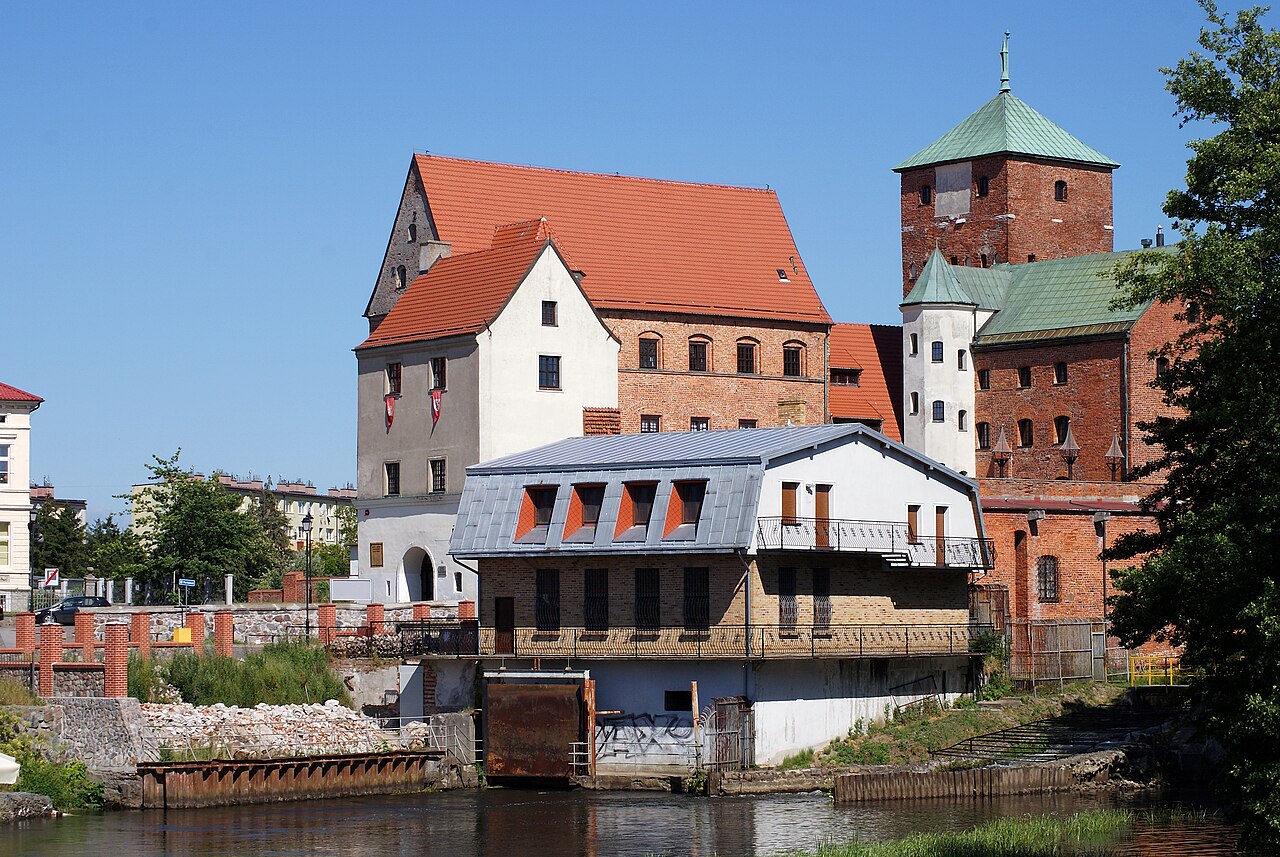
He did not go quietly. From the great fortress of Visborg on Gotland, the deposed king of three realms spent the better part of a decade doing the one thing he still could: preying on the shipping of the Baltic — the same sea-lanes his Sound Toll had once taxed. His enemies called him a pirate, and in the plain sense he was; but it was also a stranded sovereign waging the only war left to him, from the last rock he held. For ten years no one could prise him off it.
.jpg)
In 1449 he cut a last deal — Gotland to the Danish crown in exchange for safe passage home — and sailed back to the little Pomeranian duchy he had come from, to rule the scrap of land called Rügenwalde as a minor duke. He died there in 1459, in the castle where he had been born, having outlived his queen, his union-partner Margrete, and very nearly the meaning of his own name. The union itself, cracked but standing, would limp on another sixty years, until a Swede named Gustav Vasa broke it for good in 1523. Erik of Pomerania had been given the whole of the North, and kept only the room in which he was born.