He inherited nothing — not a throne, not a treasury, not even a country. When Valdemar was a boy his father, Christopher II, died a bankrupt and deposed king, and for eight years Denmark had no king at all: the realm had been pawned, province by province, to the German counts who had lent it money. Valdemar spent his reign buying it back. Over thirty-five years he redeemed a whole kingdom castle by castle, out of taxes, war and hard cash, and made himself again a real king of the Danes — which is why history remembers him as Atterdag, the day that dawns again.
But the same restless ambition that rebuilt Denmark broke itself on the Baltic. In 1361 he stormed the island of Gotland and its rich town of Visby, and in doing so turned the Hanseatic League, at the height of its power, into an implacable enemy — a war that ended by mortgaging to foreign merchants the very crown he had spent his life redeeming. He died in 1375 with no surviving son, leaving the realm to a ten-year-old grandson and, behind him, a daughter. That daughter was Margrete I, and she would take the kingdom he restored and build from it something he never imagined: a union of the whole North.
The boy who inherited nothing
Valdemar was born around 1320, the youngest son of a doomed king. His father, Christopher II, was the Danish king who had been forced to sign away his own royal power to the nobles, then deposed, restored, and finally driven out of the country; he died in 1332 leaving a crown worth nothing. The boy grew up a near-penniless exile at the imperial court in Germany — a prince with a name and a claim, and no land at all.
For eight years after his father's death, from 1332 to 1340, Denmark had no king. It had been taken apart and pawned, province by province, to the German counts who had financed its wars — above all to Gerhard III of Holstein, whom North Jutland called simply the Bald Count. Jutland and Funen alone had been mortgaged for a sum first reckoned at a hundred thousand marks of silver; Scania had been sold outright to the king of Sweden. Denmark, in any real sense, had ceased to exist: it was a bundle of debts run by foreign lords. This was the inheritance the exiled boy was waiting to claim.
A count's head at Randers
The lock was broken with murder. On the night of the first of April 1340 a Danish squire named Niels Ebbesen and a band of followers slipped into the town of Randers, forced their way into the Bald Count's lodging, and cut off his head. Gerhard had a whole army in Jutland; it did not matter. With the count dead, the German grip on Denmark suddenly loosened, and the exiled prince was brought home. (The vivid particulars the ballads love — forty-seven men, a drum beaten in the dark, a bridge sabotaged behind them as they fled — are tradition; the killing itself is fact.)
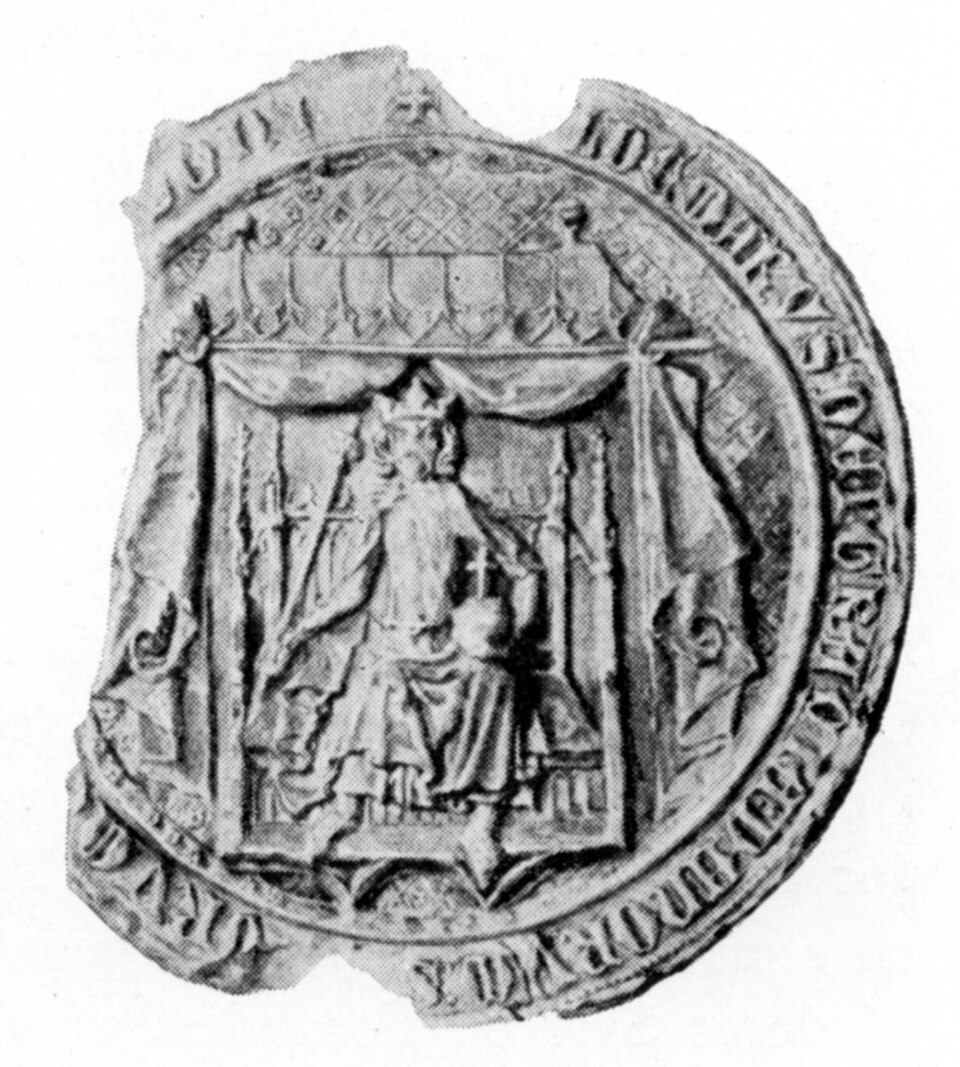
On midsummer day, the twenty-fourth of June 1340, Valdemar was proclaimed king at the assembly of Viborg. One detail tells how far things had shifted: unlike his father, he was not made to sign away his royal power as the price of the crown. The same year he married Helvig of Schleswig, and her dowry was not money but land — a claim on the northern quarter of Jutland, the first real ground the landless king could stand on. From it, he began to buy his kingdom back.
A kingdom bought back castle by castle
What followed was not a blitz but a grind that lasted the rest of his life — a reconquest done as much with a ledger as with a sword. Valdemar redeemed the pawned realm the only way it could be done: borrowing a fortress here, besieging one there, paying off a mortgage when he could raise the cash, and raising it however he could. In 1346 he sold off the whole Duchy of Estonia — Denmark's crusader-conquest on the far Baltic shore — to the Teutonic Order, liquidating the empire's edge to save its core. Piece by piece Zealand, Funen and Jutland came back into his hand.

The richest prize, Scania, came in 1360 — and not, whatever the easy telling says, simply bought back. Scania had been sold to Sweden thirty years before; Valdemar took it by invasion, marching in and besieging Helsingborg until its garrison gave up the province's key. With Scania and its herring-markets in hand, the man who had inherited nothing was again a real king of the Danes. It is why history calls him Atterdag — usually read as the Danish for "day again," the dawn of a realm risen from the dark. (The familiar reading is a gloss from around 1600, and scholars still argue the name: some hear in it not a sunrise at all but a weary Low-German catchphrase — "one of these days it will get better.")
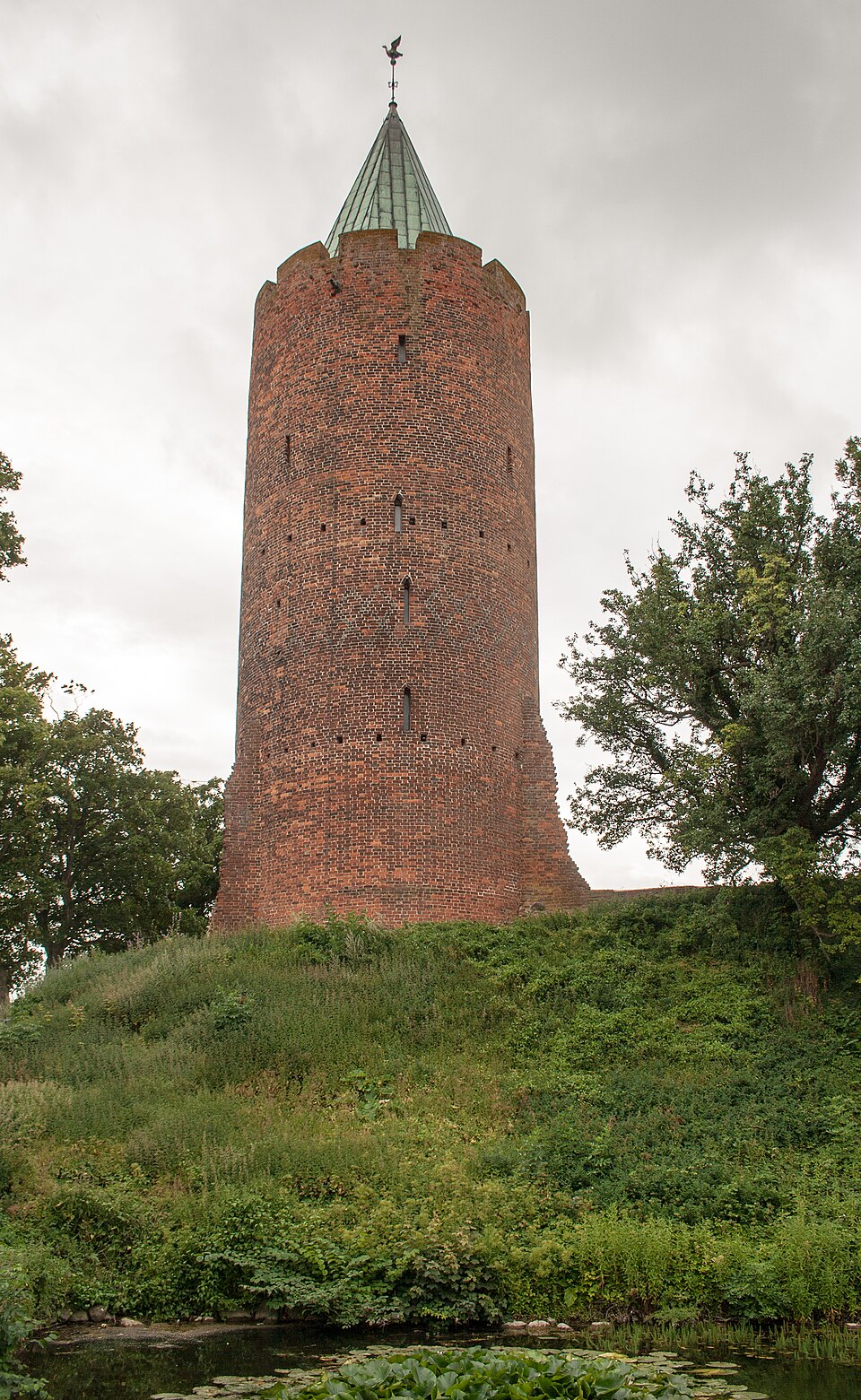
He made his seat at Vordingborg on Zealand, the old fortress of his dynasty, and rebuilt it into the largest stronghold in Denmark — a wall eight hundred metres round with nine towers. Only one still stands: the Goose Tower, Gåsetårnet, twenty-six metres of brick. It became the town's symbol, and in 1808 the first protected historic monument in all of Denmark. Its gilded goose comes from a good story — that when seventy-seven Hanseatic towns declared war on him in 1367, Valdemar set a goose on the spire and said he feared them no more than seventy-seven squawking geese. It is only a story; the goose up there now was first placed in 1871. But the war the story hangs on was real, and it was coming.
The turn to the Baltic
Having rebuilt Denmark on the land, Valdemar turned to where the real money of the North was made: the Baltic sea-trade, the herring-markets of Scania, and the island of Gotland with its rich Hanseatic town of Visby. In the summer of 1361 he crossed with a professional army, crushed the Gotlandic country levy in a bloody afternoon outside Visby's wall, and took the island; he added "King of the Goths" to his titles and carried off a ransom. What that afternoon cost, and who paid it, belongs to the story of Visby itself, where the field of the dead still carries his name on its memorial cross.
.jpg)
It was the one victory that undid him. Striking a Hanseatic town at the height of the League's power did not go unanswered — and the war it started would, in the end, tear down much of what his whole reign had built. The island he kept; the bill came due elsewhere.
The bill the Hansa sent
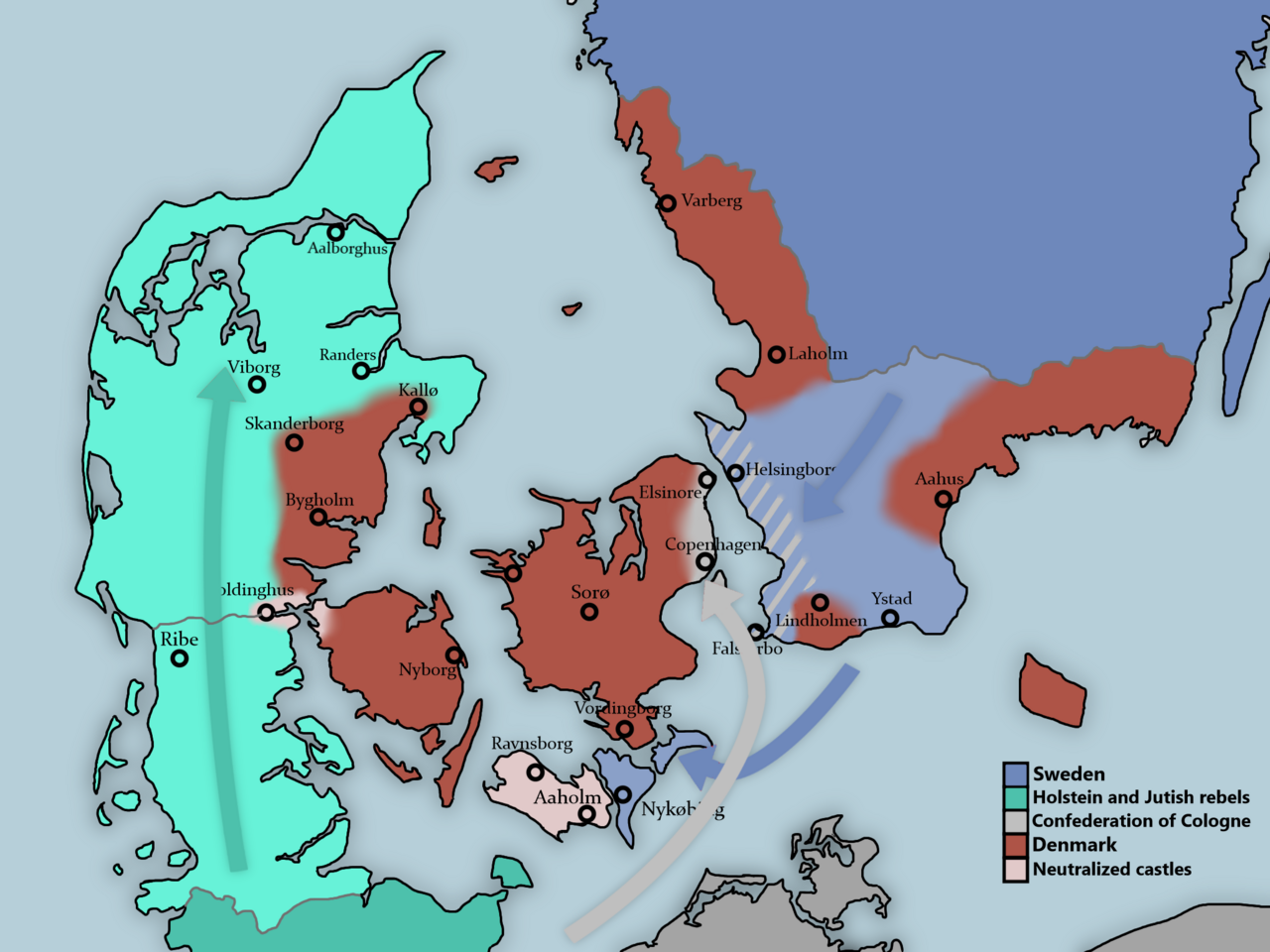
The Hanseatic League struck back, and at first Valdemar won: when a Lübeck fleet besieged Helsingborg in 1362 he shattered it, and its admiral was executed at home for the failure. But burning merchants' privileges is not the same as beating merchants. In 1367 the Hansa did what it rarely did — it united. Wendish, Prussian and Dutch towns swore the Confederation of Cologne against him, allied with Sweden and his own disaffected nobles, and in 1368 they stormed Copenhagen and overran Scania's castles. On the eve of the assault Valdemar left the country, entrusting the realm to his marshal and spending three years abroad making trouble for the League from the rear.
The reckoning was the Peace of Stralsund, sealed in 1370 while the king was still away. It is remembered as the peak of Hanseatic power. The League won free trade across the whole Baltic, tax relief and a large share of Scania's wealth, and four Scanian castles to hold for fifteen years; it even secured a say in who could be chosen king of Denmark — a right of consent over the crown itself. (In practice the succession was settled by bargaining, not by Hanseatic decree, and this right of consent was never an operative veto over who became king; but that a league of merchant towns could put such a clause on paper measured how far the balance had tipped.) The man who had spent his life redeeming a mortgaged kingdom had, for one Baltic island, mortgaged its sovereignty to the merchants of the sea.
The dynasty on a knife's edge
For all he rebuilt, Valdemar's line was one death from ending, and much of the strain was of his own making. His marriage to Helvig soured badly; by the 1350s he had shut her up in the castle of Søborg, and it was there, in her father-in-law's fortress-gaol, that their youngest child was born in 1353 — a daughter, Margrete. Of his six children most died young. His designated heir, Christopher, was struck by a stone in a sea-battle against the Hansa in 1362 and died of it the next year, and with him the male line that was to carry the crown.
So everything came, in the end, to rest on the daughter born in a prison. Valdemar had married her off at ten, in that same year 1363, to Haakon VI of Norway — a match he engineered to bind Denmark and Norway together and press his ambitions toward Sweden. He can have had no idea what he was arranging. The child bride would outlive them all, and the alliance sealed to serve his schemes would become the frame of a united North.
The day that dawned after him
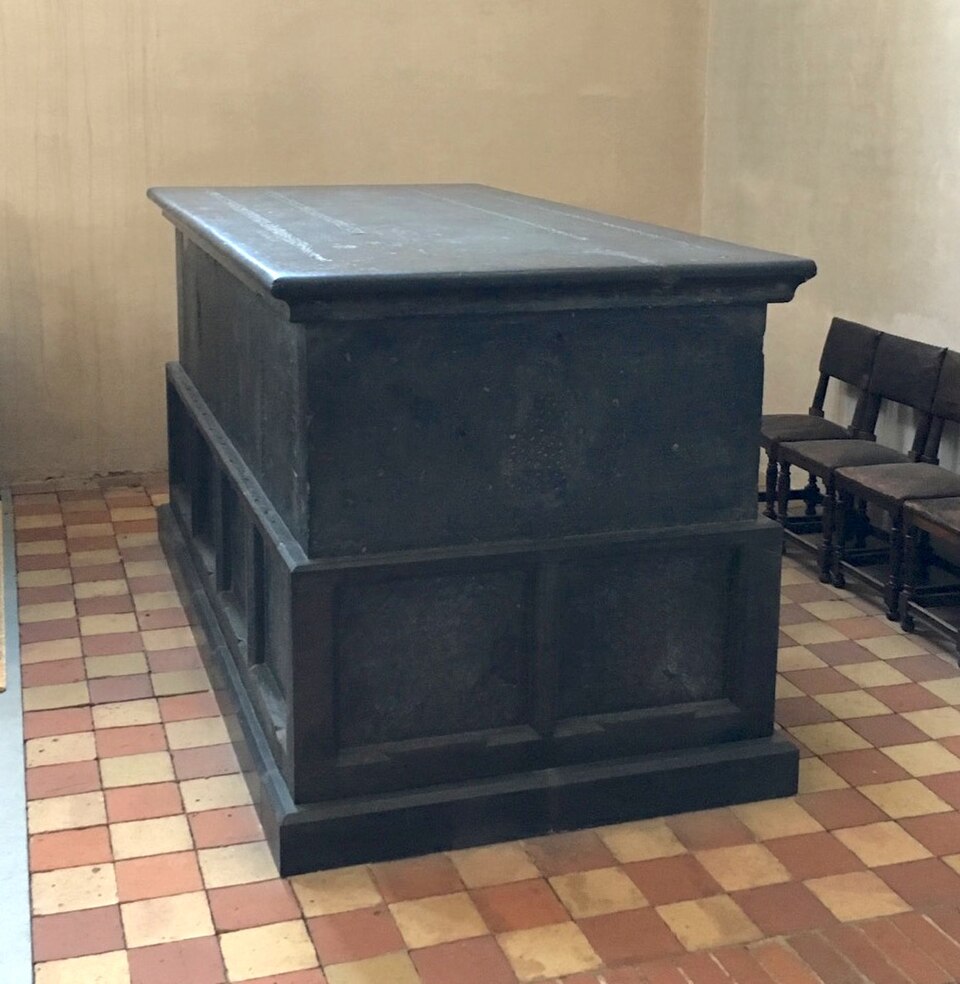
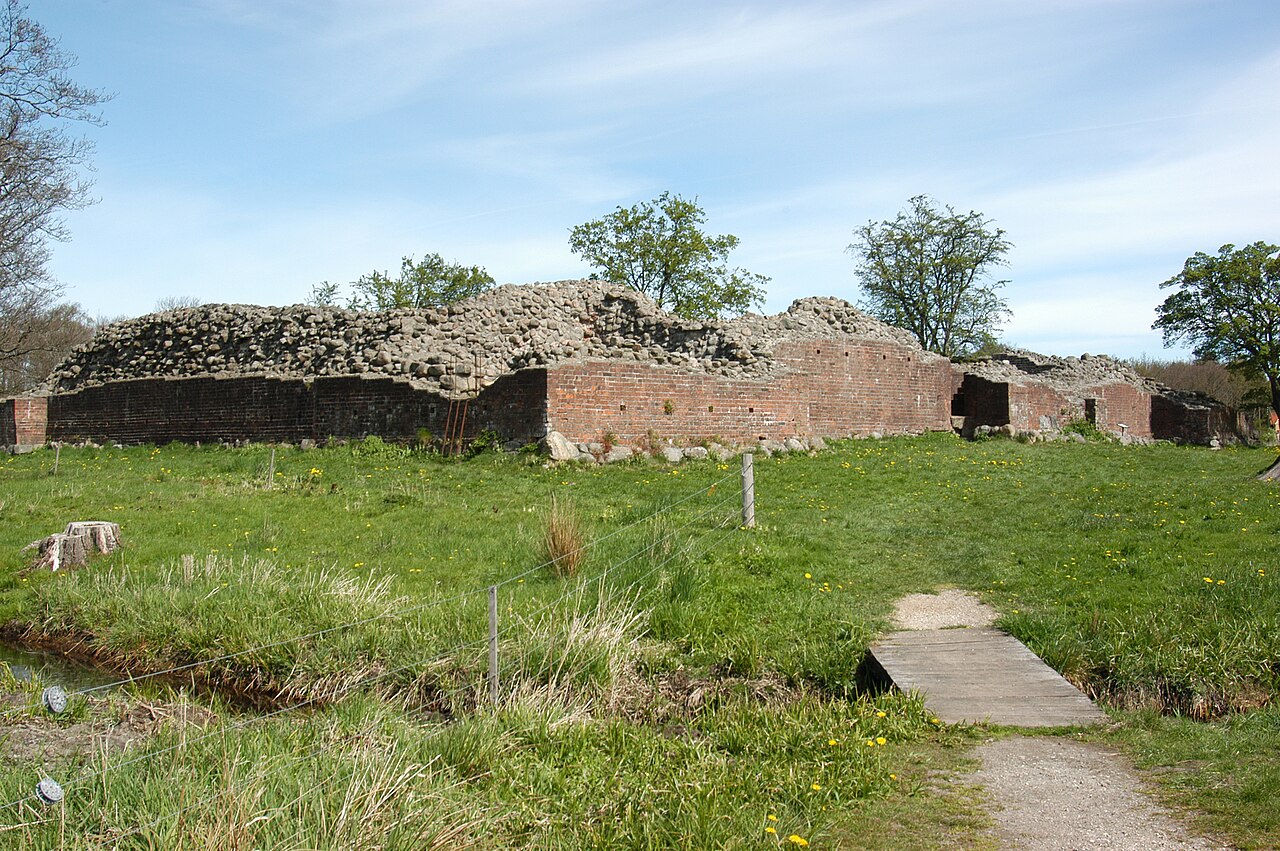
Valdemar came home around 1372, clawed back some of what he had lost, and died on the twenty-fourth of October 1375 at Gurre, the hunting castle in North Zealand he loved above all his fortresses. Tradition says he loved it so much that he boasted he would let God keep heaven if he might keep Gurre — and that for the impiety he rides those woods still, a ghostly huntsman with black hounds, the Danish king of the Wild Hunt. It is folklore, first told two centuries after he died; but it fastened his name to that place forever. He was buried at Sorø, and he left no surviving son.
The crown he had rebuilt was elective, and now it was contested between two grandsons. His daughter Margrete I out-manoeuvred the rival Mecklenburg claim and got her own five-year-old son elected king of Denmark in 1376, ruling in his name. What she did next — gathering Denmark, Norway and Sweden into a single union crowned at Kalmar in 1397 — is her story, not his. But it was built on the kingdom he had spent his life redeeming, and on the marriage he had arranged for a ten-year-old girl. The "day again" that his name promised dawned not in his reign but in his daughter's.