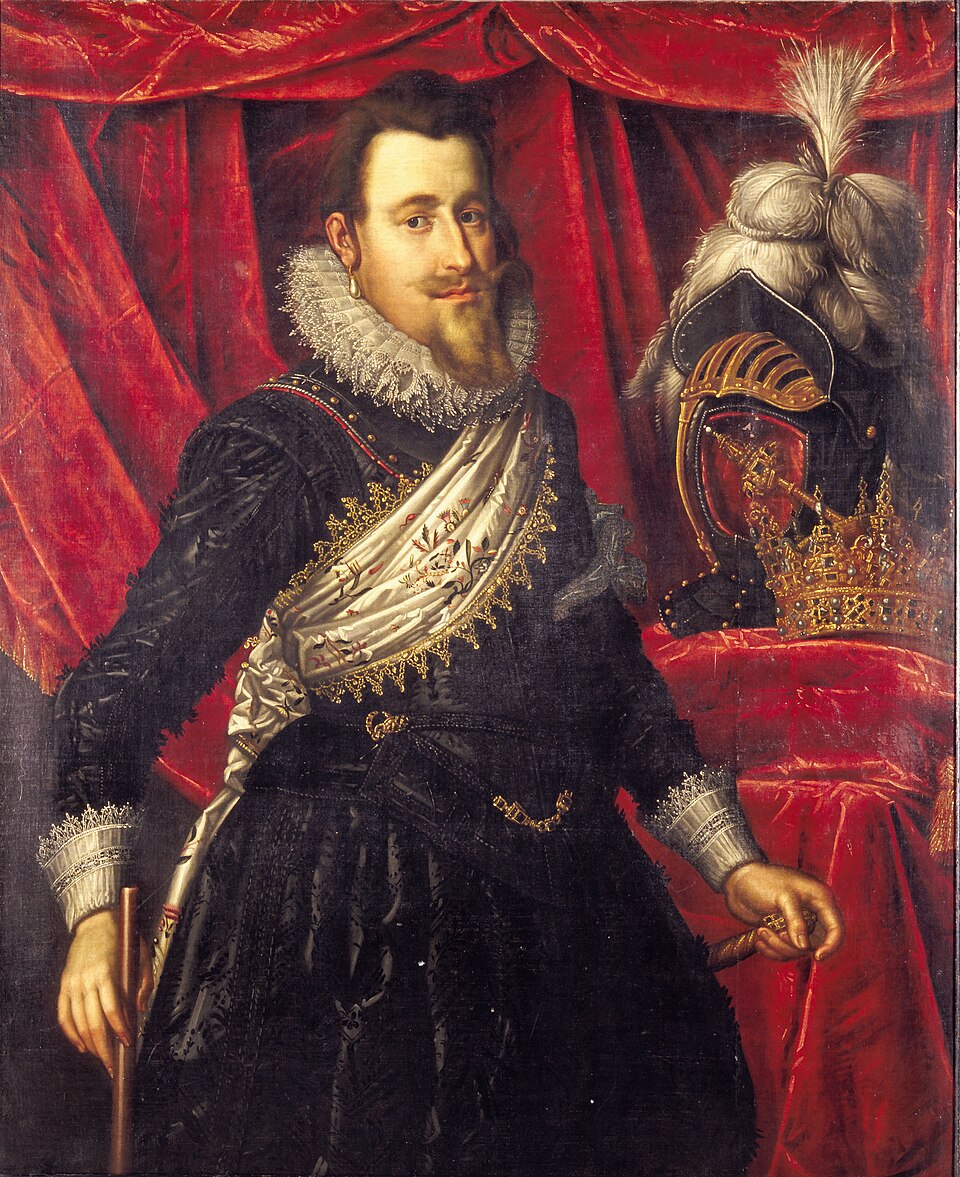
He sat on the throne of Denmark-Norway for fifty-nine years — the longest reign in the history of the North — and he filled them with stone. No king of these lands ever built so much: Christian IV raised palaces, towers, a stock exchange, whole new towns, rebuilt the fortresses of two kingdoms, and stamped his monogram on a skyline that still stands. With the same restless energy he also led his realm from the height of its power down into the long defeat that followed. This is the king who built dazzlingly and warred ruinously.
The boy king and the long reign
He was ten when his father died and the crown passed to him, in 1588 — too young to rule, so a council of nobles governed in his name until he came of age and was crowned in 1596. He would not let go of it for another fifty-two years. By the time he died, Christian IV had reigned longer than any monarch in Scandinavian history — a record that stood for nearly four centuries.
He was a force: physically powerful, endlessly curious, hot-tempered, hands-on in everything from shipbuilding to town plans, a hard drinker and a harder worker. For a generation he was the most conspicuous prince in the North, and he meant his reign to be remembered in stone and on the map. It would be — though not in every way he intended.
The builder-king
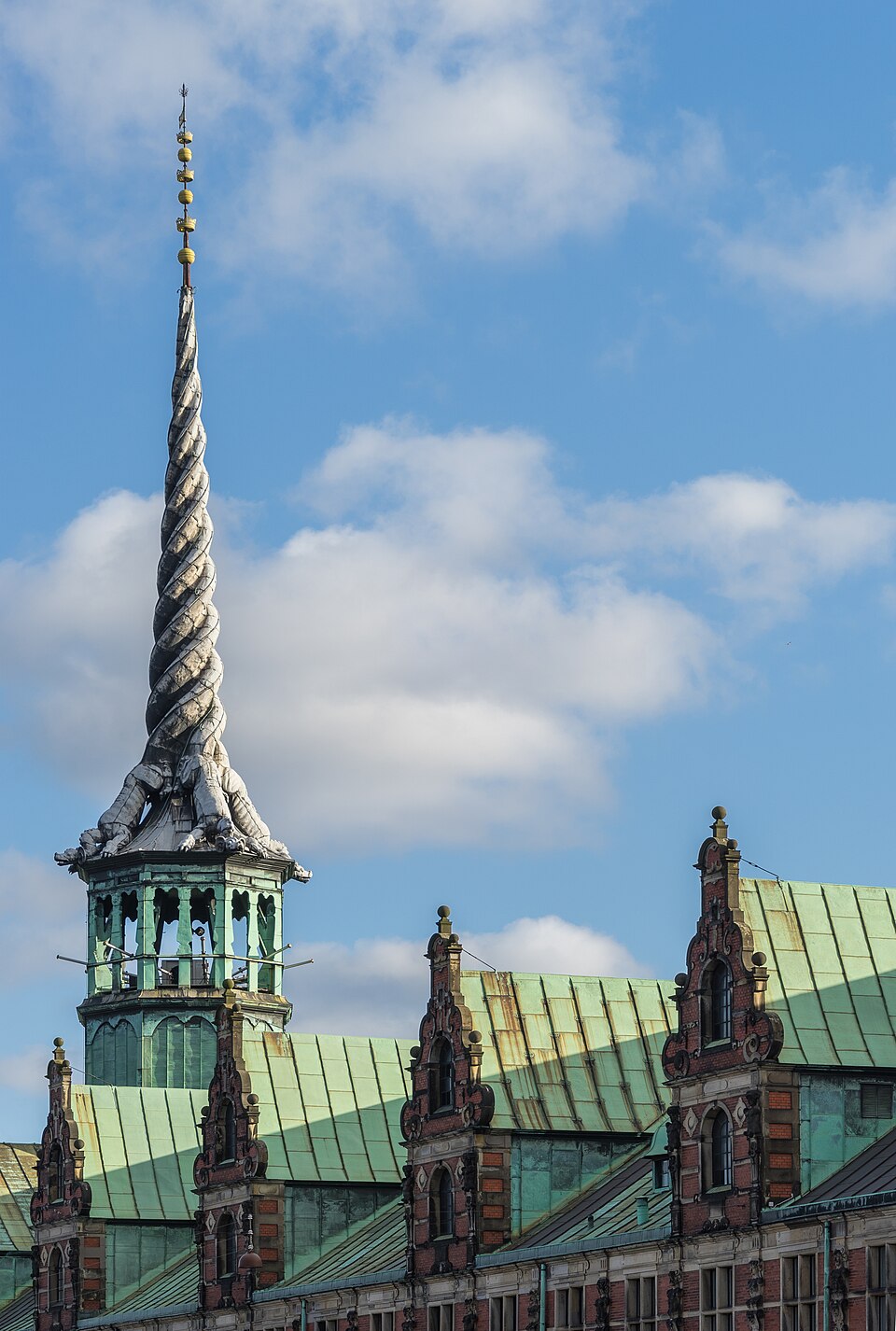
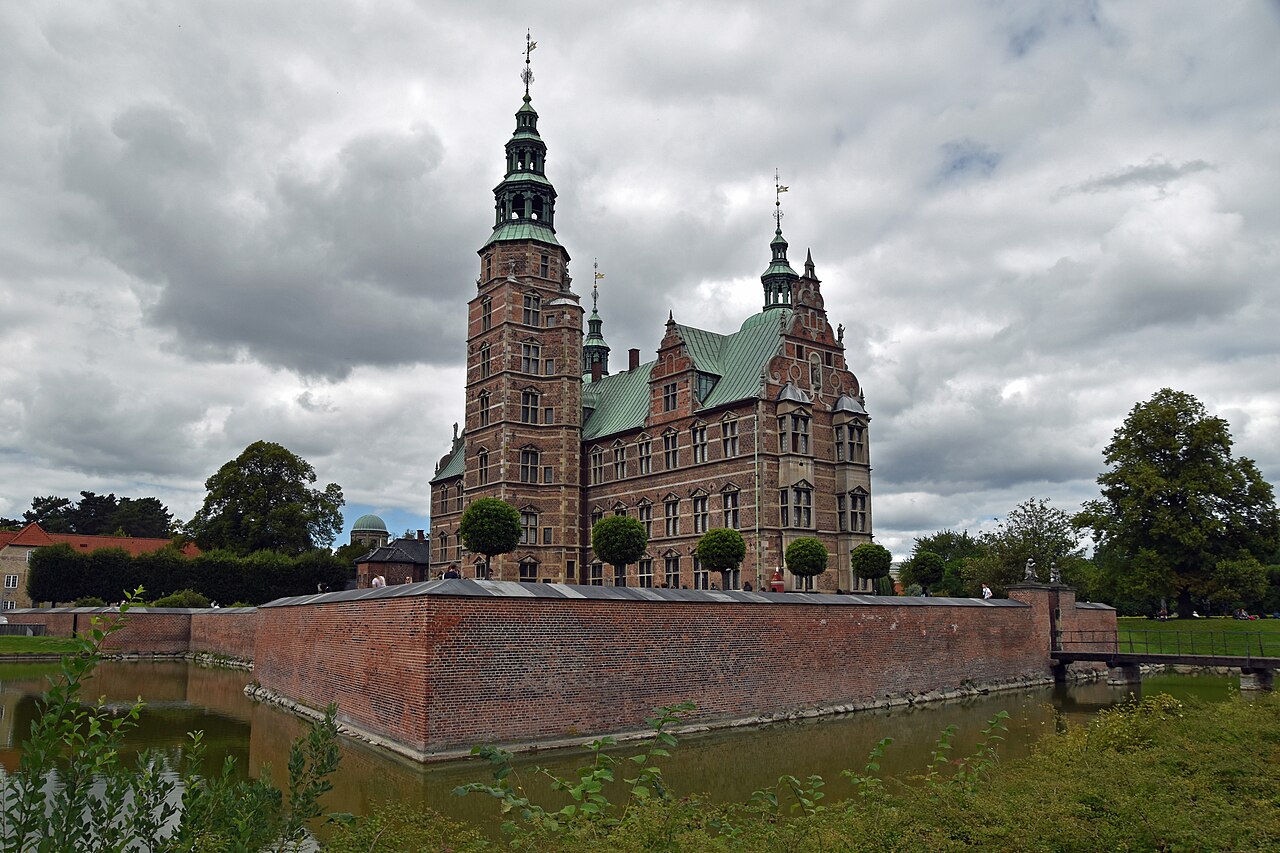
No ruler ever left a heavier mark on the North in mortar. In Copenhagen he raised Rosenborg as his pleasure-palace and treasure-house; the Børsen exchange with its famous spire of four dragons' tails twined into a spike; the Rundetårn, an observatory tower whose spiral ramp is wide enough to ride a horse up; the sailors' rowhouses of Nyboder; and he rebuilt his father's Frederiksborg into the grandest Renaissance palace in Scandinavia. He was the patron and driving force, not the trained architect — that was his Flemish Steenwinckels — but the vision and the relentless pushing were his.
And he did not stop at one city. He founded new towns outright and gave many of them his name — Christianshavn across Copenhagen's harbour, Kristianstad in Scania, Glückstadt on the Elbe, Kristiansand in Norway. When Oslo burned in 1624 he refused to rebuild it as it was and laid out a new city, Christiania, beneath the walls of Akershus; and when fire gutted Kronborg in 1629 he restored its silhouette to the Sound. Those two stories belong to the fortresses themselves — but the hand was his. He was, quite literally, redrawing the map.
Reaching for the world
His ambition ran past his coastline. He poured money into the navy until the Danish-Norwegian fleet was one of the strongest in northern Europe, and built Nyboder to house its crews. He crowned his Copenhagen with the Rundetårn's observatory, reaching for the heavens that the age's new science was opening — and reached, just as eagerly, for the wider world below.
.jpg)
In 1616 he chartered a Danish East India Company, and in 1620 his expedition planted a fort at Tranquebar on the coast of India — a tiny Danish foothold in Asia that would outlast him by nearly two centuries. For a few years it looked as though Denmark might become a trading power to rival the Dutch. The reach was real. What it lacked was the money to sustain it once the wars began.
The Thirty Years' War
In 1625 Christian made the great miscalculation of his reign. He marched into the Thirty Years' War as the elected champion of the Protestant princes of northern Germany — partly from faith, partly to extend Danish power. His army was underfunded and outmatched, and in 1626, at Lutter am Barenberge, the imperial general Tilly destroyed it. Christian escaped with fewer than half his men.
The Catholic armies poured north and occupied Jutland itself — the Danish mainland, overrun. The Peace of Lübeck in 1629 was, in the end, lenient: he kept all his territory in exchange for abandoning the war and his German ambitions. But the damage was done. The leadership of the Protestant cause passed to Sweden's Gustavus Adolphus, and Christian's dream of dominating the North began, quietly, to invert.

The old king at sea
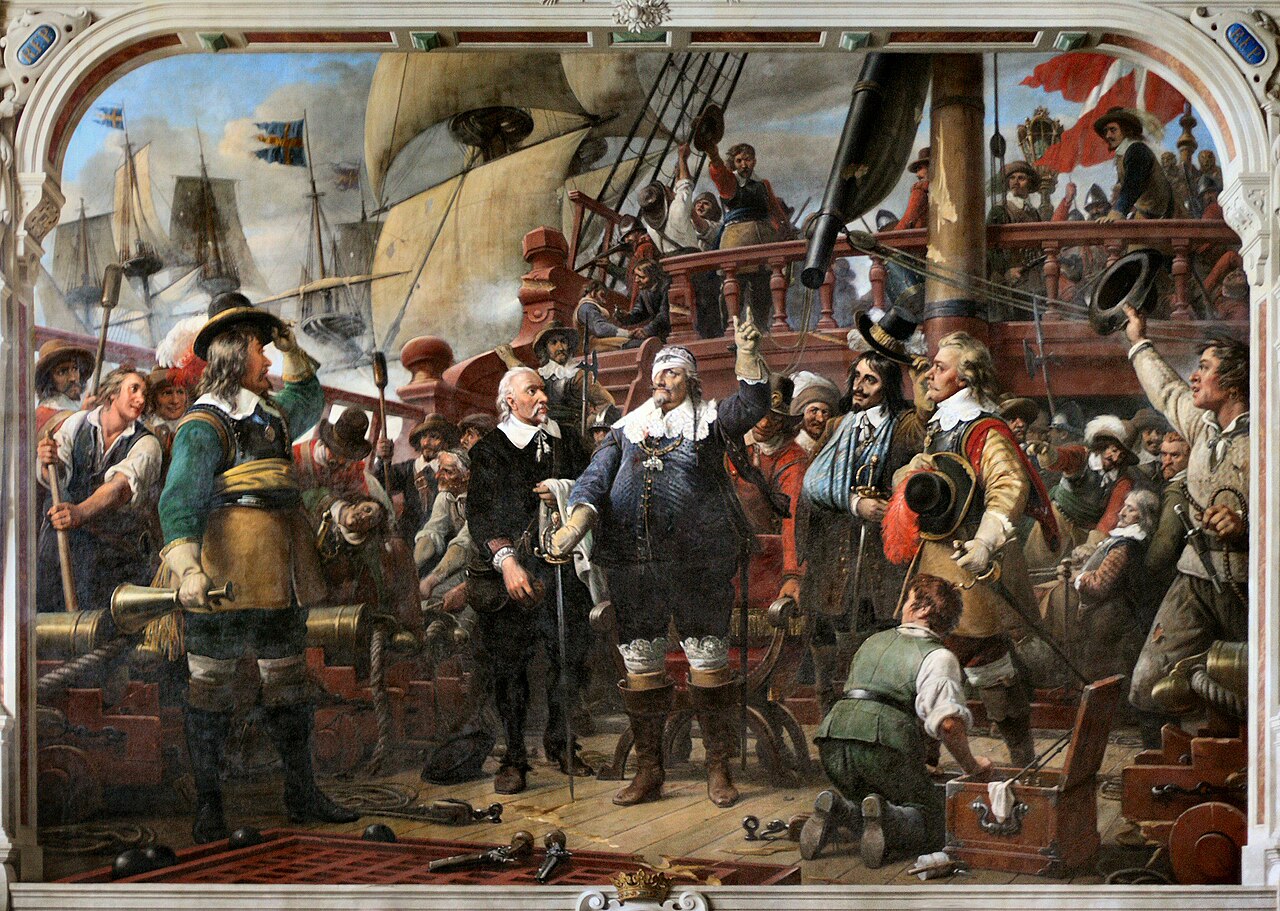
The reckoning came in 1643, when Sweden — now the great power Christian had failed to become — invaded without warning under Lennart Torstenson and took Jutland again within weeks. The next summer, aged sixty-seven, Christian took personal command of his fleet against the Swedes at Kolberger Heide. A shell burst beside him on the deck of his flagship, the Trefoldigheden; splinters tore him in a dozen places and destroyed the sight of his right eye — and the old king refused to leave the deck, rallying his crew with blood running down his face.
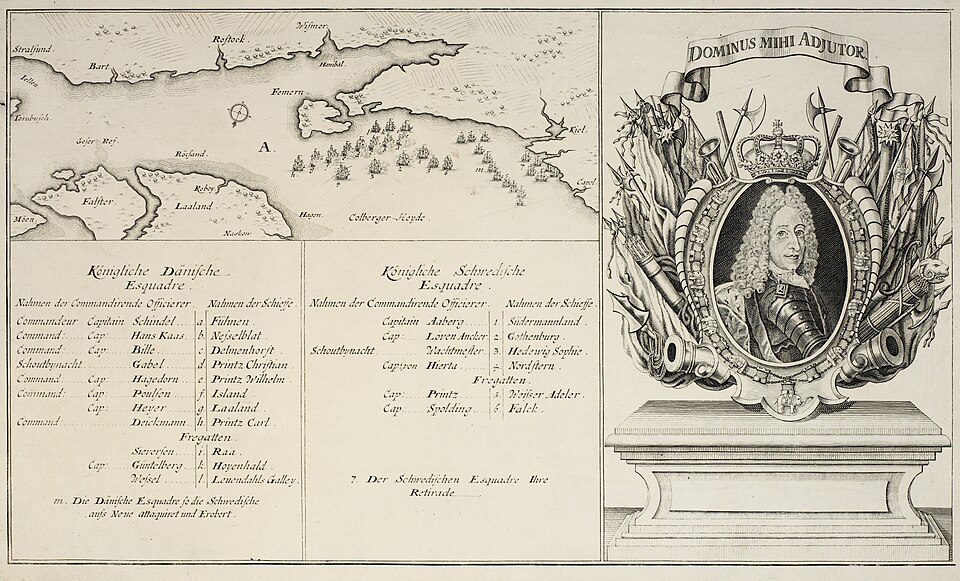
It was the image Denmark would cherish forever — though the famous song that fixed it came a century and a half later, and blended his stand with other men's battles. The war itself he lost. The Peace of Brömsebro in 1645 stripped away Jämtland, Härjedalen, Gotland, Ösel and Halland, and broke Denmark's grip on the Baltic for good. The realm he had spent his life enlarging was now visibly shrinking.
Death and the verdict
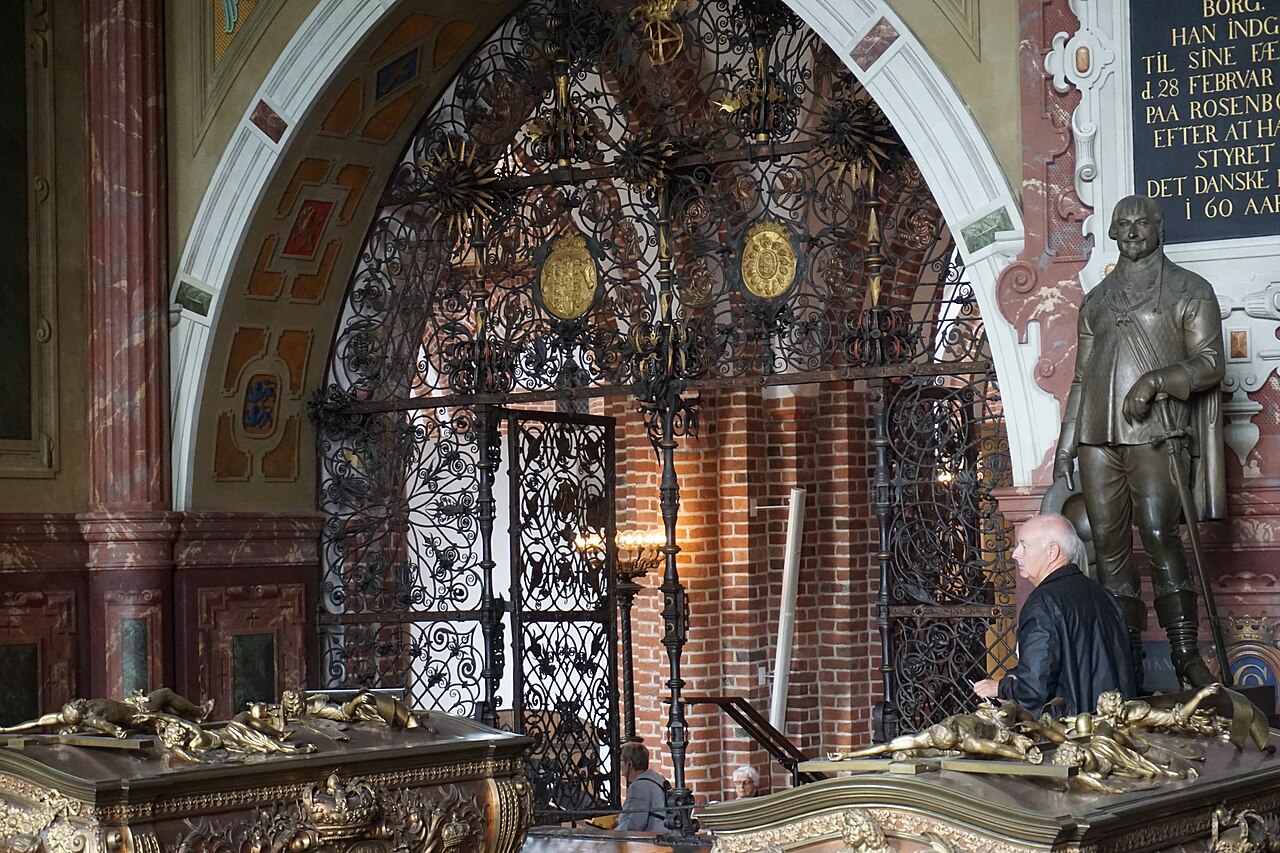
He died in 1648, at Rosenborg, the palace he had built, and was laid in a chapel of his own making at Roskilde. He had reigned for fifty-nine years; he had outlived his queens, his triumphs, and the high noon of his kingdom. His motto had been Regna Firmat Pietas — piety strengthens the realms — and he had believed, to the end, that he was strengthening his.
The verdict history settled on is double, and fair to both halves: the king whose wars cost Denmark its place as the master of the North, and the king whose towers still define Copenhagen's skyline four hundred years on. He shrank the realm and adorned it in the same long lifetime. No one built more; no one lost more. And of the two, it is the building that the eye remembers.