9+ Highlights · Finnish Heritage Agency
Industrial heritage — where Finland was made
Ironworks and cotton mills, water mills and sawmills, mines and engineering works – step into the places where Finland built and made things.
A factory or ironworks was once a world of its own. A whole community grew around it – workers' housing, a school, a shop and the owner's house, all keeping time to the same whistle. The blocks of the Finlayson cotton mill in Tampere tell that story: a rapids set the wheels turning, and a city rose around it. Water, iron and timber were the force that fed the country and carried its goods out into the world.
Some of these places are still alive; others are quiet ruins whose brick walls remember the sound of the machines. We have gathered the ones worth a stop – engineering works and paper mills, sawmills and mining communities – and, around Vaasa, a route that ties them into a single day. Follow the marks of work, and see how Finland was made.
Highlights
Immilän, Kumian ja Seestan myllyt
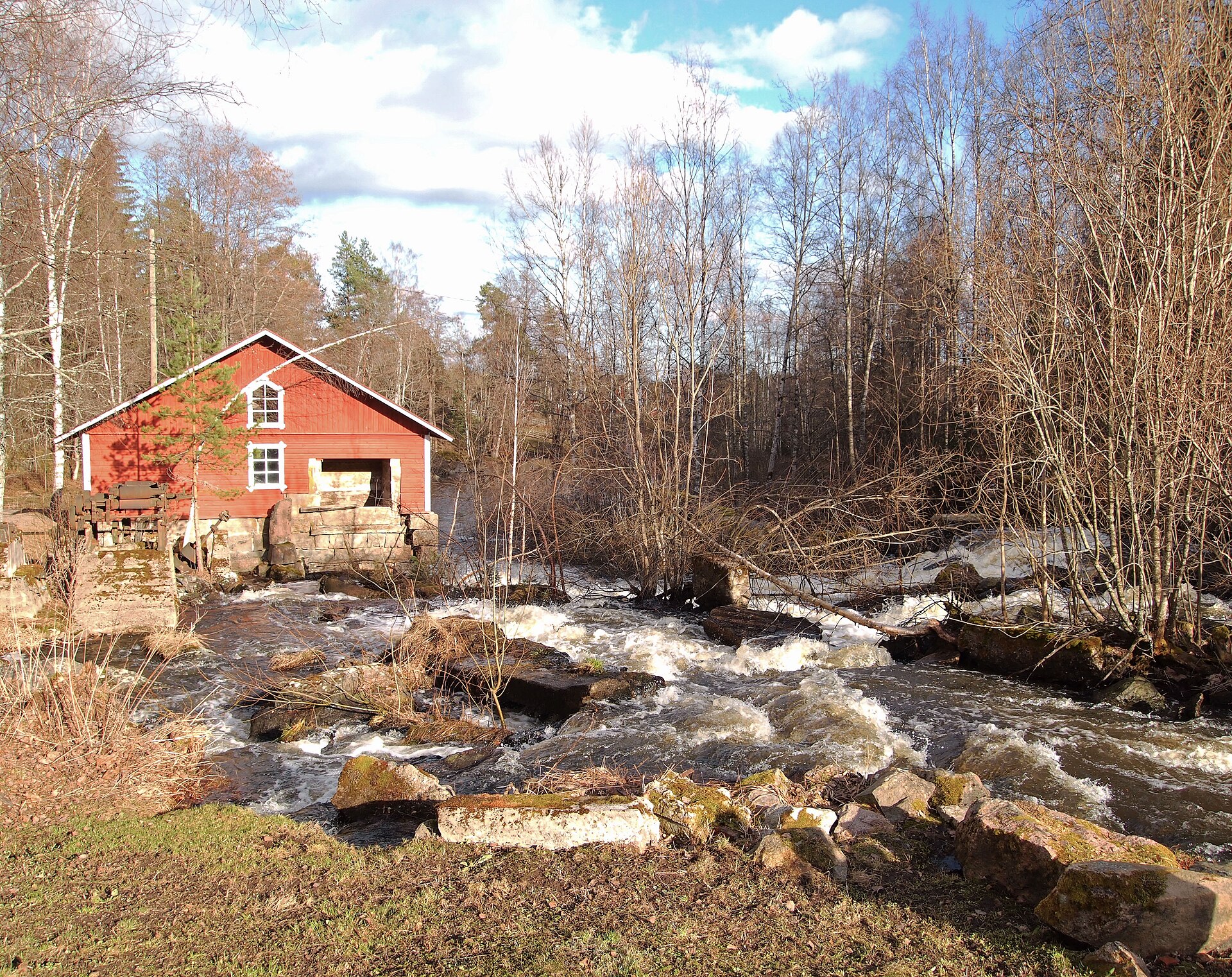
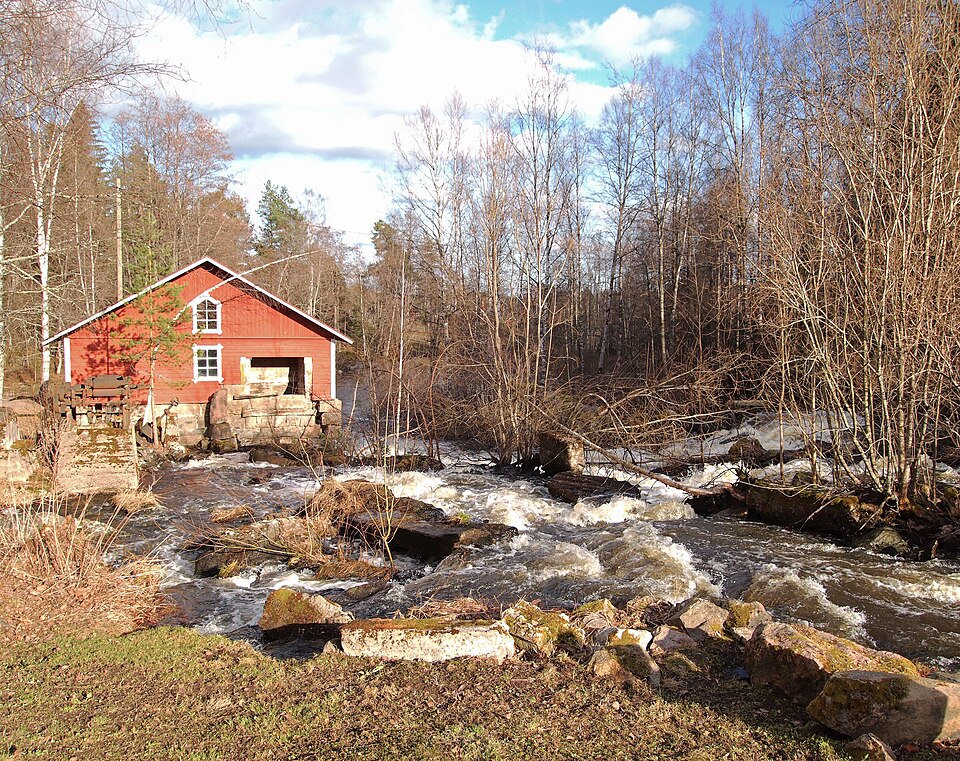
From the 16th century onward, a whole world of mills gathered at the rapids north of Salpausselkä. The Immilä, Kumia and Seesta water mills still stand on these scenic rapids, intact layers of early industry.
Look for: Look for the buildings of different ages: Immilä's 1901 mill, Kumia's 1890s log mill and tall 1930s wheat mill, and Seesta's 1830s water mill at the Sepänkoski rapids.
Karhulan teollisuusympäristö
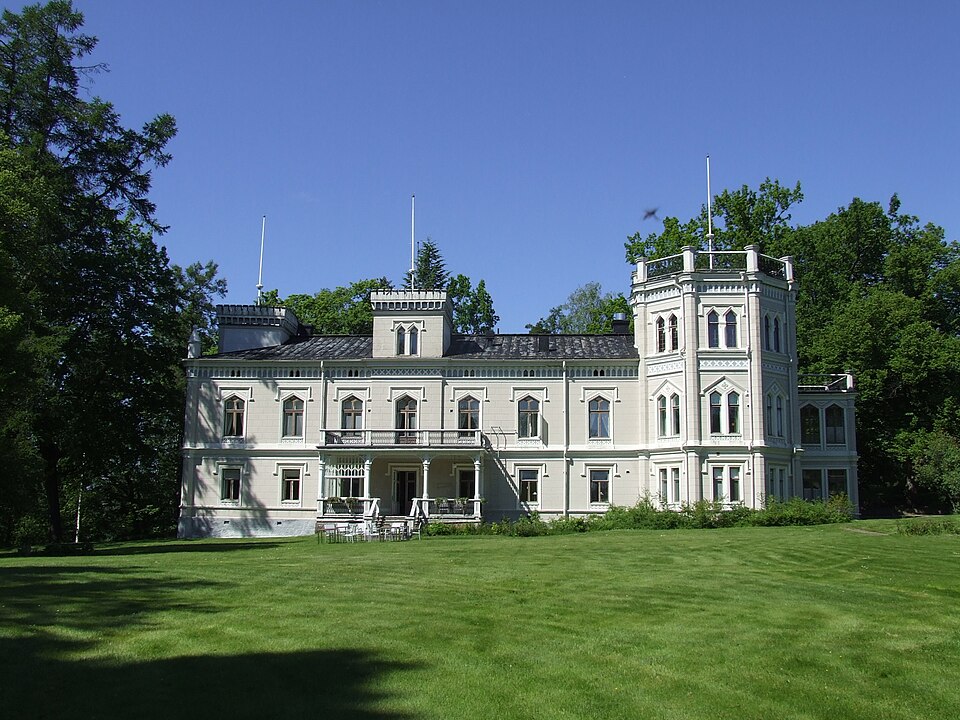
Karhula's industrial milieu grew along the Kymijoki into a community of mill, workers' quarters and a manor. Step in and take in a factory town shaped across many eras.
Look for: Look for the two-storey, shingle-clad workers' barracks Kalliopytinki, Suopytinki, Verstaspytinki and Metsäpytinki of the 1890s — unique in their architecture.
Martinniemen saha
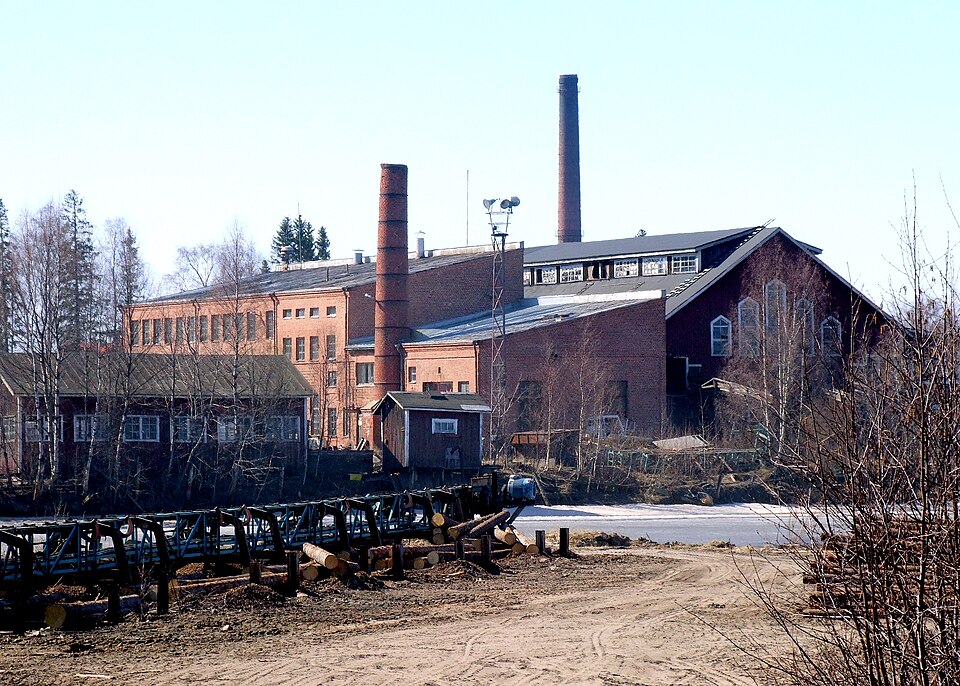
Martinniemi sawmill is among the best-preserved examples of the steam-sawmill era: the two-storey, post-framed mill of 1918 is likely the last large sawmill to have worked with a main shaft and power wheel.
Look for: Lift your eyes to the lantern structure on the roof ridge and the gable windows; across the narrow strait on Laitakari stands Finland's first groundwood mill to run on steam power, away from any rapids.
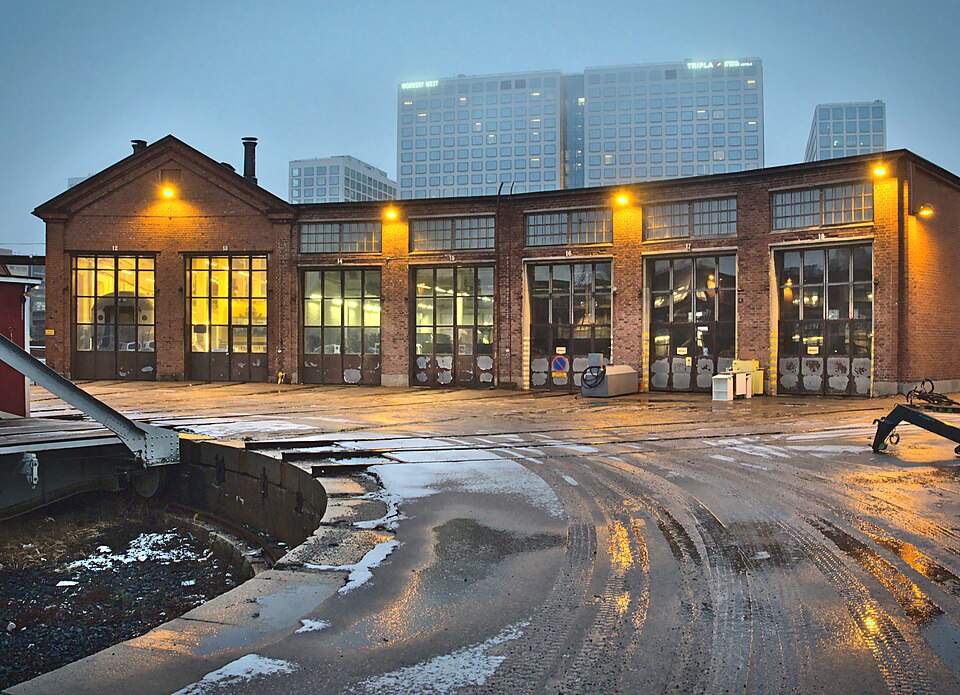
Pasilan veturitallit, konepaja ja SOK:n teollisuuskorttelit
Böle's locomotive sheds, VR's former workshop and SOK's functionalist plants tell how the railway industrialised the capital. The workshop was once among Helsinki's largest industrial works.
Look for: West of the tracks, find Toralinna — the railways' longest residential building — with wooden railway workers' houses beside it; to the east rise seven great brick halls and the power plant's chimney.
Kainuun puromyllyt
Of the hundreds of water mills once built along Kainuu's brooks, only a handful survive restored — modest log buildings at remote rapids, quiet remnants of a self-sufficient age. Come see how the forest country ground its bread.
Look for: Seek out the Komulanköngäs tub-wheel mill in Hyrynsalmi: the present building dates from around 1900, but the mill site descends from the 1600s, and it was among the largest in Kainuu.
Anjalan paperitehdas sekä Inkeroisten kartonkitehdas ja yhdyskunta
Grown into the rapids landscape of Ankkapurha, the Anjala and Inkeroinen mill community carries both industrial history and modern architecture. Walk among quarters Alvar Aalto shaped in the 1930s and 1950s.
Look for: See Finland's first continuous board machine in Inkeroinen's old board mill — a hundred years old, restored and open to the public.
Aurajokisuun satama-, telakka- ja teollisuusalue
The mouth of the Aura river carries a long harbour and seafaring history that begins with the founding of Turku Castle. This shipyard and industrial area, layered from the late 1800s to the 1980s, also tells of post-war shipbuilding's rise.
Look for: Seek out the oldest layers of the yard: Crichton & Vulcan's wooden residential building begun in 1846 and the red-brick office and dwelling from 1873. The shipyard was once Finland's largest.
Hämeenlinnan lääninsairaala, kruununmakasiinit ja Verkatehdas
On Keinusaari island in Lake Vanajavesi, the Empire-style provincial hospital and crown granary from the 1830s tell of Hämeenlinna's time as the administrative capital of the province; the hospital buildings still answer to Engel's original design.
Look for: Look to the southern end of the island, where the Pinella villa — built in 1906 as the manager's residence — stands amid the 1890s brick buildings of the Woollen Mill.
Haverin kaivosyhdyskunta
Haveri mine represents early Finnish mining and helped industrialise Tampere. It yielded iron ore from the late 18th century to the 1860s and copper in 1942–1960; today water-filled open pits and the buildings of a small mining community remain.
Look for: Look into the open shaft, 85 metres deep and 125 metres wide, and seek out the timber mine tower built in 1941 and restored in 2001, along with the workers' and managers' dwellings set across the terrain.
An industrial day around Vaasa
The Vaasa region and Ostrobothnia hold a dense seam of ironworks and industrial heritage – a single day's route links several sites across a landscape of rapids and sea.
5 sites · ~22 km · about 4 h · set aside a full day
- 1Protected building
The Cotton Mill was the new town's first industrial works after the Vaasa fire. The red-brick factory grounds live on, now part of the university campus with its main building and science library.
Look for: Seek out the red-brick weaving building from 1859, designed by provincial architect C.A. Setterberg, and the two two-storey workers' barracks from 1870 along the leafy avenue.
- 2Palosaaren satama-, telakka- ja tehdasalue 0 km driveNationally significant
Palosaari's red-brick harbour, shipyard and factory buildings form a central part of Vaasa's maritime silhouette, where a shipbuilding tradition from the late 1700s meets the city's post-fire industrial history. Come see the site of Vaasa's first industrial plant.
Look for: Notice the red-brick weaving mill of 1859, designed by C.A. Setterberg and keeping its original features, and the two-storey workers' barracks of 1870 along the leafy avenue.
- 3Suomen Sokerin Vaasan tehdas asuinalueineen 2 km driveNationally significant
The factory and its housing rose beside the harbour and railway, and nearly the whole industrial community survives: office, clock tower, machine shop and workers' homes as one coherent whole.
Look for: Look for provincial architect K.V. Reinius's ornate red-brick buildings, and beside them the wooden workers' houses Runar Finnilä designed in the 1920s.
- 4Strömbergin teollisuus- ja asuinalue 6 km driveNationally significant
A factory and residential district planned by Alvar Aalto in the mid-1940s, where the large works is broken into human-scaled units and set loosely into the park-like forest, with the workers' comfort in mind.
Look for: Follow the curving roads into Aaltopuisto: nearly twenty houses designed by Aalto fan out in formation, their basic types a two-storey timber row house and a stone one.
- 5Nationally significant
The old workers' settlement gathered at the Annalankoski rapids and the mill rapids of the Kyrönjoki tell of centuries of water power – among Ostrobothnia's earliest rapids-driven production sites.
Look for: Pause at the Annalankoski mill, restored into a museum by the Vähäkyrö society, and take in the Merikaarto suspension bridge, built in 1929–1930 and characteristic of the Kyrönjoki.