Why visit
In the old cultural landscape of Mynämäenlahti, Louhisaari is, alongside Sarvilahti in Pernaja, Finland's only noble residence built to the ideal of the great-power era. The Dutch Baroque main house with its court of honour carries you briefly into 17th-century splendour.
Look for: Notice the strict symmetry: the low side wings stand as mirror images on either side of the main house, whose three storeys are crowned by a tall roof echoing Dutch palace architecture.
About this site
Louhisaari manor is situated in Masku Askainen in the cultural landscape of Mynämäenlahti, on the southern shore of the Mynämäenlahti inlet that extends far inland, on a rock that once lay by the sea. The manor with its outbuildings was originally located on a promontory or island, with the sea separating it from the farm buildings.
The shoreline to the south of the manor has retreated about 300 metres as a result of land uplift. The landscape structure of Louhisaari, which ranks among the most notable construction projects of the Great Power era in Finland, dates back to the Middle Ages, and the basic features of the cultural landscape reflect the manor environment that developed during that era.
Louhisaari and Sarvilahti in Pernaja, built twenty years later, are the only noble manor residences in Finland built in accordance with the architectural ideals of the Great Power era. The main building of Louhisaari manor, representing Dutch Baroque, with its outbuildings flanking the courtyard on both sides, is strictly symmetrical in composition.
The low outbuildings are mirror images of each other on either side of the main building, with a gravel-surfaced court of honour between them. Symmetry is also expressed in the facades and floor plans of the buildings. The dominant position of the three-storey main building is emphasised by the high roof reminiscent of Dutch palace architecture.
The manor's sandstone Baroque portal with its inscription panels, sandstone plinth, eave consoles and roof gables are the only decorative details on the whitewashed facade. Approaching the building across the court of honour, attention is drawn especially to the decorative main entrance as a captivating feature in an otherwise austere facade.
The windows have the 16-pane sash arrangement characteristic of the Rococo period. The use of the different floors was planned according to housing customs inherited from the Middle Ages. The first floor comprised living rooms for the servants and utility and storage rooms. The second floor was the gentry's residential floor, whose fixed interior was redesigned in Rococo style in 1760–1770 according to plans by master mason C.F. Schröder, who served as city architect of Turku.
The third floor with its halls was the ceremonial floor which, with its surviving original ceiling paintings, is the only preserved representative room from the Great Power era in Finland. The same floor plan is repeated on each floor, connected by a cross-vaulted staircase rising from the entrance hall and by the servants' spiral staircase.
The cellar of the south-eastern outbuilding may be older than the other buildings, possibly dating from 16th-century construction phases. The four-room floor plan of the building also points to the same era's building practice. The castle kitchen and bakehouse were in the north-western outbuilding until 1792.
The hipped saddle-roof form of the upper parts of the outbuildings dates from the 1770s. The court of honour was originally enclosed by a wall built along the line of the outbuildings' gables. Today, the gravel area borders on lawn near the foundations of the new stone wall by which the courtyard was enlarged in the 18th century.
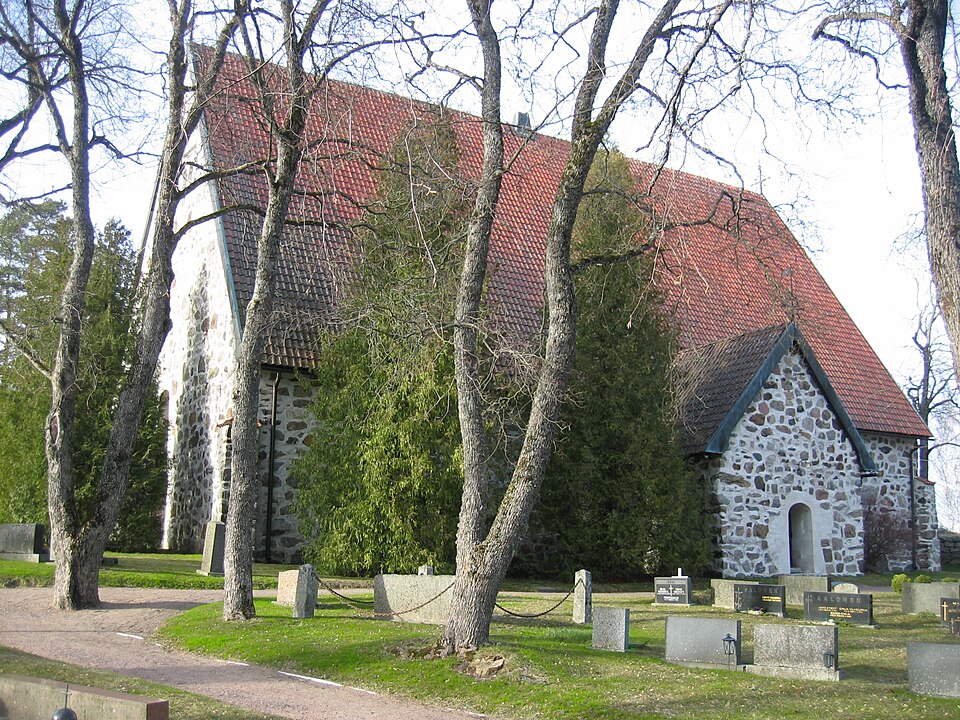
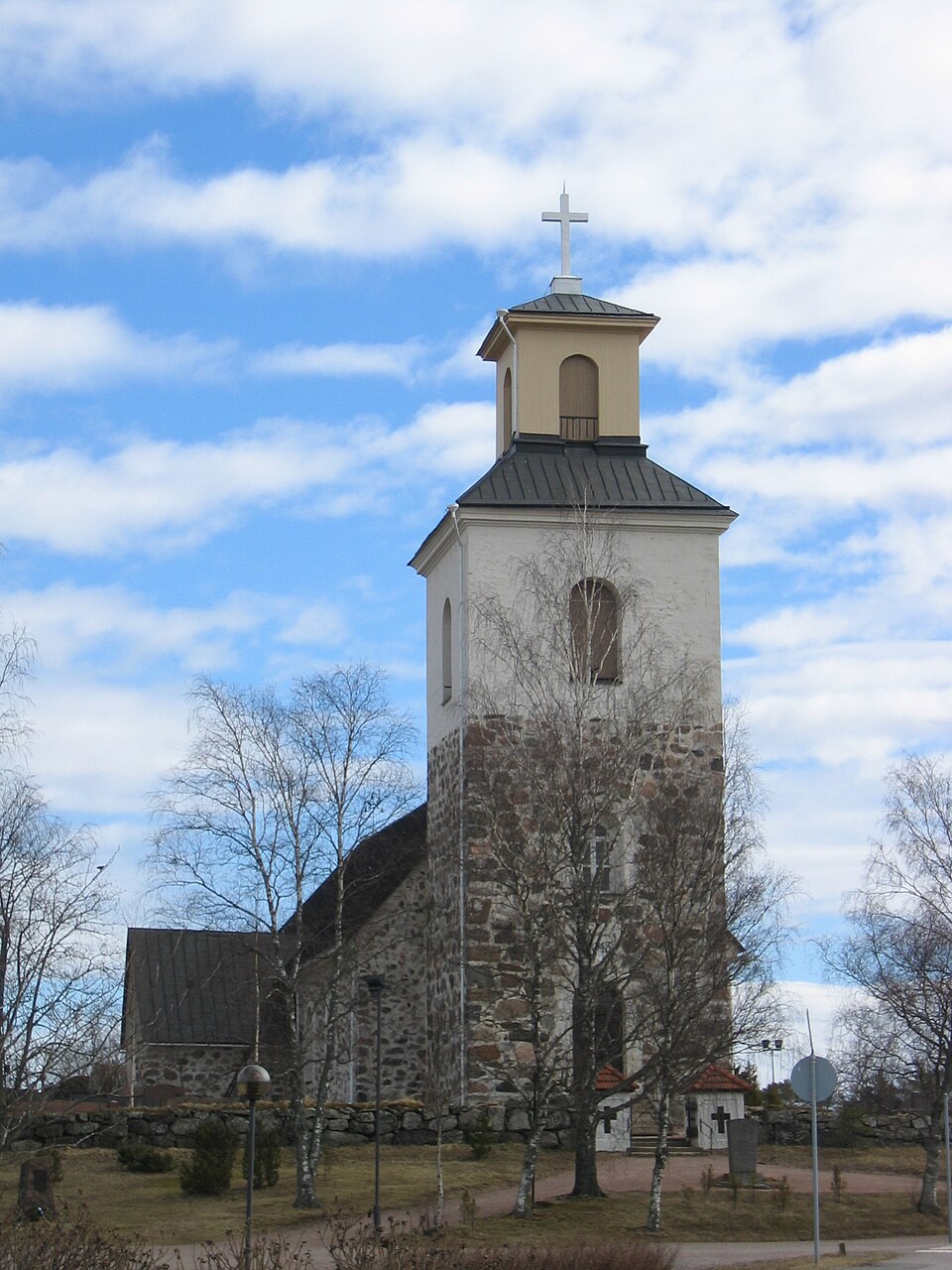
In connection with restoration, an iron fence has been added here, based on the 18th-century Rococo-style fence between the main building and the outbuildings. The two-kilometre birch avenue planted along the axis of the manor's main entrance and given its final alignment in the first half of the 18th century connects the manor to Askainen church, which was likewise built by the Flemings.
Halfway along, at the so-called Temple Corner, the road makes a right-angle turn toward the church. According to tradition, there was some kind of wooden 'temple' or summerhouse on top of the hillock. The hillock is probably associated with the English-style landscape garden established around the turn of the 18th–19th centuries.
Reflecting the close relationship between the family and the parish, the construction of Louhisaari manor and the church were joined under Herman Fleming's direction into a single construction project. Masons and master builders came from Stockholm to both construction sites. The park of the manor dates in its basic features from the late 18th century and early 19th century.
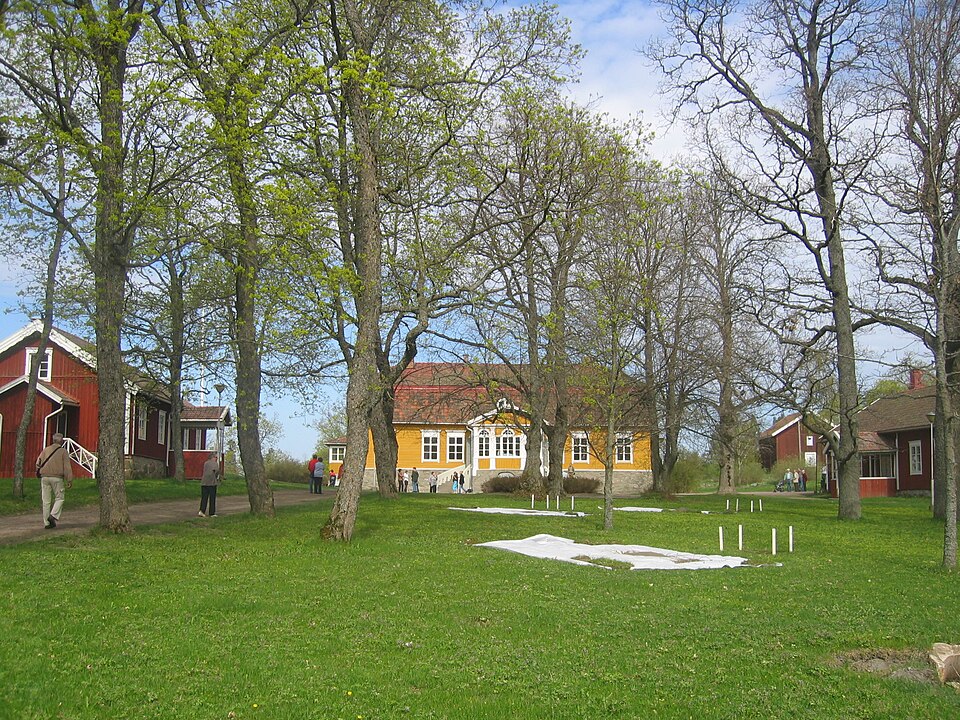
Near the manor there are traces of an old fruit and kitchen garden with an originally simpler block division. The low-lying land revealed by land uplift was suited to an English-style landscape garden, for which the surrounding nature at Myllymäki and Paratiisimäki served as powerful landscape elements.
The park contains a bathing pavilion built in 1825 by the Mannerheims at the then shoreline, designed by A.F. Granstedt. The manor's building complex also includes a dairy and a storage building from the first half of the 20th century. Myllymäki is a rocky hill bordering the Louhisaari inlet that has had a mill on it since at least the 18th century.
From the manor's shoreside park to Myllymäki runs the Pengertie (embankment road), lined mainly with black alders. Once an important connection to the windmill and the Myllymäki landing pier and further to Paratiisimäki, it is one of the oldest surviving structures in Louhisaari park. In 19th-century illustrations, trees clipped into hedges can be discerned; they were maintained in this way as late as the early decades of the 20th century.
Official description (Museovirasto) — machine-translated from Finnish
- Municipality
- Masku