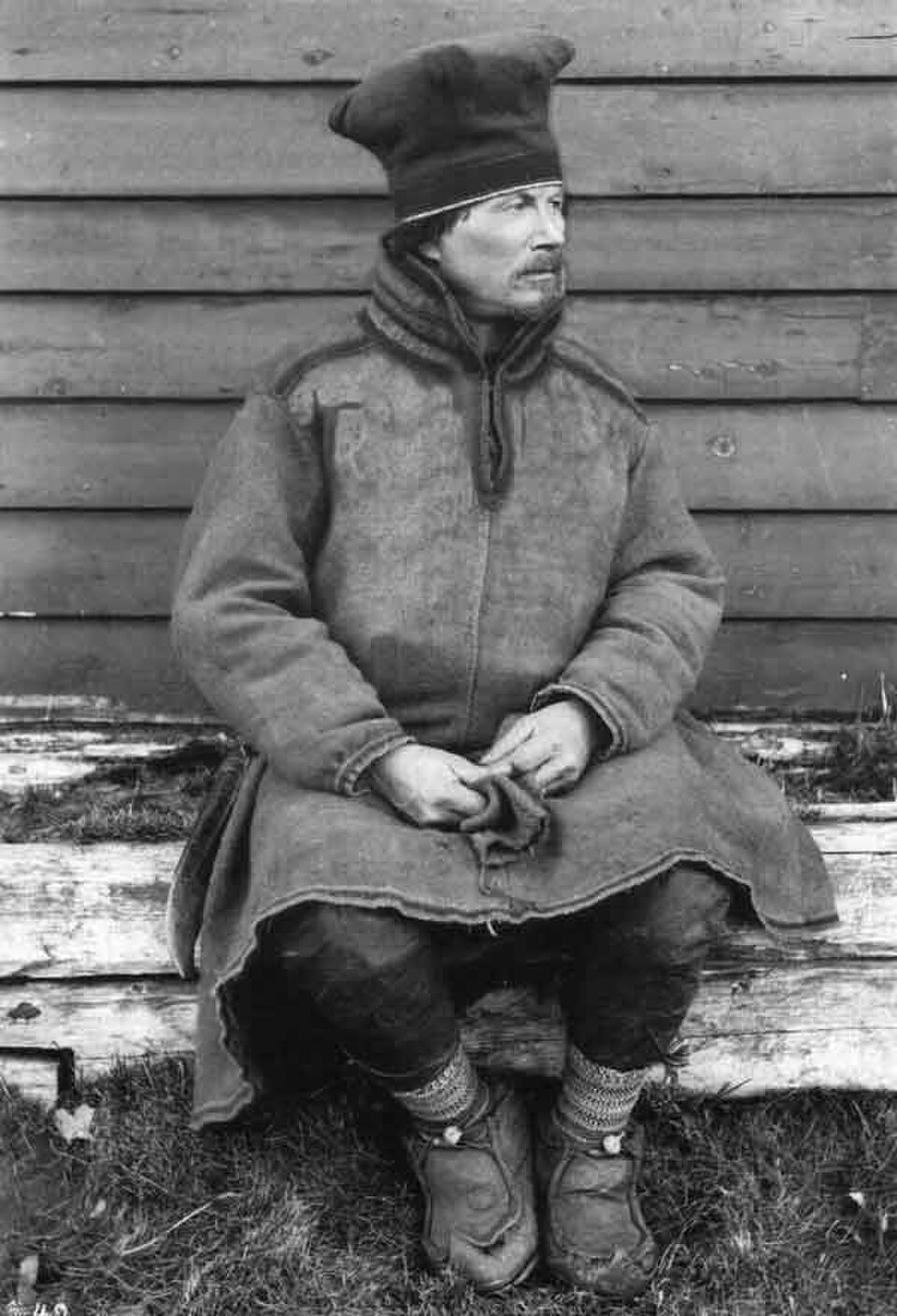
Lars Hætta was eighteen, a Sámi reindeer-herder from Kautokeino in the far north, when in 1852 a group of Sámi rose against the local authorities — a revolt with roots in a religious awakening, the liquor trade, and long injustice. It was put down hard. Two of the leaders were beheaded; Lars was sentenced to death.
His sentence was commuted to life, and he was sent the length of the country to Akershus — to a stone fortress beside a southern sea, about as far from the reindeer-plains of home as Norway could send a man. Several of his fellow prisoners died there. Lars did not.
In his cell he was given paper and time, and used them to do something extraordinary: he translated the Bible — the whole of it — into Northern Sámi, for the first time in history. A man locked far from everything he loved kept his entire language alive on the page. Pardoned at last, he went home and lived to 1896 — a wood-carver and translator who had turned a prison sentence into the survival of a tongue.