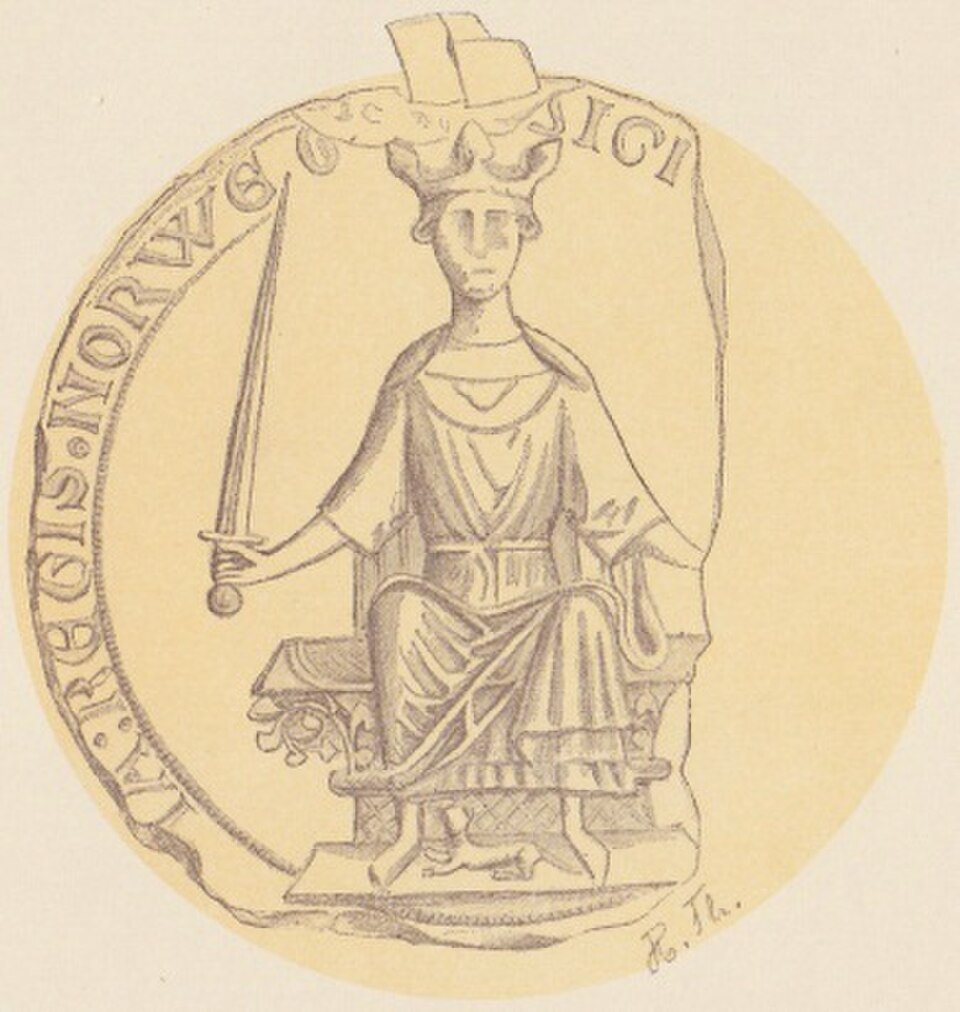
Håkon was the grandson of King Sverre, born in 1204 into the chaos his grandfather had set loose. For years his right to rule was contested, his birth doubted; he had to fight for the crown as Sverre had. But once it was his, he held it for forty-six years — longer than any Norwegian king since Harald Fairhair — and used it to end the century of civil war for good.
His reign was Norway's golden age. Under him the realm reached its greatest extent: Iceland and Greenland came under his crown, and his court became a place of learning, where the great romances of Europe were turned into Norse. With the new peace came the great buildings — and the greatest of his castles was Tunsberghus, raised on the rock at Tønsberg into the largest castle in all of Norway.
He died in 1263 far in the west, at Kirkwall in Orkney, on the campaign that marked the high-water of Norwegian power. His son Magnus the Lawmender would give Norway its national law; and his grandson Håkon V — the last of the old blood — would die in the very castle Håkon IV had raised over the fjord.