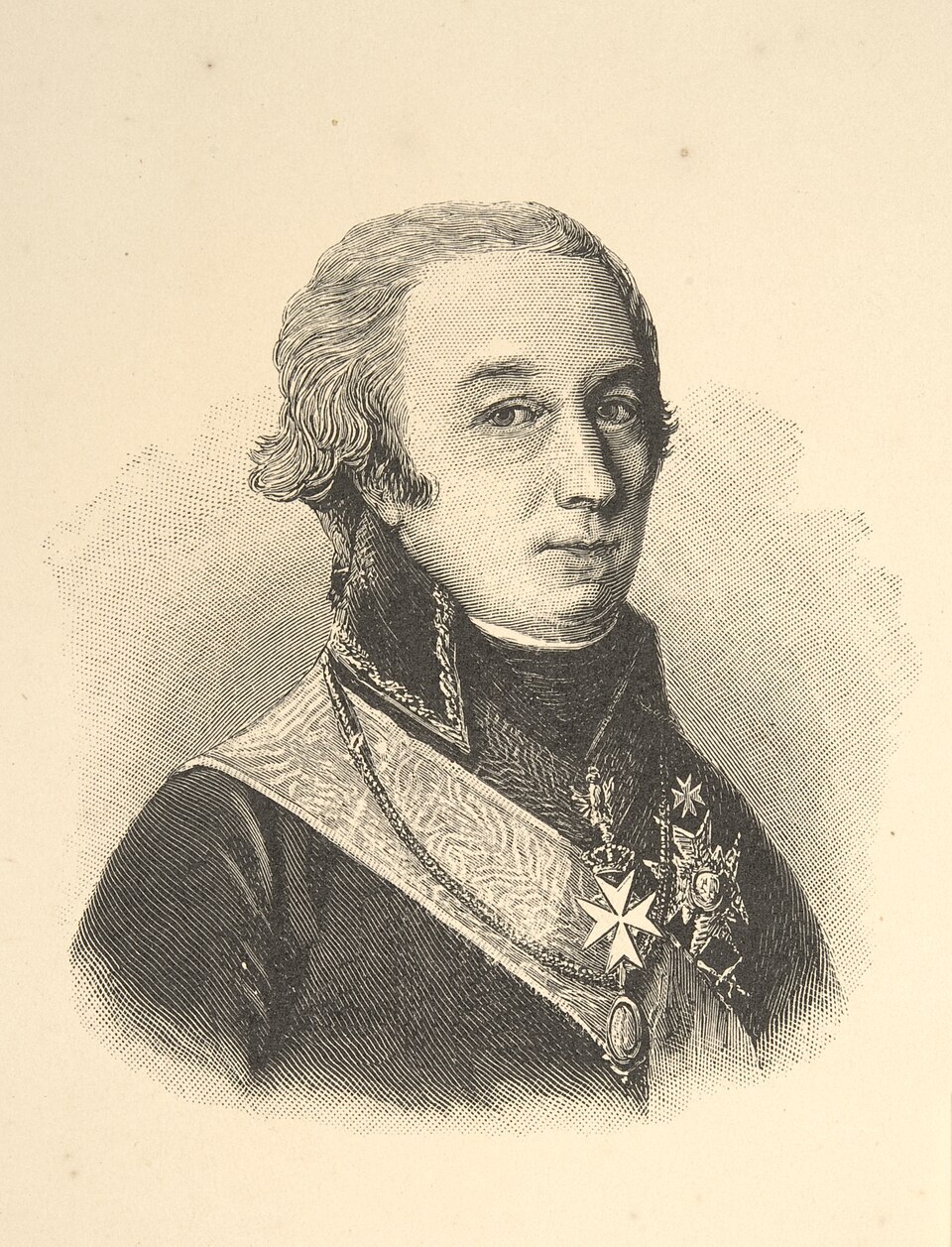
He began as a hero. In July 1790, at Svensksund in the Gulf of Finland, the Swedish and Russian fleets met in the largest naval battle the Baltic has ever seen — some five hundred ships, thirty thousand men. On the morning of the fight, with a senior officer urging retreat to a safer position, it was Carl Olof Cronstedt who argued to stand and fight where they were; King Gustav III agreed, named him flag-captain on the spot, and led the battle from his side. By nightfall the Russian fleet was shattered — fifty ships and thousands of men lost — and Sweden had its greatest naval victory. Cronstedt came away with the Grand Cross of the Sword and a hero's name.
Eighteen years later he gave it all back in a single signature. As commandant of Sveaborg — a posting closer to exile than honour, for he had fallen from the king's favour — he held the great fortress when Russia invaded Finland in 1808. He had six and a half thousand men, a fleet at anchor, and two thousand women and children sheltering inside the walls; he also had powder running out, couriers begging for relief whom the Russians quietly intercepted, and a war already being lost everywhere else. On 3 May 1808 he signed the capitulation. The impregnable fortress, the one Augustin Ehrensvärd had given his life to build, fell with six men dead. Finland began sliding into Russian hands that day.
Why he did it is a question two countries have argued for two hundred years. Bribery, the rumour said — though nothing was ever proven against him. A Russian bluff he fell for, others say, fed false numbers by men who knew exactly how to break a tired garrison's nerve. Or simply the clear sight of a hopeless war and two thousand civilians he would not see killed for nothing. He never gave his own answer. Sweden gave him theirs: stripped of rank, charged with treason, condemned to death in his absence — then spared, of all people, by the Russian tsar, and left to live out his days on his manor near Helsinki, in the very Finland he had handed over, until he died there in 1820. The poet Johan Ludvig Runeberg fixed him forever as the villain of the nation's epic. The man who had won the Baltic's greatest battle is remembered for losing a country without a fight.