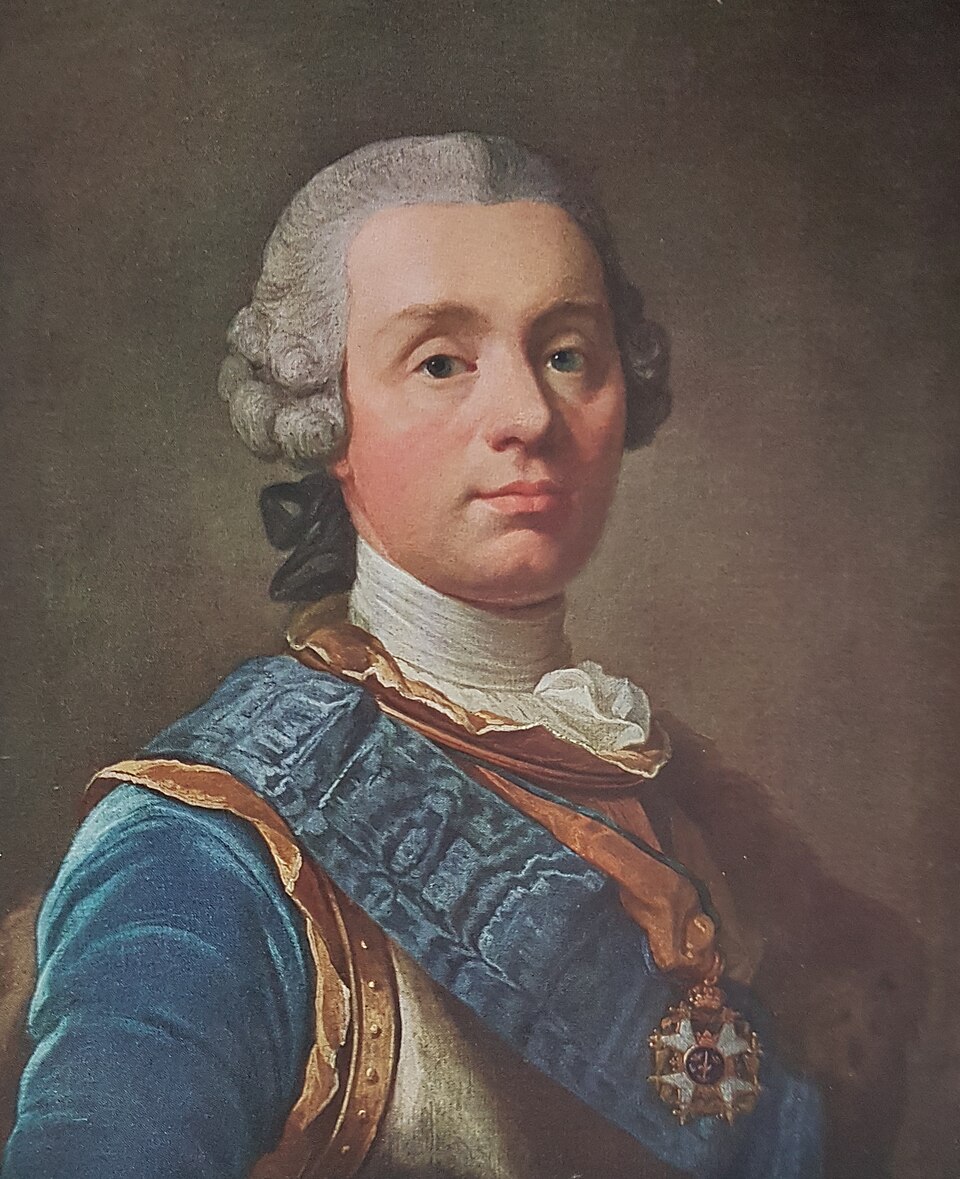
In 1748, on a cluster of bare granite skerries off Helsinki, Sweden set out to build a fortress against Russia — and handed the work to a young artillery officer named Augustin Ehrensvärd. What he drew was bigger than a fort. He imagined a whole fortified town rising from the rock, and at its heart a naval dockyard for a new kind of fleet — the shallow-draught archipelago navy he had championed for years, built to fight among the islands where deep-water ships could not follow. Vauban's geometry, reimagined on the skerries of the north. At its peak seven thousand men were hauling stone for him.
It cost him everything he had, and more than the realm would give. He poured his own fortune into it — when the crown would not pay, he funded a naval officers' school himself — and he paid in reputation too: when his political faction fell in 1766 he was dismissed from his own creation, reinstated only when they returned to power. He was an artist as much as a soldier, and he painted the work as it rose, oil after oil of the fortress-town taking shape, as though he could not bear to let any of it go unrecorded. Over the King's Gate he had words carved that read like a man speaking past his own death: Posterity, stand here on your own ground and never rely on outside help. He was bracing for an end he would not live to see — the fortress stood unfinished in his lifetime, and remained so after his death.
He died in 1772 without seeing his work finished, and might have stayed a footnote — except the young king Gustav III would not let the maker rest apart from his work. So he came to be buried at the fortress's heart, beneath a monument the king designed himself; the grave and its story belong inseparably to what still stands on the islands. He had given his life to a wall meant to keep Finland safe forever. Thirty-six years after his death, that wall would be surrendered without a fight by Carl Olof Cronstedt — but that is a story the fortress tells in its own time.