9+ Highlights · Finnish Heritage Agency
Military heritage — guardians of the border
Sea fortresses, garrison towns, barracks and gun batteries — step into the places that watched over a borderland between East and West.
Finland has long been a border between East and West, and you can read it in the land. At the mouth of the sea rose Sveaborg-era sea fortresses such as Suomenlinna; inland grew garrison towns like Hamina and Lappeenranta, whose streets still follow the lines of old ramparts. The Ruotsinsalmi sea fortress and the Naval Barracks tell the same story: for centuries these shores were fortified, garrisoned and defended.
We have gathered the places where that history can still be walked — the ramparts, barracks and batteries worth a stop. Around the Helsinki region you'll also find a route that ties a few of them into a single day on foot.
Highlights
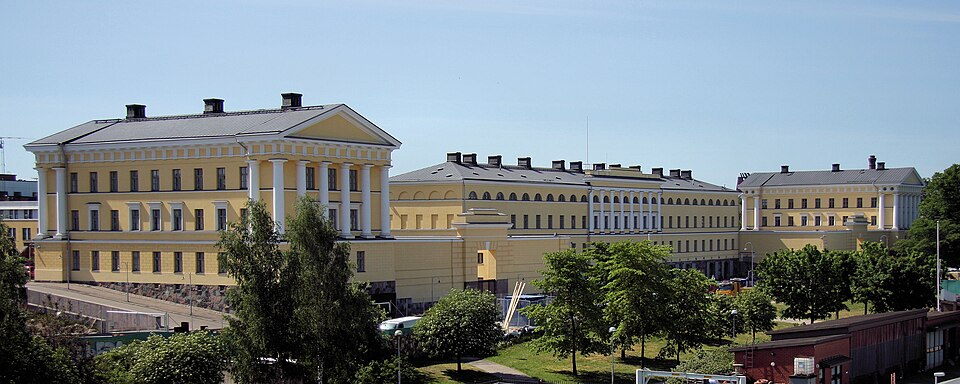
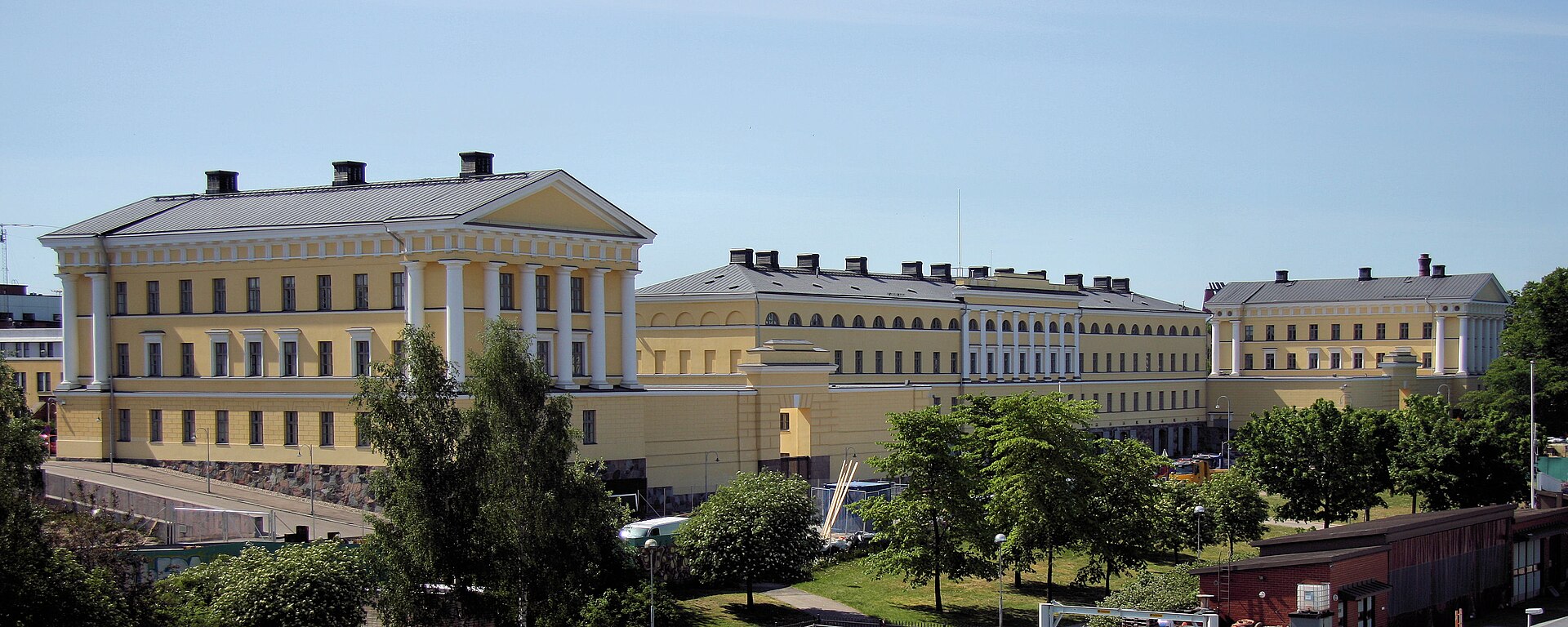
Merikasarmi
Helsinki
On Katajanokka's eastern tip, Merikasarmi has carried many lives — from depot fortress to Russian garrison, shipyard, and finally the Foreign Ministry. The barracks, designed by C. L. Engel from the 1810s onward, gather around the old depot courtyard.
Look for: Look to the northern frontage: the 1980s restoration finally completed Engel's grand neoclassical composition, designed in 1825 but left partly unbuilt.
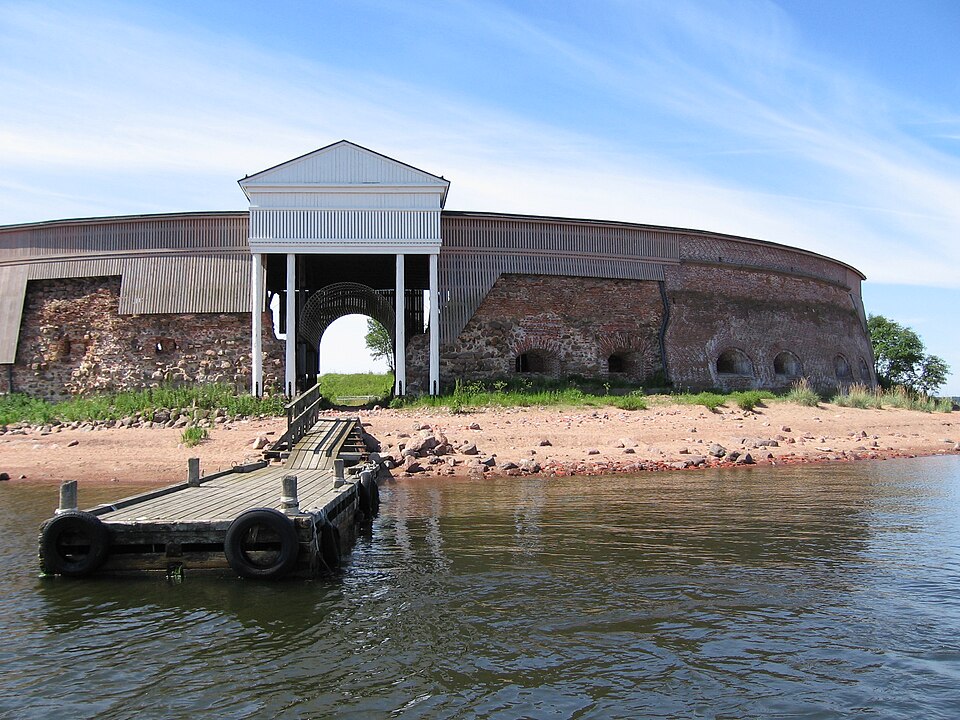
Ruotsinsalmi sea fortress
Built 1790-1809 on the orders of Empress Catherine II to defend Russia's western frontier, this sea fortress is scattered across the islands off Kotka, its history shaped by the naval battles fought here in 1790.
Look for: Seek out Fort Slava on Kukouri island, a round fortress of hewn stone and brick raised in 1791-1794, and on Varissaari the memorial to the 1790 naval battle, unveiled in 1940.
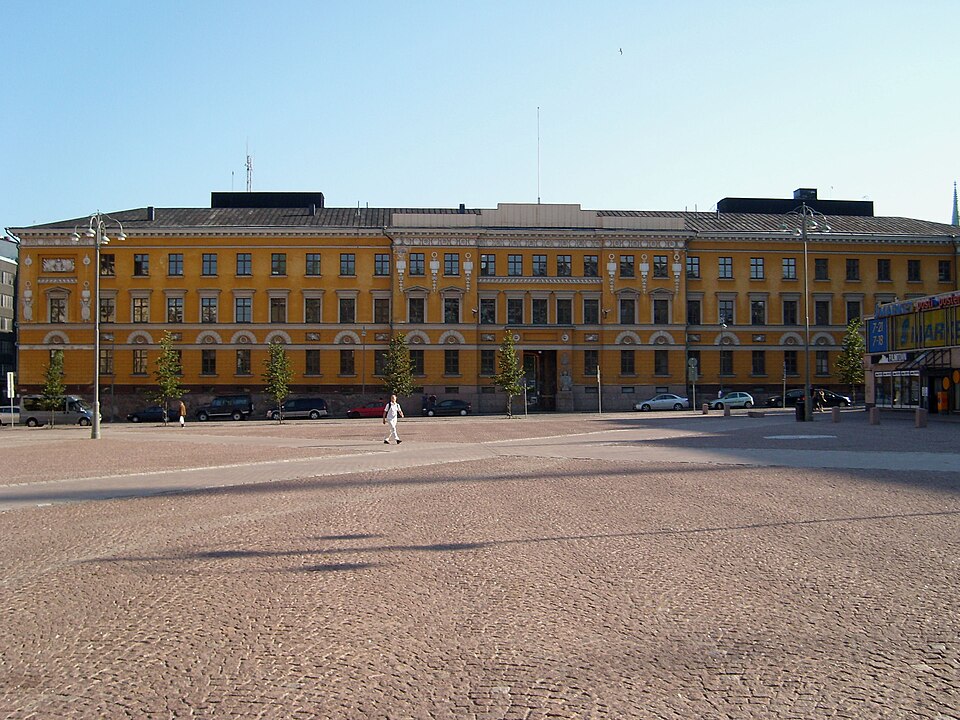
Kaartin kasarmi
The Guards' Barracks block is a historic setting of the Finnish military, its buildings reflecting two centuries of architectural change in military use.
Look for: Look to the strikingly ornate façade of C.L. Engel's officers' building, with its trophy reliefs, forming the block's main face toward Kasarmitori.
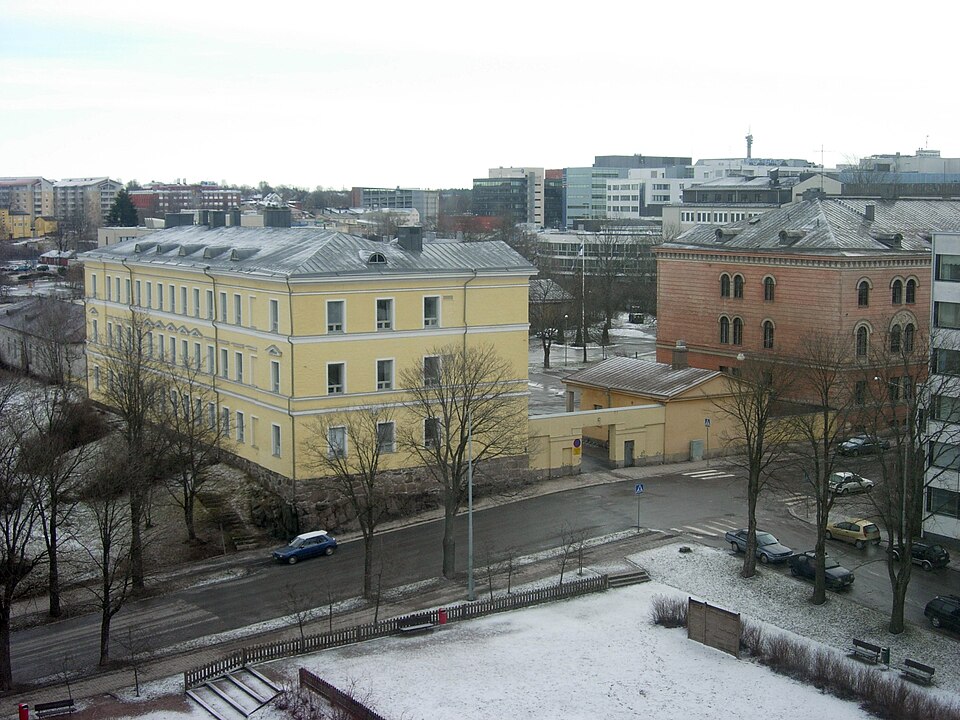
Sirkkalan kasarmit
The Sirkkala barracks are among the oldest city barracks in Finland to survive in their main outlines. In 1846 Turku's grenadier sharpshooter battalion settled into the town's former poorhouse.
Look for: Pause before the main guardhouse beside the Kaivokatu gate: its principal facade is dominated by the arcade with a pediment that is characteristic of the building type.
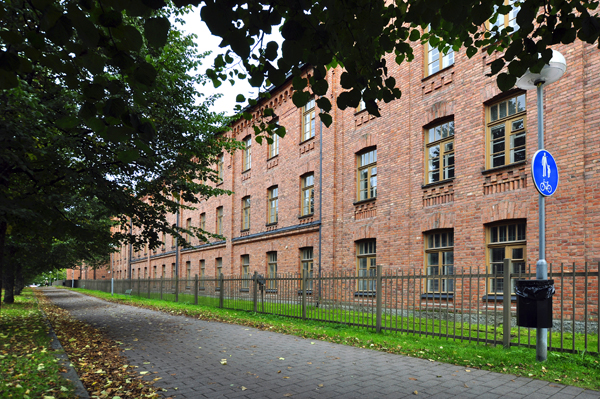
Suomen kasarmit
Beside the old highway to Turku, the Finland Barracks recall Hämeenlinna's past as an important military centre and provincial capital. A barracks of two eras invites you to wander.
Look for: Tell apart the two building phases: the intact row of officers' wooden residences from 1882–83 on the eastern edge, and the Russian period's bare-brick buildings, such as the handsome officers' club.
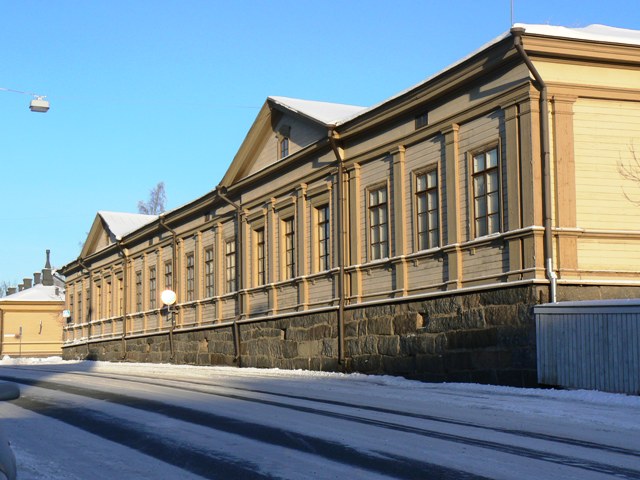
Vaasan tarkka-ampujakasarmit
One of the best-preserved 1880s wooden barracks quarters opens around the Orthodox Church of St Nicholas, designed by C.A. Setterberg. Step into the calm of its grid plan and linger.
Look for: Seek out the four U-shaped company buildings flanking the central courtyard, and the decoratively finished residence of the battalion commander.
Dragsvikin kasarmit
Dragsvik is one of Finland's most notable barracks areas from the 1910s, where the Russian planners' original aims survive intact. Nearly thirty red-brick barracks line up along three streets running parallel to the shore.
Look for: Notice the dentil friezes and ornate gables of the unplastered brick barracks; beside them stands the three-storey Tammiharju hospital, designed by Axel Mörne in the late 1920s.
Haminan linnoitus- ja varuskuntakaupunki
Hamina is a singular historical fortress town whose radial plan follows the Renaissance ideal-city model. From the central square ringed by strong bastions, eight streets radiate outward, joined by two circular streets.
Look for: Seek out the late-18th-century town hall at the meeting point of the radial streets on the circular square, whose monumental central tower was built in the 1840s to designs from the Intendant's Office.
Heikkilän kasarmialue
A barracks area raised for Russia's Baltic Fleet in the early 1900s meets the seashore behind Korppolaisvuori, southwest of the Turku centre. Step into a military setting the Finnish defence forces have shaped over decades.
Look for: Look at the large troop barracks, whose baroque-tinged exterior plays with projecting bays and the alternation of bare and rendered brick; in 1967 a dining-hall wing was deftly fitted to its extension.
A day among Helsinki's fortifications
A short loop linking the Suomenlinna sea fortress and the Naval Barracks into one unhurried day along the capital's shores.
3 sites · ~2 km · about 4 h · set aside a full day
- 1Protected buildingNotable
On Katajanokka's eastern tip, Merikasarmi has carried many lives — from depot fortress to Russian garrison, shipyard, and finally the Foreign Ministry. The barracks, designed by C. L. Engel from the 1810s onward, gather around the old depot courtyard.
Look for: Look to the northern frontage: the 1980s restoration finally completed Engel's grand neoclassical composition, designed in 1825 but left partly unbuilt.
- 2Kaartin kasarmi 1 km driveNationally significantNotable
The Guards' Barracks block is a historic setting of the Finnish military, its buildings reflecting two centuries of architectural change in military use.
Look for: Look to the strikingly ornate façade of C.L. Engel's officers' building, with its trophy reliefs, forming the block's main face toward Kasarmitori.
- 3Protected building
Two buildings joined into one tell of two eras: Rikhardinkatu 2 was completed in 1891 to Carl Rupert Rosenberg's designs, Kasarmikatu 42 only in 1934, by J. S. Sirén.
Look for: See how four decades separate the neighbours — the buildings were originally raised as commercial and residential houses.