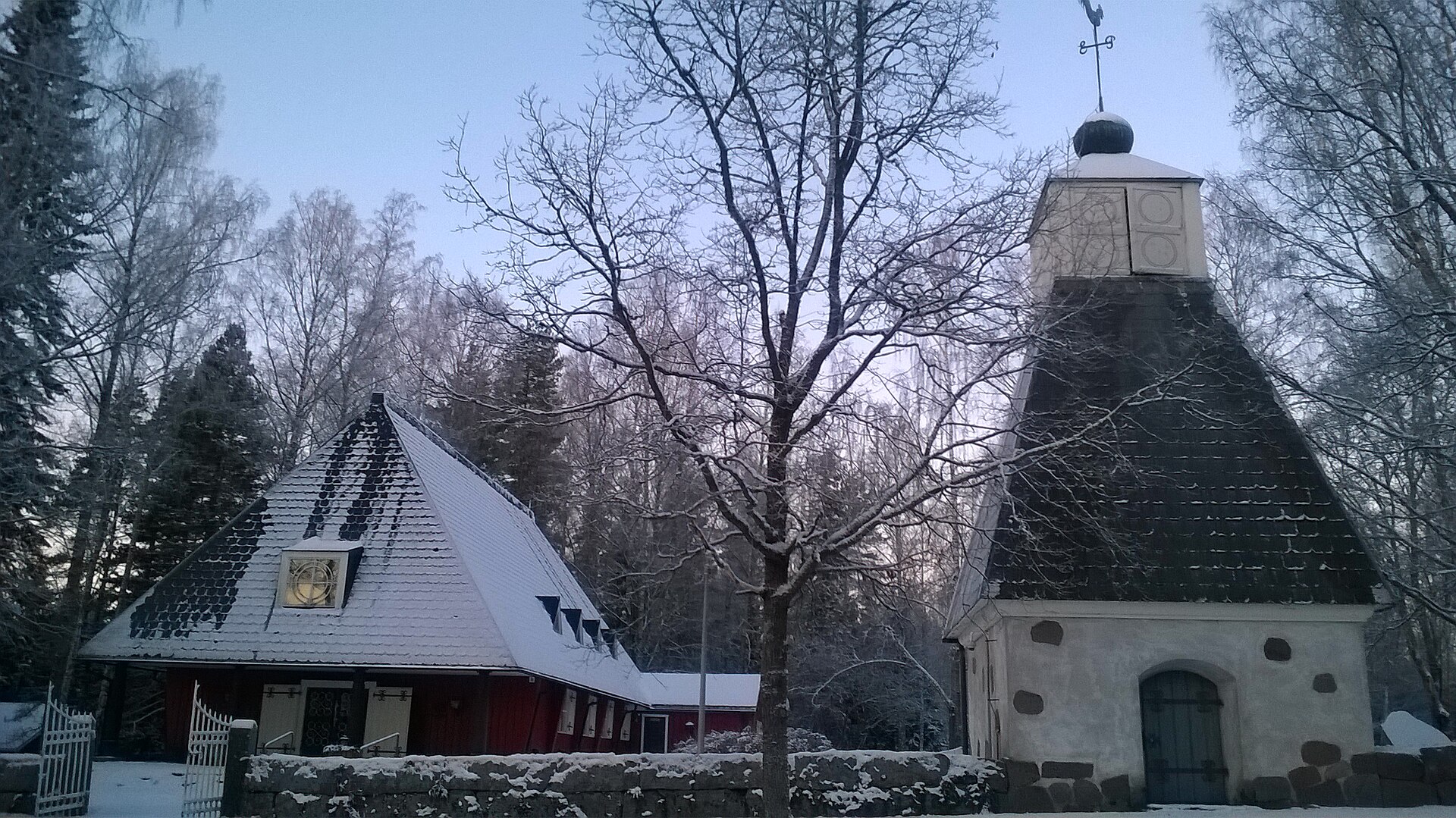
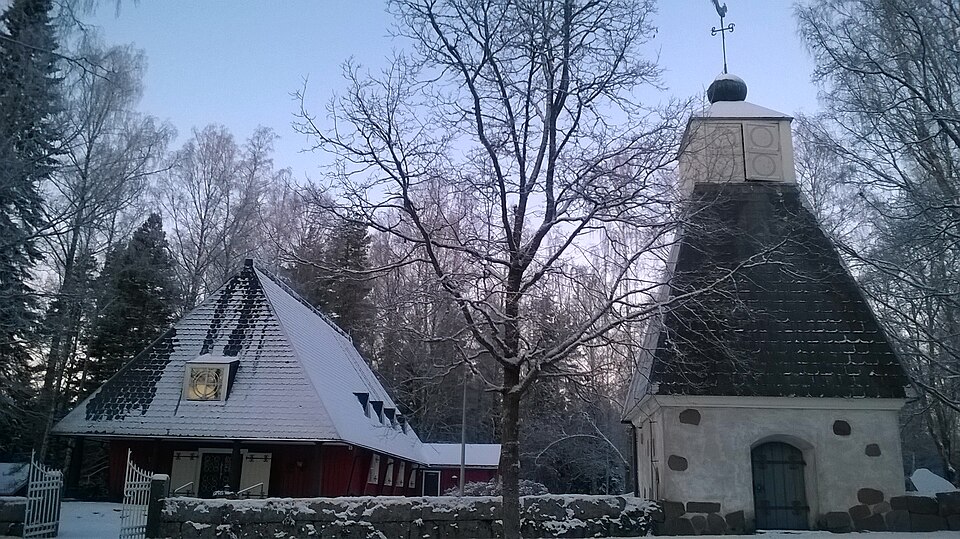
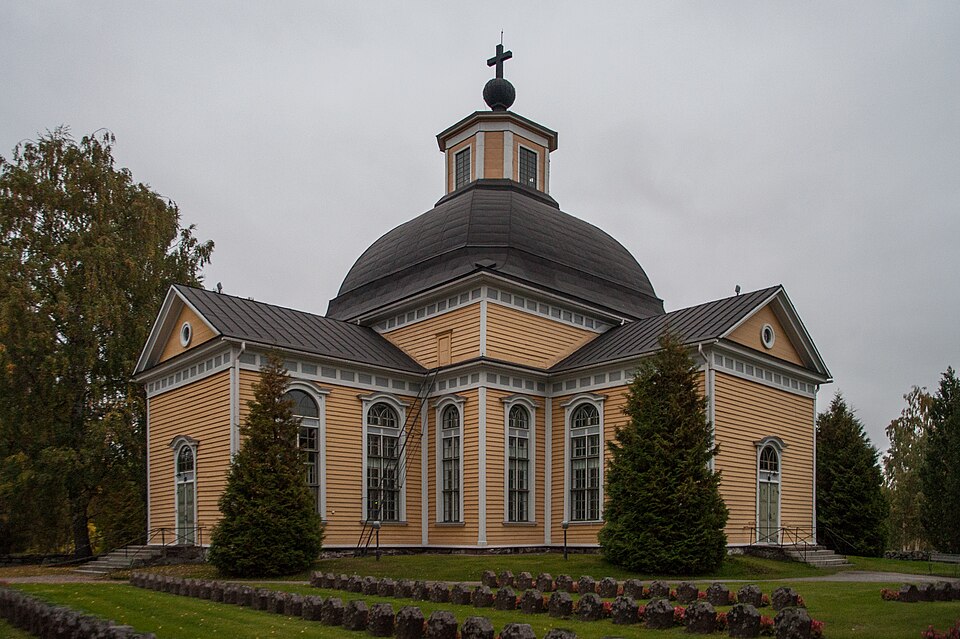
Wooden church. Nuijamaa church is the first of the new churches from the post-war reconstruction period. The intimate little wooden church with its numerous decorative details and traditional bell tower represents the nature-close, romantically tinged early phase of architecture following pure functionalism.
The church's exterior is characterized by a tall roof with hipped gables, known from Swedish architect Gunnar Asplund's Skogskapellet designed for Skogskyrkogården in Stockholm, which under posts also shelters the entrance and the cobbled terrace in front. The windows have shutters, which like the outer door are equipped with decorative wrought iron fittings.
The church's richly articulated design and construction is based on six transverse Cremona arches. Walls and ceiling vault, pews and floor are of brown-stained wood; in the chancel wall and the small altar niche fitted with side windows there is a white plaster rendering. On the rear wall of the altar is the Descent from the Cross sculpture made by sculptor Armas Tirronen.
The church hall's almost sole colour accents are the brilliant turquoise of the altar, gallery railings, and pulpit, and the Bible verses painted on one pitch of the ceiling. The ceiling lamps were designed by Paavo Tynell.